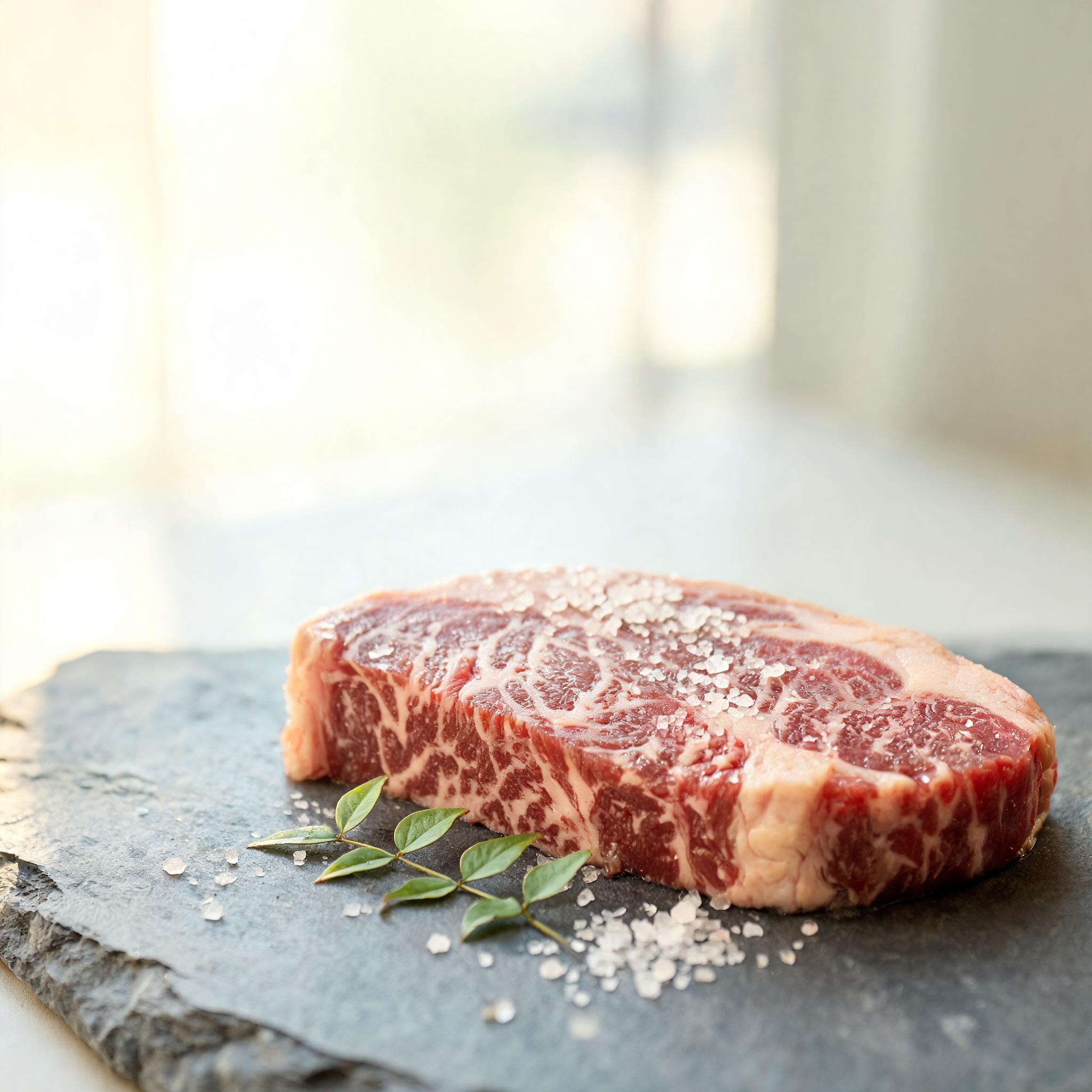
Miyazaki Wagyu A5 ribeye in Bangkok is served at Taraba Prime, a Japanese fine dining restaurant on Sukhumvit Soi 20, a 5-minute walk from BTS Asok. Raw Miyazaki A5 ribeye portion cuts retail from around 1,310 THB at Bangkok butchers (Foodworks listing, checked 2026) — the fair baseline for judging any restaurant's wagyu price before you book.
- A5 grade is Japan's highest possible beef rating: yield grade A plus a Beef Marbling Standard (BMS) score of 8–12.
- Miyazaki Wagyu won the top prize at Japan's national "Wagyu Olympics" three consecutive times: 2007, 2012, and 2017.
- Raw Miyazaki A5 ribeye portion cuts start around 1,310 THB in Bangkok; restaurant pricing should be judged against that baseline plus cooking skill.
- 100–150 g per person is the recommended A5 portion, because the marbling begins melting near body temperature.
- Taraba Prime pairs Miyazaki A5 with live Taraba king crab, uni, otoro, and dry-aged sushi, with a TH/EN/JP menu near BTS Asok — book via LINE @tarabaprime or 094-456-1124.
What Makes Miyazaki Wagyu A5 Ribeye the Most Prized Steak in Japan?
Miyazaki Wagyu A5 ribeye is beef from certified Japanese Black cattle (Kuroge Washu) raised in Miyazaki Prefecture, graded at Japan's highest level: yield grade A and quality score 5, requiring a BMS marbling score of 8–12. Miyazaki Wagyu won Japan's national Wagyu Olympics three consecutive times — 2007, 2012, and 2017 — making it one of Japan's most decorated beef brands.
Miyazaki Wagyu is not a generic label: it is beef from Japanese Black cattle raised and certified in Miyazaki Prefecture, and only beef graded 4 or higher may legally carry the brand name. That single rule is why the name on the menu matters as much as the grade.
How the A5 grading system actually works (yield grade + BMS score)
A5 grade is the highest rating in Japan's beef grading system, combining two independent scores: the letter "A" for the top yield grade (usable meat per carcass), and the number "5" for the top quality score, judged on marbling, meat color, fat color, and texture by licensed Japanese assessors — not by the restaurant.
BMS (Beef Marbling Standard) is Japan's 1–12 scale for intramuscular fat, and A5 beef must score between 8 and 12. This matters to you as a diner because "A5" is not a marketing word a kitchen can invent. Every certified carcass is independently graded, so a serious restaurant can trace its beef back to certification paperwork.
Miyazaki vs Kobe vs other wagyu brands: what the awards say
Miyazaki Wagyu holds the strongest recent competition record among Japanese beef brands, taking the top prize at the Zenkoku Wagyu Noryoku Kyoshinkai — Japan's "Wagyu Olympics" — three straight times in 2007, 2012, and 2017. Kobe is more famous abroad, but both brands use Japanese Black cattle graded on the exact same A5 scale.
At A5 level, the difference on your plate is small. What differs is price and availability: Kobe's name premium often adds cost without adding marbling. That is why many Bangkok chefs quietly prefer Miyazaki — identical grade, stronger recent credentials, friendlier price.
Why ribeye shows off A5 marbling better than any other cut
Ribeye is the cut from the rib section prized for intense beef flavor, high intramuscular fat, and juiciness — the single best canvas for A5 marbling. When a BMS 8–12 ribeye hits a hot pan, the web of fat melts through the muscle and bastes the meat from within, producing the buttery texture A5 is famous for.
Miyazaki A5 Ribeye Price in Bangkok: Restaurant vs Buying Raw
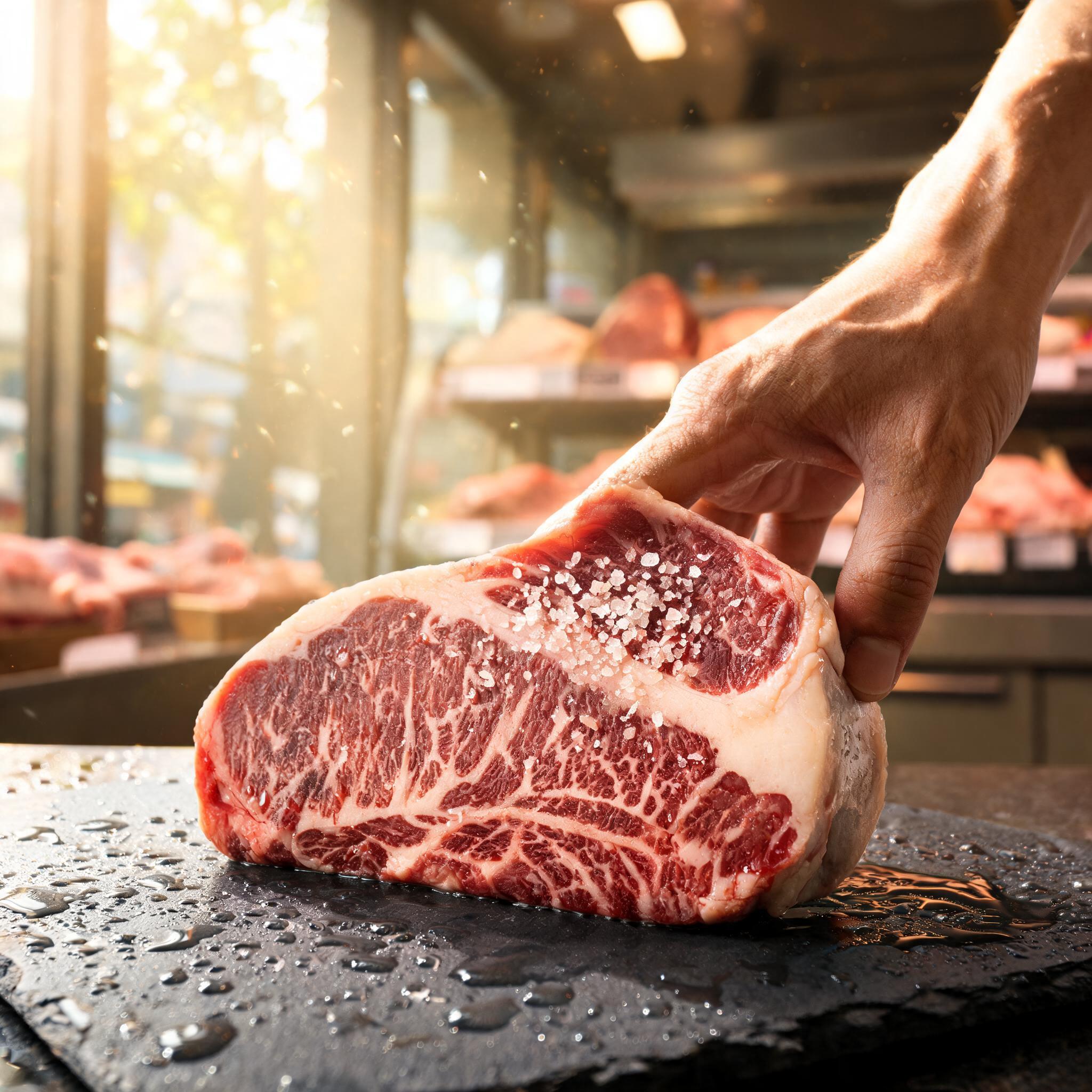
Miyazaki A5 ribeye price in Bangkok starts from around 1,310 THB per raw portion cut at premium butchers such as Foodworks, while a whole raw A5 striploin lists at 3,230 THB. Restaurant servings cost more because you pay for precise high-heat searing, resting, restrained seasoning, and pairing expertise — with A5, one wrong move at home can waste the entire premium.
Price table: raw portion cut vs restaurant serving vs omakase course
| Option | Price | What you get |
|---|---|---|
| Raw A5 ribeye portion cut (Foodworks) | from ~1,310 THB | Vacuum-packed raw portion; you cook, season, and take the risk |
| Raw A5 striploin, whole cut (Foodworks) | 3,230 THB | Larger raw piece; needs trimming and portioning skill |
| Miyazaki A5 ribeye at Taraba Prime | Chef-seared, rested, seasoned, served with pairings | |
| Omakase-style wagyu + seafood course | Full sequence: sashimi, uni, king crab, A5 wagyu, sushi |
For context: most diners comparing Japanese fine dining in this tier of Bangkok budget roughly 3,000–10,000 THB per person for a full wagyu-and-seafood dinner. To see where the current menu sits in that range, check the Miyazaki A5 and king crab menu at Taraba Prime before you book.
What the restaurant premium actually pays for
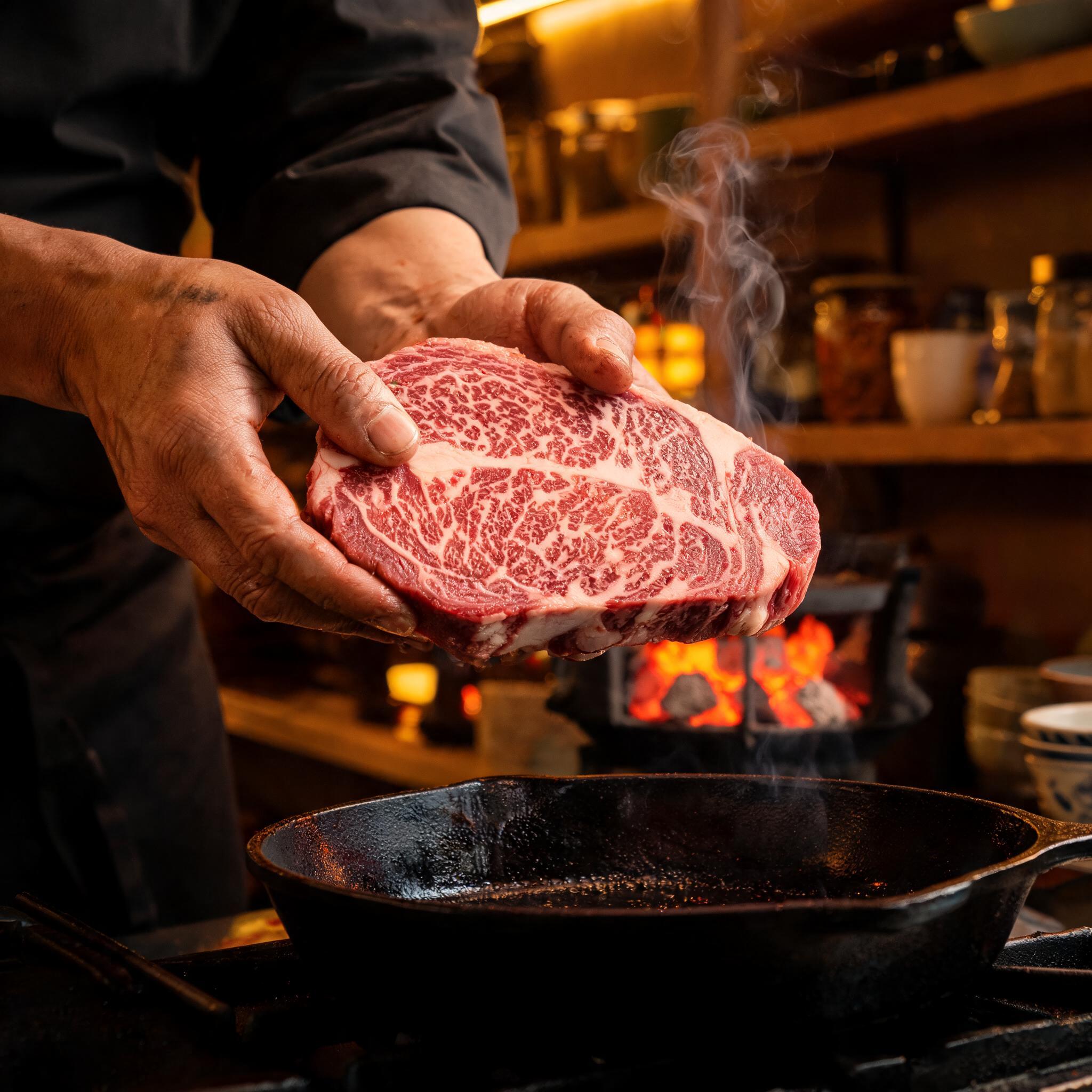
The restaurant premium on A5 wagyu pays for four things that decide whether the beef tastes sublime or merely greasy: exact searing temperature, proper resting, restrained seasoning, and pairing design. A5 fat renders fast — a few seconds too long on the heat and the marbling you paid for literally leaks out of the meat.
- Correct searing: hot and fast outside, tender translucent-pink center — no home pan thermometer required on your side.
- Resting: juices redistribute into the muscle instead of flooding the plate.
- Seasoning restraint: good A5 needs little more than salt; a skilled kitchen knows when to stop.
- Pairing design: clean seafood between bites so the richness never overwhelms you.
How much A5 wagyu per person is worth ordering (100–150 g rule)
100–150 g per person is the sweet spot for A5 wagyu recommended by most Japanese steak houses, because BMS 8–12 marbling is so rich that a 300 g Western-style steak becomes exhausting halfway through. Order the smaller portion, then spend the saved budget on king crab sashimi or uni — every bite stays enjoyable.
Where to Eat Miyazaki A5 Wagyu in Bangkok: Taraba Prime on Sukhumvit Soi 20
Taraba Prime is a premium Japanese seafood restaurant on Sukhumvit Soi 20, a 5-minute walk from BTS Asok, serving Miyazaki A5 wagyu alongside live Taraba king crab, uni, otoro, and dry-aged sushi flown in from Japan daily. The menu is written in Thai, English, and Japanese, built for foreign visitors seeking authentic Japanese fine dining in central Bangkok.
How the Miyazaki A5 is prepared and served at Taraba Prime
Miyazaki A5 at Taraba Prime is prepared to protect the marbling: seared hot and fast on the outside while the center stays tender, then rested before serving. If you want proof of origin, ask the staff about certification documentation — a normal request at any serious wagyu restaurant, not a rude one.
Why foreigners and tourists choose Sukhumvit 20 for Japanese fine dining
Sukhumvit Soi 20 sits in the Asok–Phrom Phong corridor, the densest Japanese dining zone in Bangkok, yet the soi itself stays quieter than the main road. For visitors deciding between restaurants, three practical advantages stand out — and each one answers a real tourist-trap worry:
- Walkable from BTS Asok in about 5 minutes — no taxi negotiation, no traffic gamble before a reservation.
- TH/EN/JP menu and English-speaking service, so you know exactly which cut and grade you are ordering.
- Per-dish pricing on the menu, not the vague "market price" surprises common at tourist-oriented seafood spots.
Daily air-flown ingredients: what "fresh from Japan" really means
"Air-flown daily" at Taraba Prime means seafood and beef arrive from Japan on daily flights rather than sitting in long-term frozen storage. Live king crab is kept in tanks until your order; uni and otoro freshness is measured in hours, not days. The honest trade-off: premium logistics cost more, and stock can sell out — one more reason to reserve ahead.
Beyond the Steak: Pairing A5 Wagyu with Live King Crab, Uni and Dry-Aged Sushi
Live Taraba king crab, uni, otoro, and dry-aged sushi are the natural companions to Miyazaki A5 ribeye, because their clean, briny flavors reset the palate between bites of rich marbled beef. At Taraba Prime, live king crab is served three ways — sashimi, steak, or nabe hot pot — in the same meal as the wagyu, a pairing no raw-beef shop can offer.
Live king crab three ways: sashimi, steak, nabe — which to order with wagyu
King crab sashimi is the best partner for A5 ribeye: chilled, sweet, and clean, it cuts through beef fat like nothing else on the menu. Crab steak adds smoky char that echoes the seared wagyu, while nabe hot pot works as a warm, soothing finish after the beef course.
Tip: if you order only one crab preparation on a wagyu night, choose sashimi. The cold-hot temperature contrast alone makes both dishes taste better. Browse the full live Taraba king crab menu — sashimi, steak, and nabe before deciding.
Uni, otoro and fresh sashimi: the palate-cleansing order of eating
Uni (sea urchin) and otoro should be eaten before the wagyu, not after — both are rich in their own right, and once A5 fat coats your palate, their delicate sweetness disappears. Light white-fish sashimi works the opposite way: eat it between wagyu bites as a reset, the same role pickles play in a Japanese steak house.
Dry-aged sushi and lobster: rounding out a premium surf-and-turf course
Dry-aged sushi is sushi made from fish rested for days under controlled conditions to concentrate umami, giving it a deeper flavor that stands up to A5 beef better than ordinary sushi. Together with lobster and signature dishes like the foie gras unagi don and chirashi, the omakase-style sets let you build a full Japanese surf-and-turf dinner at one table.
Suggested eating sequence for a full wagyu + king crab dinner
- Start with light sashimi and king crab sashimi while your palate is fresh.
- Move to uni and otoro — rich seafood before rich beef, never after.
- Eat the Miyazaki A5 ribeye in small bites, alternating with crab, pickles, or plain rice.
- Finish with dry-aged sushi or crab nabe, which settles the meal instead of adding heaviness.
How Should You Choose: A5 Ribeye vs Striploin vs Other Wagyu Cuts?
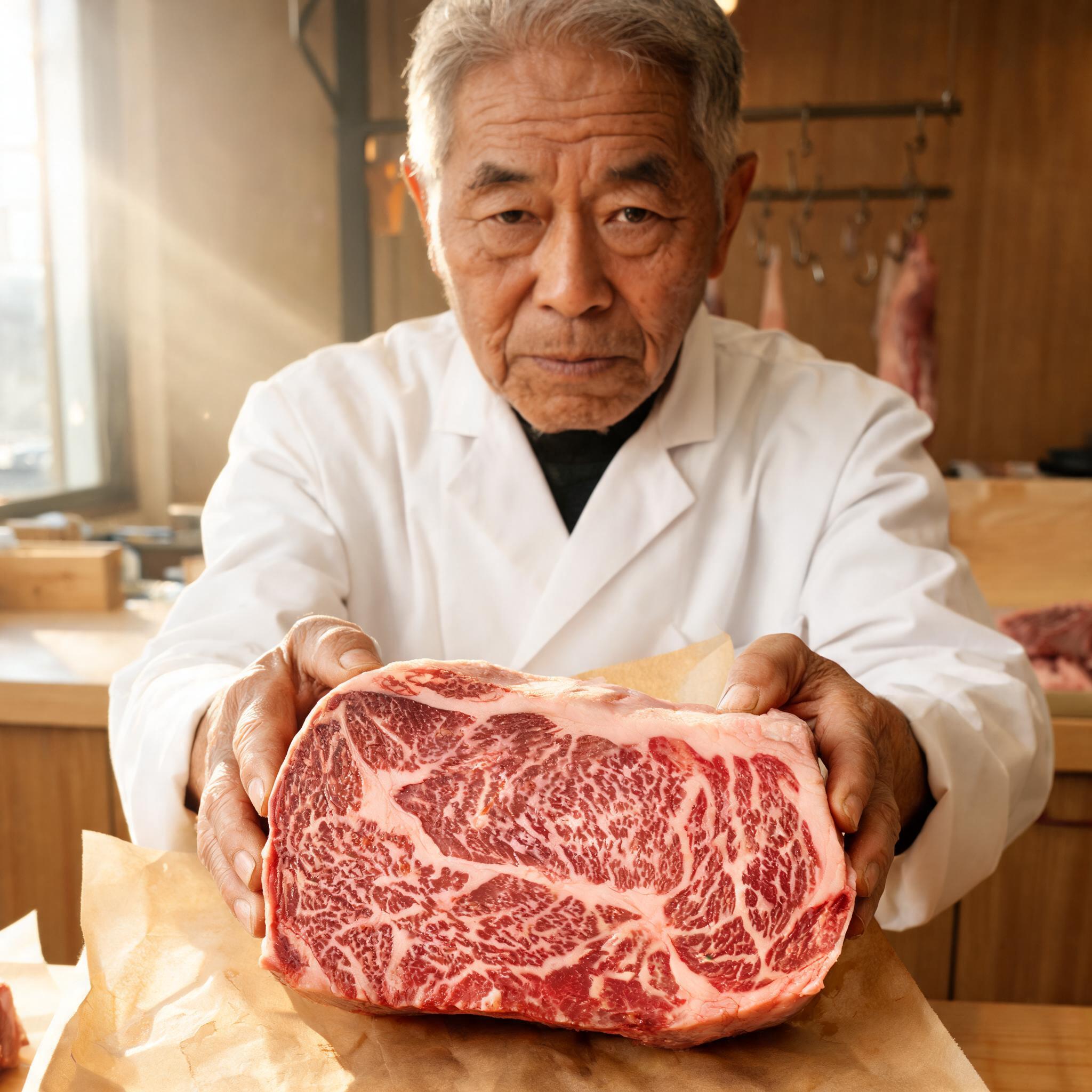
A5 ribeye vs striploin comes down to richness tolerance: ribeye delivers maximum marbling, juiciness, and intense beef flavor, while striploin offers a firmer bite with slightly leaner richness. First-time A5 eaters worried about heaviness should choose striploin or a smaller ribeye portion; committed marbling lovers should always pick ribeye.
Comparison table: marbling, texture, richness, best doneness, price range
| Cut | Marbling & richness | Texture | Reference price |
|---|---|---|---|
| Ribeye | Highest marbling, most intense | Melting, buttery; medium-rare only | Raw portion from ~1,310 THB |
| Striploin | High but slightly leaner | Firmer bite, less palate fatigue | Whole raw cut 3,230 THB (Foodworks) |
| Chateaubriand / tenderloin | Lowest fat of the premium cuts | Extremely tender, mild flavor |
Which cut for first-timers vs seasoned wagyu eaters
First-time A5 eaters should order striploin, or 100 g of ribeye shared alongside seafood — the most common regret at premium wagyu tables is a large ribeye abandoned halfway through. Experienced wagyu eaters should go straight to ribeye: it is the cut where a BMS 8–12 score is most visible and most rewarding per bite.
Common Mistakes When Ordering and Eating A5 Wagyu (and How to Avoid Them)
The most common A5 wagyu mistakes are ordering oversized portions, requesting well-done cooking that melts away the prized marbling, eating without palate cleansers, and judging menu prices with no market baseline. A5 fat begins melting near body temperature, so medium-rare searing and 100–150 g portions preserve exactly what you paid for.
- Order 100–150 g per person, not a Western-sized 300 g steak.
- Ask for medium-rare — never well-done on A5.
- Alternate bites with king crab sashimi, pickles, or plain rice.
- Know the raw baseline (~1,310 THB per portion cut) before calling a menu price expensive.
Mistake 1: Ordering too much — why 100–150 g is enough
Oversized A5 portions are the number-one first-timer regret: A5 ribeye carries far more intramuscular fat than any Western steak, so satiety arrives fast. Diners who order 250–300 g typically stop enjoying it after the first half. 100–150 g keeps every bite pleasurable and leaves budget for crab, uni, and sushi.
Mistake 2: Asking for well-done A5
Well-done A5 wagyu renders out the very fat you paid a premium for. Because BMS 8–12 marbling starts melting at low temperatures — close to body heat — a long cook leaves a dry, expensive piece of ordinary-tasting beef. Medium-rare keeps the fat inside the muscle, where it belongs.
Mistake 3: Skipping palate cleansers (this is where king crab and uni help)
Eating A5 bite after bite with nothing in between coats the palate and dulls the flavor by the third piece — the beef stops tasting special even though nothing changed. Chilled king crab sashimi, light white-fish sashimi, or pickled vegetables between bites reset your tongue. This is the core logic behind pairing wagyu with premium seafood in one meal.
Mistake 4: Judging price without knowing raw-cut market rates
A restaurant charging several times the raw price is not automatically overcharging. The fair comparison is the raw portion cut (~1,310 THB, Foodworks 2026 listing) plus the searing skill, resting technique, seasoning judgment, and pairing design that make A5 worth eating. Compare against that total, not the butcher's sticker alone.
How to Reserve a Wagyu & King Crab Dinner at Taraba Prime (Directions from BTS Asok)
Reservations at Taraba Prime can be made by phone at 094-456-1124 or via LINE @tarabaprime; the restaurant is on Sukhumvit Soi 20, a 5-minute walk from BTS Asok. Booking 1–2 days ahead is recommended for live king crab and Miyazaki A5 wagyu, since both are prepared from daily air-flown stock that can sell out.
Step-by-step: reserving via LINE or phone
- Add LINE @tarabaprime or call 094-456-1124 — you can complete the booking entirely in English via the Taraba Prime reservation page.
- State your date, time, and party size, ideally 1–2 days before your visit.
- Mention if you want live king crab or Miyazaki A5 ribeye, so the kitchen holds stock for your table.
- Confirm the booking and any pre-orders, then arrive on time.
Walking directions from BTS Asok to Sukhumvit Soi 20
From BTS Asok, exit toward Sukhumvit Road and walk along the even-numbered side toward Phrom Phong. Sukhumvit Soi 20 is roughly a 5-minute walk from the station; turn into the soi and follow it to the restaurant.
What to pre-order: live king crab and omakase-style courses
Live king crab is the item most worth pre-ordering, since tank stock depends on daily flights from Japan and walk-ins occasionally miss out on busy nights. Omakase-style courses combining Miyazaki A5 wagyu, king crab, uni, and dry-aged sushi should also be requested at booking, so the chef can plan the eating sequence around your table.
คำถามที่พบบ่อย (Frequently Asked Questions)
Frequently asked questions about Miyazaki A5 wagyu and premium Japanese seafood dining in Bangkok cover where to eat the best king crab, how to verify A5 authenticity, expected prices per portion, and how to book near BTS Asok. Each answer below is short, factual, and self-contained. (Last updated: 2026)
Where can I eat the best king crab in Bangkok?
Taraba Prime on Sukhumvit Soi 20 specializes in live Taraba king crab served three ways — sashimi, steak, and nabe hot pot — with crab and seafood flown in from Japan daily. The restaurant is a 5-minute walk from BTS Asok, making it one of the most accessible king crab restaurants in Sukhumvit for foreign visitors.
Is Miyazaki A5 wagyu better than Kobe beef?
Miyazaki Wagyu won Japan's national Wagyu Olympics top prize three consecutive times (2007, 2012, 2017), and both Miyazaki and Kobe use Japanese Black cattle graded on the same A5 scale. At A5 level the quality is comparable — Miyazaki simply carries stronger recent competition credentials, often at a friendlier price.
How much does Miyazaki A5 ribeye cost in Bangkok?
Raw Miyazaki A5 ribeye portion cuts retail from around 1,310 THB in Bangkok at premium butchers such as Foodworks, while restaurant servings cost more to cover expert searing, resting, and pairing. Use the raw-cut price as your baseline when judging whether a menu price is fair.
How do I know the wagyu is genuine Miyazaki A5?
Genuine Miyazaki Wagyu carries Miyazaki Prefecture certification, and only beef graded 4 or higher may use the brand name at all. Reputable restaurants can show origin documentation on request, so asking to see the certificate before or during your meal is normal practice, not rude.
Which Japanese restaurant near BTS Asok serves both wagyu and live seafood?
Taraba Prime, a 5-minute walk from BTS Asok on Sukhumvit Soi 20, serves Miyazaki A5 wagyu together with live king crab, lobster, uni, otoro, and dry-aged sushi sets. The menu is written in Thai, English, and Japanese, so foreign visitors can order every dish with full confidence in what they are getting.
Do I need a reservation for king crab omakase in Bangkok?
Reservations are recommended for king crab omakase in Bangkok, because live king crab and Miyazaki A5 wagyu at Taraba Prime are prepared from daily air-flown stock that can sell out on busy nights. Book via LINE @tarabaprime or call 094-456-1124, ideally 1–2 days ahead of your visit.
What doneness should I order for A5 wagyu ribeye?
Medium-rare is the recommended doneness for A5 wagyu ribeye, because its BMS 8–12 marbling melts at low temperatures and well-done cooking renders away the very fat that makes the cut valuable. A quick, hot sear with a tender center preserves the buttery texture A5 is prized for.
How many grams of A5 wagyu should one person order?
100–150 g per person is the sweet spot for A5 wagyu because of its extreme richness — larger Western-sized portions become tiring rather than enjoyable. Ordering the smaller size leaves room to pair the beef with king crab sashimi, uni, or dry-aged sushi in the same meal.