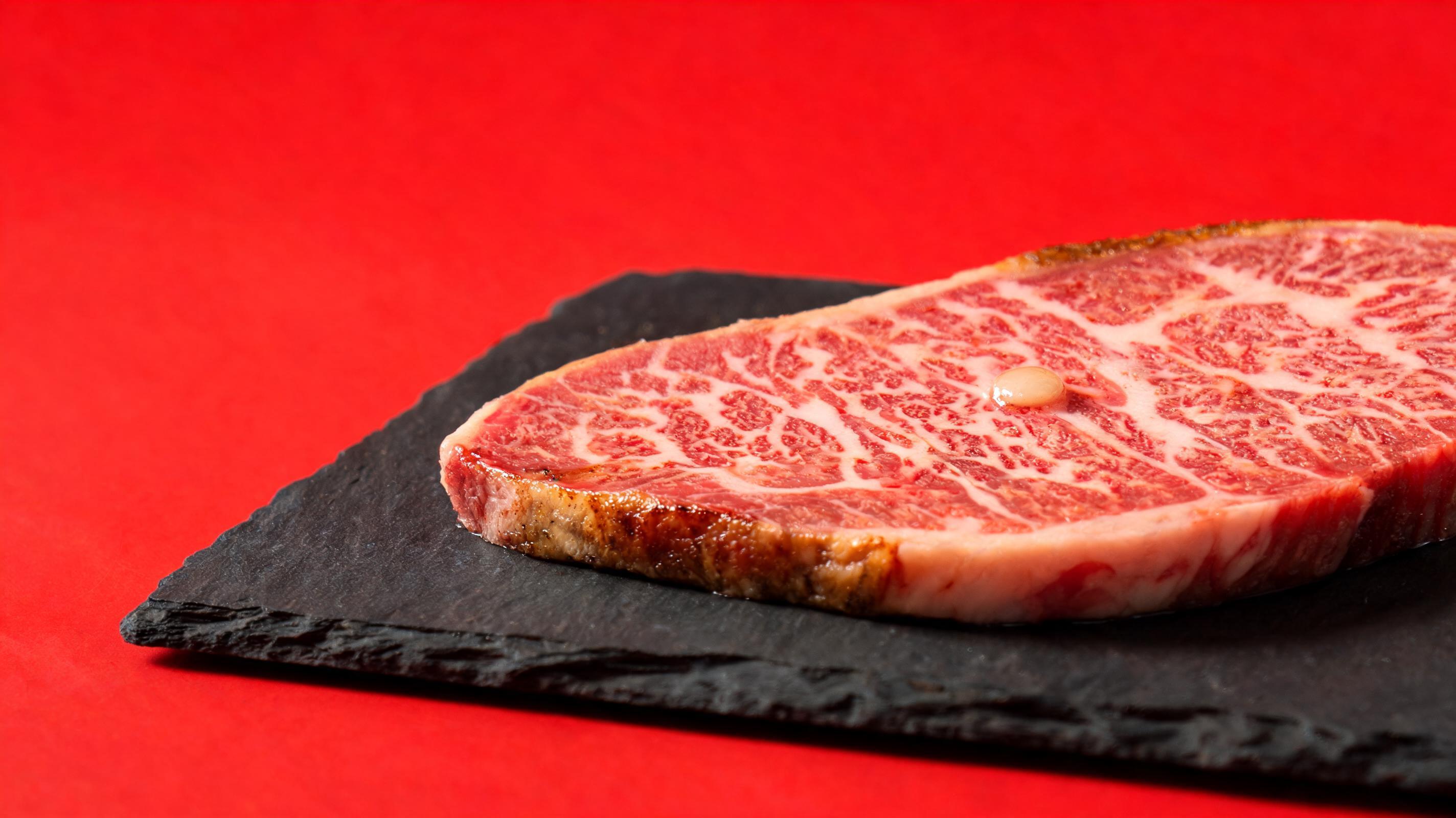
Miyazaki Wagyu A5 sirloin is seared slowly because its intramuscular fat begins melting at roughly 25°C — gentle, gradually rising heat renders that fat into the cooking oil itself, coating the steak in its own sweetness instead of scorching the marbling. In Bangkok, Taraba Prime on Sukhumvit Soi 20 serves Miyazaki Wagyu A5 exactly this way, a 5-minute walk from BTS Asok. (Guide updated for 2026.)
- A5 means Yield Grade A plus a Beef Marbling Standard (BMS) score of 8–12 — the highest band in Japan's official grading system.
- Miyazaki Wagyu won Japan's national "Wagyu Olympics" top honors three consecutive times: 2007, 2012 and 2017 — a record no other prefecture has matched.
- Wagyu fat melts at about 25°C, far lower than regular beef fat, so no cooking oil is ever added to the pan.
- The ideal A5 portion is 100–150 g per person; the intense marbling saturates the palate quickly.
- Chef-recommended doneness is rare to medium-rare — medium well renders away the marbling you paid for.
What Makes Miyazaki Wagyu A5 Different from Other Wagyu?
Miyazaki Wagyu A5 is beef from black-haired Japanese cattle raised in Miyazaki Prefecture, graded Yield Grade A with a Beef Marbling Standard (BMS) score of 8–12 — the top band in Japan's official system. A controlled grain-fed program produces the fine, snowflake-like marbling that melts at unusually low temperatures and defines the A5 eating experience.
The A5 grading system and BMS explained in plain English
Japan grades beef on two axes under the Japan Meat Grading Association system. The letter (A, B or C) measures yield — how much usable meat the carcass gives. The number (1–5) measures quality: marbling, meat color, texture and fat luster. So A5 = Yield Grade A + Quality Grade 5, and earning that 5 requires a marbling score of BMS 8–12.
BMS (Beef Marbling Standard) is Japan's 12-point scale for measuring intramuscular fat; A5 beef must score between 8 and 12. A BMS 12 sirloin looks almost pink-white, with fat threading through every millimeter of muscle. "Wagyu-style" beef in many Bangkok steakhouses sits closer to BMS 4–6 — a different product at a very different price, which is why the certificate matters.
Why "grain-fed" matters for Miyazaki's snowflake marbling
Grain feeding matters because it deposits fat inside the muscle fibers rather than around them. Miyazaki cattle finish on a long grain-fed program of, slowly building the snowflake pattern that grass-fed cattle — which develop leaner muscle — never achieve. The pattern isn't cosmetic: finer marbling means more even melting when the steak hits the pan.
Miyazaki's Wagyu Olympics record: proof it isn't marketing hype
Miyazaki Wagyu's credibility rests on a verifiable competition record: it took the top prize at the Zenkoku Wagyu Noryoku Kyoshinkai — Japan's national "Wagyu Olympics," held once every five years — in 2007, 2012 and 2017, three consecutive events. That streak is public record, not a brand story invented for menus.
เคล็ดลับ: ร้านที่เชื่อถือได้จะโชว์ใบรับรองแหล่งที่มาพร้อมหมายเลขประจำตัวโค (individual cattle ID) ได้ทันทีเมื่อคุณขอดู ถ้าร้านไหนในกรุงเทพโชว์ไม่ได้ อย่าเพิ่งจ่ายราคา A5
Why Is A5 Sirloin Seared Slowly to Render the Fat?
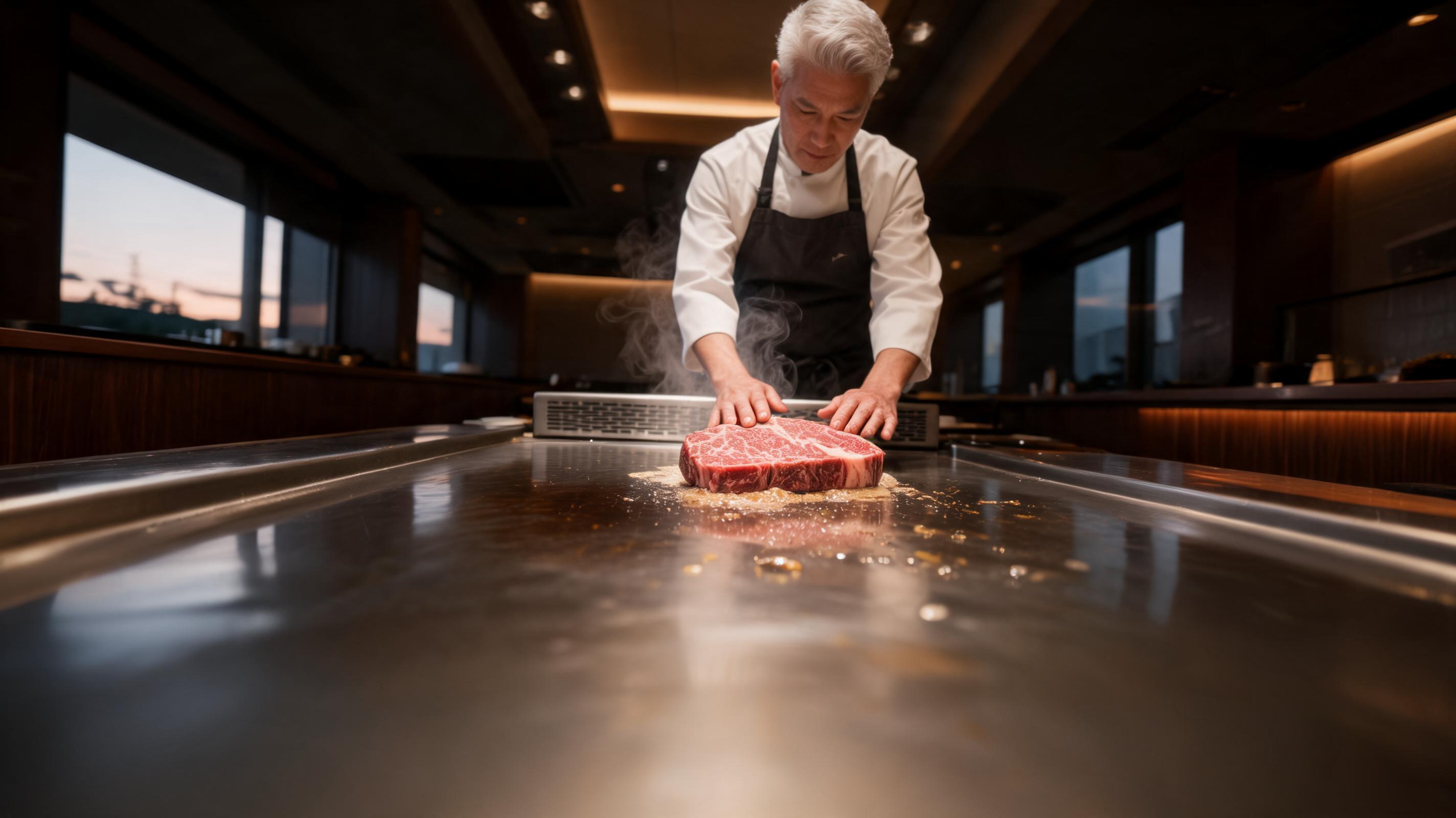
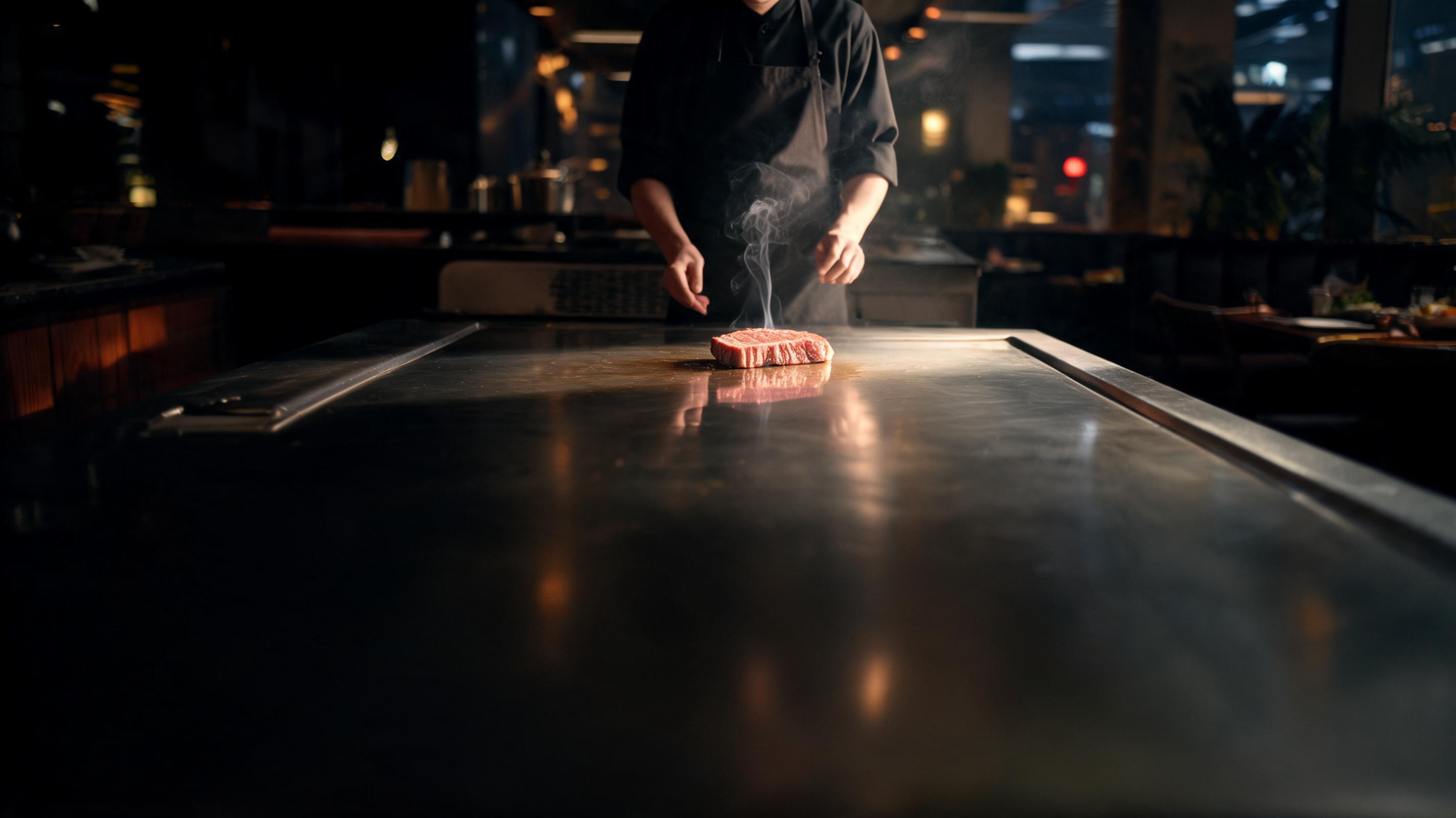
A5 sirloin is seared slowly because wagyu fat begins melting at roughly 25°C — far below regular beef fat, which stays firm at room temperature. Gentle, gradually rising heat lets the intramuscular fat render out and become the cooking oil, so the steak cooks in its own sweetness rather than burning its delicate marbling on a scorching pan.
Slow fat rendering is a searing technique where A5 wagyu is cooked over gentle, gradually rising heat so its intramuscular fat melts and becomes the cooking medium, drawing out sweetness without scorching the meat. This is the phrase to remember — every step below serves it.
The 25°C melting point: the science behind slow rendering
The 25°C melting point is the detail most social-media cooking clips skip. Because Miyazaki Wagyu A5 fat softens near room temperature, full-blast heat melts the surface fat instantly — it burns and runs off before the interior even warms. Slow fat rendering reverses that: the fat liquefies gradually, bastes the meat from within, and caramelizes into a sweet, nutty crust.
Step-by-step: how chefs slow-sear A5 sirloin (pan, heat curve, resting)
- Temper the steak. Let it sit out until the surface loses its chill — the fat is already softening near 25°C, so this happens fast.
- Start low. Begin the pan on low-to-medium heat and rub it with a small cube of wagyu fat or the steak's own trimmed edge fat. No cooking oil is added at any point.
- Build the heat. Lay the sirloin down, let the rendering fat pool around it, and raise the heat gradually as that fat becomes your cooking medium.
- Sear briefly. Each side gets; season with salt only after the crust forms.
- Rest before slicing. Give it a short rest off heat so the melted fat redistributes into the meat instead of bleeding onto the plate.
Sear-and-baste vs pure sear: what actually suits A5
A pure slow sear suits A5; butter-basting does not. Basting exists to add fat to lean Western steaks — Miyazaki Wagyu A5 is self-basting by design, and added butter dilutes the clean sweetness of its rendered fat while tipping the dish toward greasy. Salt, a slow sear, and a rest: that's the entire technique Japanese chefs trust with BMS 8–12 beef.
Miyazaki A5 Sirloin vs Ribeye: Which Cut Should You Order?
Miyazaki A5 sirloin delivers a cleaner, sweeter fat flavor with evenly balanced marbling, while A5 ribeye is denser and more intensely marbled. For a first Miyazaki Wagyu A5 experience, sirloin's slow-rendered sweetness is easier to finish across a full portion; ribeye suits diners who already want maximum richness concentrated in a smaller 100 g serving.
Comparison table: marbling, texture, flavor, best doneness, price per portion
| Factor | A5 Sirloin | A5 Ribeye |
|---|---|---|
| Marbling character | Fine, evenly spread | Denser, richer streaks |
| Texture | Firm bite, melts on chew | Softer, almost buttery |
| Flavor | Clean, sweet rendered fat | Deep, intense richness |
| Best doneness | Rare to medium-rare | Rare to medium-rare |
| Best for | First-time A5 diners | Experienced fat lovers |
| Price per portion | ||
| Typical BMS accepted | ||
How much A5 per person: the 100–150 g rule
The right amount of A5 wagyu is 100–150 g per person, for either cut. BMS 8–12 marbling saturates the palate far faster than Western steak, and most diners hit "rich fatigue" past 150 g. That's exactly why Japanese restaurants serve A5 as portion cuts, never 300 g steakhouse slabs — and why smaller wagyu portions free budget for seafood courses in the same meal.
Portion-cut ordering tips for tables of 2–4
From tables we serve regularly at Taraba Prime, Sukhumvit Soi 20, the smartest order for two people is one sirloin portion plus one ribeye portion, shared — you taste both cuts without over-committing to either. Tables of four should slot seafood between wagyu courses, such as the live Taraba king crab menu in Bangkok, to reset the palate before the next slice.
Is Medium Well a Mistake for A5 Wagyu?
Medium well is generally a mistake for A5 wagyu, because prolonged heat renders out most of the intramuscular fat you paid a premium for — the steak comes out drier and noticeably less sweet. Most Japanese chefs serve Miyazaki Wagyu A5 sirloin rare to medium-rare, sliced thin and seared briefly so the fat melts on the tongue, not in the pan.
What happens to BMS 8–12 marbling at medium well
At medium well, most of the BMS 8–12 fat in an A5 steak has already liquefied and drained into the pan — remember, it starts melting at 25°C. What remains is a lean, gray-pink steak that eats closer to ordinary beef. In plain terms: you paid A5 prices for flavor you cooked out.
ข้อควรระวัง: สเต๊กเฮาส์บางร้านในกรุงเทพยินดีทำ A5 เป็น medium well โดยไม่เตือนอะไรเลย ร้านญี่ปุ่นเฉพาะทางจะอธิบาย trade-off ให้ฟังก่อนเสมอ — บทสนทนานั้นแหละคือสัญญาณว่าคุณมาถูกร้าน
If you truly prefer medium well: how to order it without ruining the cut
If medium well is non-negotiable, ask for a thinner slice — the standard sear thickness chefs use is — so the crust-to-interior ratio stays high and less fat escapes. Better yet, switch format entirely: A5 in sukiyaki gives you fully cooked meat while the sweet warishita broth preserves the richness.
Steak, Sukiyaki or Shabu-Shabu: Best Ways to Eat A5 Wagyu in Bangkok
A5 wagyu in Bangkok works in three formats: slow-seared steak highlights rendered-fat sweetness, sukiyaki coats thin slices in sweet-soy warishita for maximum umami, and shabu-shabu's 2–3 second hot-broth swish shows off the fat's 25°C melting point. Steak suits sirloin; sukiyaki and shabu-shabu suit thinly sliced cuts of the same beef.
Slow-seared A5 sirloin steak: the purist's choice
- Choose steak to taste slow fat rendering at its purest — crust, salt, and the cut's own sweetness with nothing else on the plate.
- Steak is where the sirloin-vs-ribeye decision matters most, because you eat the cut in larger, undiluted bites.
- The honest downside: there's no broth or sauce to hide behind, so both the beef's grade and the kitchen's technique are fully exposed.
A5 wagyu sukiyaki: where to find it in Bangkok in 2026
- Choose sukiyaki if you prefer fully cooked meat — thin A5 slices simmered in warishita stay tender because the fat re-melts into the sweet-soy broth.
- Dipping each slice in raw egg mellows the richness, which helps diners who find pure A5 steak too intense to finish.
- Confirm availability before booking in 2026:.
Shabu-shabu and the low-melting-point advantage
- Choose shabu-shabu to watch the 25°C melting point in action: swish a paper-thin A5 slice in hot broth for just 2–3 seconds and the fat turns silky instantly.
- Hold it longer and the fat drains into the broth — the same over-rendering problem as medium well, just in liquid form.
- Shabu-shabu is the lightest of the three formats and pairs naturally with seafood courses in the same sitting.
Where to Eat Miyazaki A5 Wagyu and Premium Japanese Seafood in Bangkok (2026)
Taraba Prime on Sukhumvit Soi 20, a 5-minute walk from BTS Asok, serves Miyazaki Wagyu A5 slow-seared alongside live Taraba king crab, uni and otoro flown in from Japan daily. For French-style fine dining, Blue by Alain Ducasse is Bangkok's benchmark alternative — but when Japanese authenticity is the point, a specialist kitchen wins.
Taraba Prime: A5 wagyu specialist steps from BTS Asok
Taraba Prime, Sukhumvit Soi 20, Bangkok, is a Japanese seafood and wagyu specialist built around ingredients flown in from Japan daily. The menu is fully bilingual — Thai / English / Japanese — so foreign visitors order confidently without a translator. Opening hours:.
Booking is tourist-friendly: message LINE @tarabaprime or call 094-456-1124. You can reserve a table at Taraba Prime via LINE in English before you even land in Bangkok — dinner slots on weekends fill first.
Price and style comparison: Japanese seafood fine dining vs French fine dining in Bangkok
| Factor | Taraba Prime | Blue by Alain Ducasse |
|---|---|---|
| Cuisine style | Japanese seafood + A5 wagyu | French haute cuisine |
| Signature | Live Taraba crab, slow-seared A5 | Modern French tasting menus |
| Location | Sukhumvit Soi 20, near BTS Asok | ICONSIAM, riverside |
| Price per head | ||
Both are legitimate fine-dining choices — the honest difference is intent. Choose Blue by Alain Ducasse for a French occasion dinner with river views. Choose Taraba Prime when the whole point of the meal is Japanese authenticity: certified Miyazaki Wagyu A5, slow fat rendering done properly, and seafood at sashimi grade. (Prices change with import costs; confirm current menus before booking.)
Why tourists choose Sukhumvit Soi 20: access, bilingual menu, LINE booking
For visitors staying in the Sukhumvit–Asok corridor, logistics decide it. Sukhumvit Soi 20 is a flat 5-minute walk from BTS Asok — no taxi negotiation, no traffic gamble after a long flight. The TH/EN/JP menu removes ordering anxiety, and LINE booking works entirely in English. That combination is why the soi keeps topping best sushi on Sukhumvit Soi 20 searches in 2026.
Beyond the Steak: Pairing A5 Wagyu with Live King Crab, Uni and Premium Sushi
In an omakase sequence, delicate live king crab sashimi and uni come first, otoro arrives mid-course, and slow-seared Miyazaki Wagyu A5 lands near the end — its rich rendered fat would overwhelm lighter seafood if served earlier. Taraba Prime, Sukhumvit Soi 20, structures its premium sets around exactly this progression.
Omakase is a Japanese dining format where the chef selects and serves a sequence of premium dishes — often sushi, sashimi and wagyu — based on the best ingredients available that day.
Live king crab in Bangkok: sashimi, steak or nabe?
Live Taraba king crab at Taraba Prime is served three ways: sashimi, steak, and nabe (hot pot). Sashimi shows the crab's natural sweetness and only works with a genuinely live crab — a frozen one can't be served raw safely. The steak adds a light char; nabe closes the meal with broth enriched by the shell. Ordering one crab across all three preparations is the classic move for a table of 2–4.
The omakase ordering logic: why wagyu comes after uni and otoro
Wagyu comes after uni and otoro because omakase sequencing follows fat intensity. Uni and king crab sashimi carry delicate, oceanic sweetness — eat them after A5 wagyu and your palate, already coated in rendered beef fat, simply can't register them. Otoro bridges the middle; wagyu closes the savory arc. Taraba Prime's omakase-style sets run courses at — see the premium omakase and dry-aged sushi sets near BTS Asok for the current lineup.
Dry-aged sushi sets and foie gras unagi don on Sukhumvit Soi 20
Beyond crab and wagyu, dry-aging deepens the umami of premium fish, and the foie gras unagi don and signature dishes give diners a rich rice-bowl finale. Planning one splurge meal in Bangkok? Combining 100–150 g of A5 wagyu with seafood courses beats ordering wagyu alone — variety keeps your palate fresh through every bite, and the budget stretches further.
Common Mistakes When Cooking or Ordering A5 Wagyu (and How to Avoid Them)
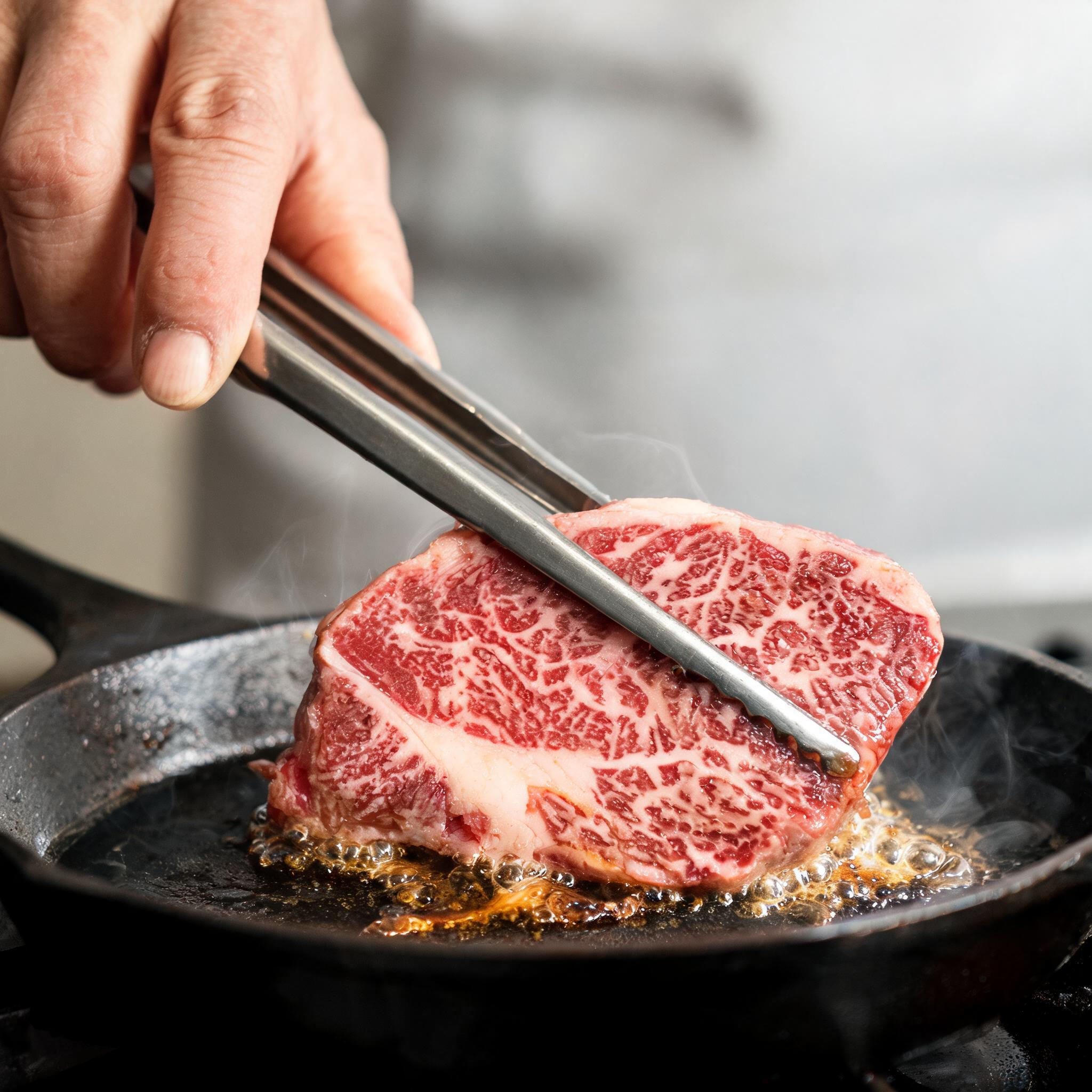
The five most common A5 wagyu mistakes are: searing on screaming-high heat instead of slow fat rendering, adding cooking oil to the pan, ordering medium well, over-portioning beyond 150 g per person, and treating A5 like a Western steakhouse cut. Every one of them wastes the BMS 8–12 marbling you paid a premium for.
Mistake 1: high heat from the start — kills the slow render
- Full-blast heat scorches the surface fat before the interior warms, because wagyu fat already softens at 25°C.
- Fix: start low, let the fat pool, and raise the heat only as rendering builds — that's slow fat rendering in one sentence.
Mistake 2: adding oil to the pan
- Added oil dilutes the clean sweetness of wagyu fat and makes the finished steak greasy rather than rich.
- Fix: rub the pan with a cube of wagyu fat or the steak's own trimmed edge — no oil, ever.
Mistake 3: ordering medium well or beyond
- Medium well renders out most of the intramuscular fat, leaving a drier steak that tastes like ordinary beef at A5 prices.
- Fix: order rare to medium-rare, or switch to sukiyaki if you want fully cooked meat.
Mistake 4: ordering steakhouse-size portions
- Tourists often order 250–300 g per person and hit rich fatigue halfway through — roughly left uneaten per portion.
- Fix: cap at 100–150 g per person and fill the rest of the meal with seafood courses.
Mistake 5: skipping the resting step
- Cutting immediately lets the just-melted fat run onto the plate instead of staying in the meat.
- Fix: rest the steak briefly off heat so the fat redistributes — patience is the cheapest upgrade in wagyu cooking.
คำถามที่พบบ่อย (FAQ)
This FAQ answers the questions diners in Bangkok search most about Miyazaki Wagyu A5 in 2026: ideal doneness, portion size, price expectations, sukiyaki availability, the sirloin-vs-ribeye choice, and how to book a table near BTS Asok via LINE or phone.
What doneness is best for Miyazaki Wagyu A5 sirloin?
Rare to medium-rare is best for Miyazaki Wagyu A5 sirloin, because its fat melts at roughly 25°C and prolonged heat renders it away. Medium well leaves the steak drier and wastes the BMS 8–12 marbling that makes A5 worth its price in the first place.
How many grams of A5 wagyu should one person order?
100–150 g per person is the sweet spot for A5 wagyu. The intense marbling saturates the palate quickly, so smaller wagyu portions paired with seafood courses — king crab, uni, sushi — deliver a better overall meal than one oversized steakhouse-style cut.
How much does Miyazaki A5 wagyu cost in Bangkok?
Miyazaki A5 wagyu pricing in Bangkok varies by cut and portion weight:. Premium beef prices shift with import costs, so confirm current pricing directly via LINE @tarabaprime before you book.
Where can I eat A5 wagyu and live king crab in the same meal in Bangkok?
Taraba Prime on Sukhumvit Soi 20 serves slow-seared Miyazaki Wagyu A5 alongside live Taraba king crab — prepared as sashimi, steak or nabe — plus uni and otoro flown in from Japan daily. The restaurant is a 5-minute walk from BTS Asok.
Should I sear and baste A5 wagyu, or just sear it?
Just sear A5 wagyu — slowly. Bring the pan up gently, render a cube of wagyu fat as your only cooking oil, and sear each side briefly before resting. Butter-basting is unnecessary for A5, because the beef's own melting fat already provides all the richness.
Is sirloin or ribeye better for a first A5 wagyu experience?
Sirloin is the better first A5 cut: its cleaner marbling and slow-rendered sweetness are easier to finish across a full portion. Ribeye is denser and richer, suiting diners who already know they want maximum fat intensity in a smaller 100 g serving.
How do I book a table at a Japanese fine dining restaurant near BTS Asok?
Reserve Taraba Prime via LINE @tarabaprime or call 094-456-1124. The restaurant sits on Sukhumvit Soi 20, a 5-minute walk from BTS Asok, and the bilingual TH/EN/JP menu makes ordering easy for foreign visitors — book a day ahead for dinner.