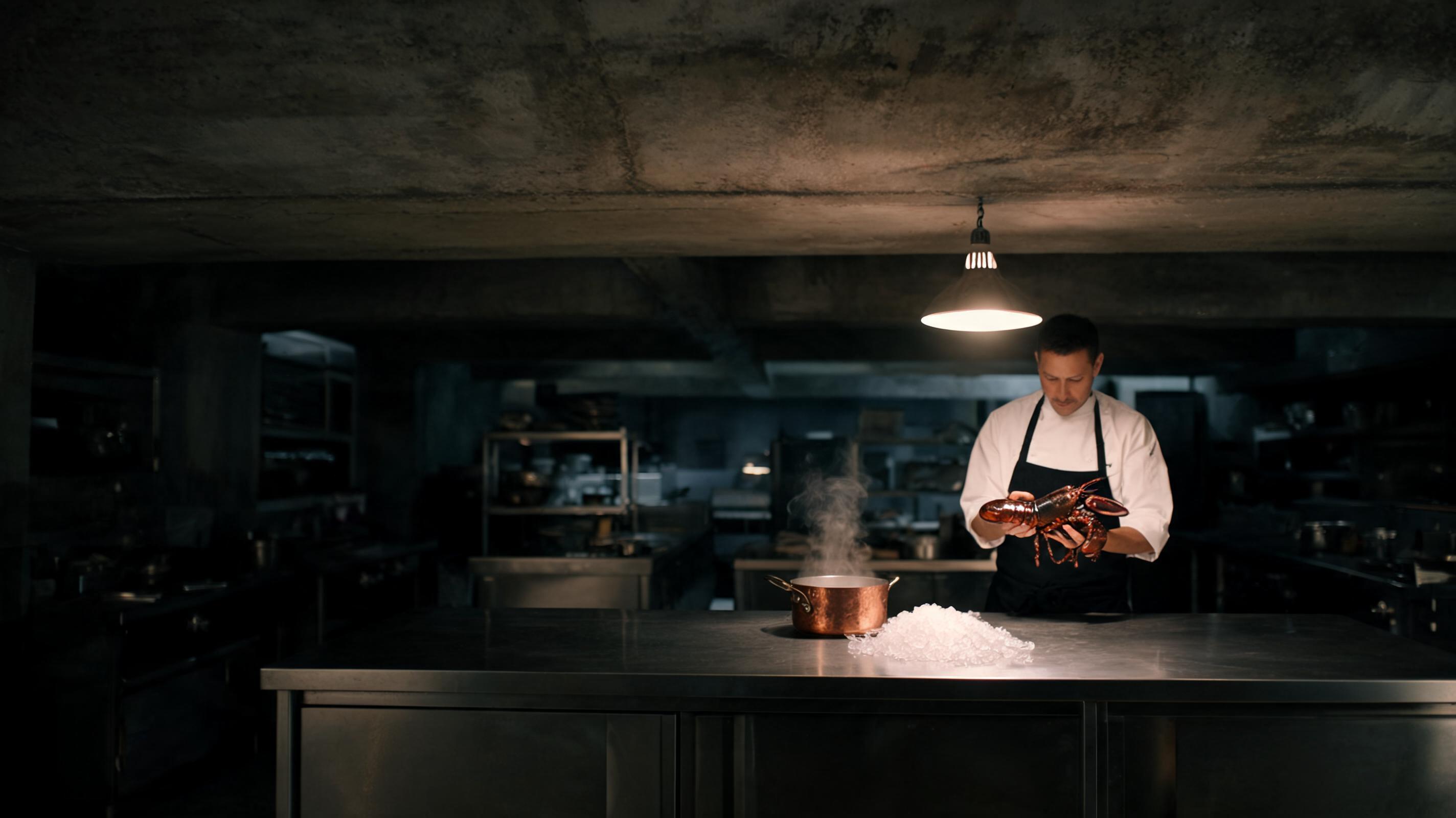
The best lobster restaurant Bangkok picks for 2026 fall into two camps: casual wild-caught Atlantic lobster at Burger & Lobster Bangkok in Gaysorn Village, and premium Japanese seafood at Taraba Prime on Sukhumvit Soi 20, where live Taraba king crab, fresh lobster and daily-flown sushi sit a 5-minute walk from BTS Asok. Your budget and how you plan to get there decide which one fits.
Key points at a glance (updated 2026):
- Cheapest whole lobster: T&K Seafood in Yaowarat grills lobster from ฿1,000 (source: Bangkok Menu, 2025).
- Biggest splurge: Summer Palace's 3 kg Typhoon Shelter Lobster Mountain costs THB 8,600 net, only 1 Apr–30 Jun 2026 (source: Thai PR, 2026).
- Market-price billing: Lord Jim's at Mandarin Oriental Bangkok bills Canadian (650 g) and Boston (1+ kg) lobster at daily price (source: Mandarin Oriental Bangkok, 2026).
- Live king crab, Japanese style: Taraba Prime is the only venue here serving live Taraba king crab as sashimi, steak and nabe.
- Freshness test: ask to see the live tank first; frozen lobster at premium prices is the top tourist complaint.
Best Lobster & Japanese Seafood Restaurants in Bangkok 2026: Quick Answer
The best lobster restaurant Bangkok options in 2026 range from casual Atlantic-lobster spots like Burger & Lobster Bangkok at Gaysorn Village to premium Japanese seafood venues serving live Taraba king crab, fresh lobster and omakase near BTS Asok, such as Taraba Prime on Sukhumvit Soi 20. Budget and transport decide which suits your trip.
Burger & Lobster Bangkok opens 11:00am–11:00pm at Gaysorn Village, 999 Phloen Chit Rd, and serves wild-caught Atlantic lobster daily (source: Burger & Lobster, 2026). It is the safest pick for a quick lobster roll or a whole steamed lobster with no dress code.
Taraba Prime is the Japanese end of the spectrum. The restaurant sits on Sukhumvit Soi 20, a 5-minute walk from BTS Asok, and builds its menu around a live seawater tank of Taraba king crab and lobster plus sushi flown in from Japan daily. Taraba king crab is the red king crab (tarabagani) prized for thick, sweet leg meat.
What counts as a 'premium' seafood restaurant in Bangkok
A premium seafood restaurant in Bangkok shows you the live tank, states prices clearly as net or plus charges, and sources named-origin product such as Boston lobster, Canadian lobster or Taraba king crab. Hotel dining rooms, Japanese specialists and a few Chinatown institutions clear that bar. Most tourist-strip "seafood" signs do not.
From what diners tell us most often, the gap between a ฿1,000 lobster and a ฿5,000 lobster is rarely the animal. You pay for live storage, chilled logistics from Japan or North America, a chef who can cut sashimi, and a table you can actually book on a Saturday night.
Casual lobster vs fine-dining Japanese seafood
Casual lobster in Bangkok means a fixed-price menu, walk-in seating and Western cooking: grilled, steamed or in a roll. Fine-dining Japanese seafood means tank selection by weight, raw dishes like sashimi and otoro, reservations, and pricing that shifts with the day's catch. Otoro is fatty tuna belly; uni is sea urchin.
- Choose casual when you are with kids, short on time, or want a predictable bill — Burger & Lobster Bangkok fits.
- Choose Japanese fine dining when the lobster or king crab is the main event and you want it raw — Taraba Prime fits.
- Choose a hotel dining room like Lord Jim's at Mandarin Oriental Bangkok when the riverside setting matters as much as the plate.
Lobster Restaurant Bangkok: Price & Style Comparison Table
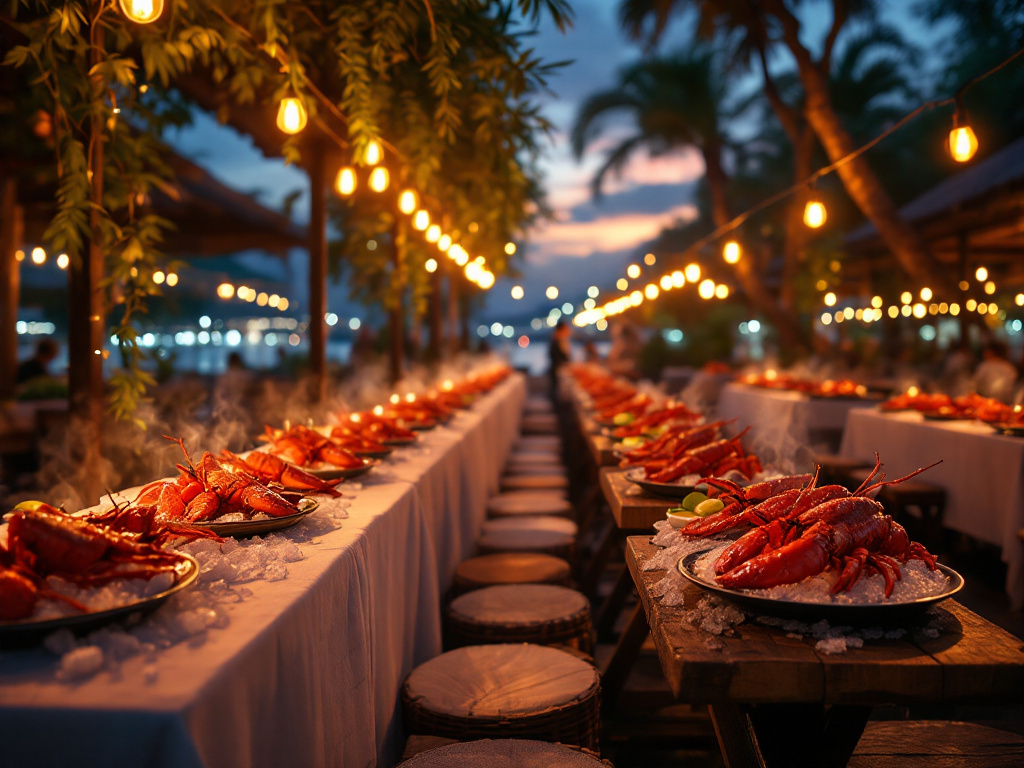
Lobster restaurant Bangkok prices span a wide range in 2026: T&K Seafood grills lobster from about ฿1,000, Summer Palace offers a 3 kg lobster mountain at THB 8,600 net, and Lord Jim's serves whole Canadian and Boston lobster at daily market price. The table below puts every venue side by side before you book.
| Venue & area | Lobster / crab & style | Price (2026) |
|---|---|---|
| Taraba Prime — Sukhumvit Soi 20 (BTS Asok, 5-min walk) | Live Taraba king crab, fresh lobster; sashimi, steak, nabe | |
| Burger & Lobster Bangkok — Gaysorn Village (BTS Chit Lom) | Wild-caught Atlantic lobster; grilled, steamed, roll | |
| T&K Seafood — Yaowarat (MRT Wat Mangkon) | Grilled lobster; stir-fried garlic & pepper | ฿1,000 / ฿1,050 (Bangkok Menu, 2025) |
| Summer Palace — (BTS Chit Lom) | 3 kg Typhoon Shelter Lobster Mountain, Cantonese | THB 8,600 net, 1 Apr–30 Jun 2026 (Thai PR, 2026) |
| Lord Jim's — Mandarin Oriental Bangkok (BTS Saphan Taksin + boat) | Canadian 650 g / Boston 1+ kg, a la carte | Daily price (Mandarin Oriental, 2026) |
| Mae Mungkorn Seafood Buffet — | Buffet incl. 1 lobster/person | ฿1,499/person, 11:30–21:00 (Trip.com, 2026) |
| The Seafood Cafe & Restaurant — | Buffet incl. 1 lobster/person | ฿2,200/person; tiers 1,700 / 1,400 (Trip.com, 2026) |
Quick read: Under ฿1,500 buys Chinatown grilling or a buffet lobster. ฿2,000–3,000 gets a Western whole lobster at a mall, or a top-tier buffet. Above that, you pay for live tank, Japanese cuts, or a five-star river view. Compare the full live Taraba king crab menu before you decide.
Buffet lobster vs a la carte lobster
Buffet lobster in Bangkok, such as Mae Mungkorn Seafood Buffet at ฿1,499 per person or The Seafood Cafe & Restaurant at ฿2,200 per person, usually includes one lobster per diner plus unlimited other seafood (source: Trip.com, 2026). A la carte lobster at Lord Jim's or Taraba Prime is priced per animal or by weight.
- Buffet pros: fixed bill, no market-price surprise, plenty of prawns and shellfish.
- Buffet cons: the included lobster is small, often precooked or frozen; not sashimi-grade.
- A la carte pros: you choose the size, watch it leave the tank, and pick the cooking.
- A la carte cons: the total is known only after weighing; a 1 kg Boston costs far more than a 650 g Canadian.
Understanding 'daily/market price' billing
Daily price on a Bangkok lobster menu means the restaurant bills the lobster at that day's wholesale rate multiplied by weight, not a printed fixed price. Lord Jim's at Mandarin Oriental Bangkok lists both Canadian lobster (650 g) and Boston lobster (1+ kg) this way (source: Mandarin Oriental Bangkok, 2026).
One habit saves money. Ask for the price per 100 g today and the weight they propose, then do the maths before you agree. Good venues bring the live animal on a scale to your table. That is a positive sign, not a sales trick.
Net price vs +service charge and VAT
Net price in Thailand already includes the 10% service charge and 7% VAT. A price marked "++" does not, so the bill rises by roughly 17.7%. Summer Palace's THB 8,600 net lobster mountain is a true final figure (source: Thai PR, 2026); many hotel menus quote "++" instead.
A quick example: a ฿5,000++ lobster lands near ฿5,885 on the bill. Ask "is that net?" before ordering. The answer is a one-word test of how transparent the restaurant is.
Where to Eat Live King Crab in Bangkok
To eat live king crab in Bangkok, choose venues with a live seawater tank. Japanese seafood specialists like Taraba Prime on Sukhumvit Soi 20 serve live Taraba king crab as sashimi, steak and nabe, a preparation general seafood restaurants rarely offer because they buy frozen legs.
Taraba king crab is the red king crab (tarabagani), prized in Japanese cuisine for thick, sweet leg meat served live as sashimi, steak or nabe hot pot. Most "king crab" in Bangkok arrives frozen from Alaska or Russia and is steamed whole. Live Taraba handled Japanese-style is a different product in a different price bracket.
Taraba Prime specialises in exactly this: crab picked from the tank, weighed in front of you, then split across courses so one animal becomes a raw, a grilled and a hot-pot dish. Check the live Taraba king crab menu for current preparations.
Live tank vs frozen king crab: how to tell
Live king crab in Bangkok shows a visible chilled seawater tank, legs that move when lifted, and pricing per 100 g or per kilogram rather than per fixed portion. Frozen king crab is sold by the leg or cluster, often pre-scored, and cannot be served as sashimi. A restaurant proud of its tank will show it on request.
- Ask to see the tank. A refusal is your answer.
- Ask for sashimi. Only live or ultra-fresh crab can be served raw; a "no" means frozen.
- Look at the shell. Live Taraba is deep red-brown with intact spines; thawed legs look dull and weep water.
- Check the pricing unit. Per-weight pricing almost always signals live stock.
King crab sashimi, steak, and nabe explained
King crab sashimi is raw leg meat from a live Taraba king crab, chilled so the flesh curls into translucent, sweet, almost custard-like petals. King crab steak is the leg split lengthwise and seared with butter. Nabe simmers the shell, knuckles and body in dashi as a hot pot.
The classic order at a Japanese specialist is all three from one crab. Legs go to sashimi and steak; the body and shell make the broth. Nothing is wasted, and you taste the same animal three ways. That is why live Taraba costs more than frozen legs, and why most first-timers find it worth it.
Best Premium Sushi & Omakase Near BTS Asok
The best sushi and omakase near BTS Asok centre on Sukhumvit, where Taraba Prime on Soi 20 serves dry-aged sushi sets, otoro, uni and chirashi with fish flown from Japan daily, all within a 5-minute walk of the station for tourists without a car. Omakase is a chef's-choice tasting course.
Omakase is a Japanese dining format where the chef selects and serves a sequence of premium seasonal dishes at their discretion. In Bangkok the word covers a 10-piece counter set through a two-hour tasting. The constant: you pay a fixed price and trust the chef.
Taraba Prime's signatures are otoro (fatty tuna belly), uni (sea urchin), dry-aged sushi sets, chirashi bowls and a foie gras unagi don, backed by a bilingual TH/EN/JP menu. Browse the premium omakase sushi sets so you can pick a course length that fits your evening.
What to expect in a premium omakase set
A premium omakase set in Bangkok runs 12–20 courses over 90–120 minutes, opening with lighter white fish, building through otoro and uni, then closing with a hand roll, soup and a small dessert. At Taraba Prime the set can pull from the live tank, so king crab or lobster may appear mid-course.
- Arrive on time; counter omakase starts as a group and latecomers miss courses.
- Flag allergies and dislikes at the first course, not the tenth.
- Wasabi and soy are already applied; taste before adding more.
- Photos are fine at most Sukhumvit counters, but no flash.
Daily flown-in fish and why freshness matters
Daily flown-in fish means the tuna, uni and seasonal catch left a Japanese market such as Toyosu that morning and reached the Bangkok kitchen by evening, holding the cold chain under 24 hours. Freshness matters most for uni and otoro, which lose sweetness and turn metallic within days.
Dry-aged sushi works the other way. The chef holds certain fish two to seven days under controlled conditions to concentrate flavour and soften texture. Both depend on knowing exactly when the fish arrived. That is why a specialist with daily deliveries can offer both, and a general restaurant usually cannot.
A5 Miyazaki Wagyu & Premium Seafood in Sukhumvit for Tourists
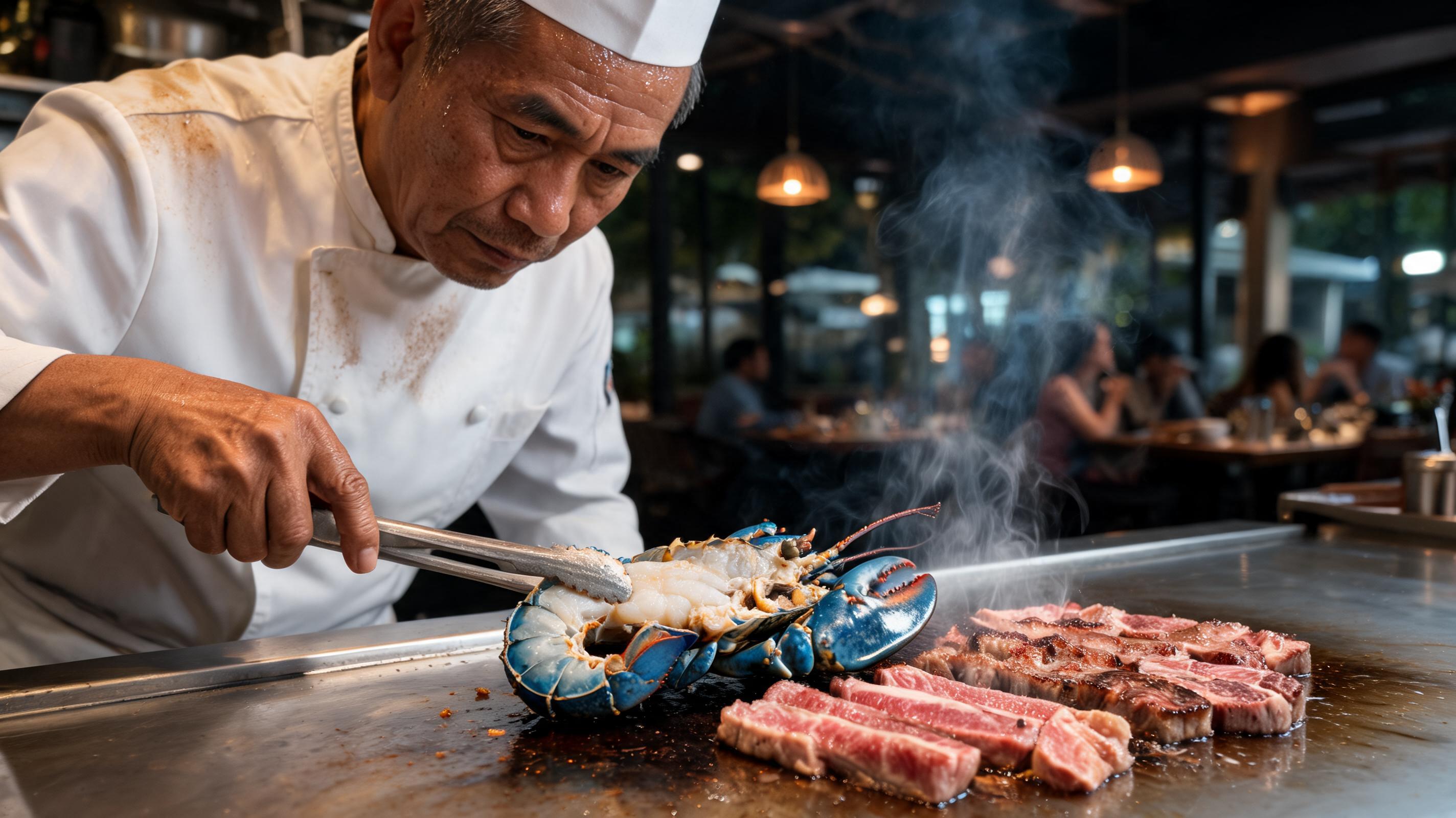
An A5 wagyu restaurant Sukhumvit search points to venues pairing top-grade beef with premium seafood. Taraba Prime serves Miyazaki A5 wagyu alongside live king crab and lobster, letting tourists combine Japanese beef and seafood in one meal near BTS Asok. Options include seared steak and sukiyaki-style.
A5 wagyu is the highest Japanese beef grade, denoting maximum yield (A) and top marbling and quality score (5), with Miyazaki a renowned A5 prefecture brand. Miyazaki has taken top prize at Japan's national Wagyu Olympics several times, which is why the name reads as a badge, not just an origin.
The appeal for visitors is combining the two. A Taraba Prime evening might open with king crab sashimi, move to a few pieces of otoro, then finish with 100–150 g of seared A5. See the Miyazaki A5 wagyu dishes for the cuts currently offered.
A5 Miyazaki wagyu grades explained (BMS 8–12)
A5 Miyazaki wagyu is scored further on the Japanese Beef Marbling Standard (BMS) from 8 to 12, with BMS 8–9 most common on Bangkok menus and BMS 10+ a rarer, richer tier. A5 guarantees the top grade; the BMS number tells you how deep into that grade the cut sits.
- BMS 8–9: heavy marbling, buttery but still tastes of beef. Best for steak.
- BMS 10–12: nearly white with fat; a few slices are enough. Best thin-sliced for sukiyaki.
- Ribeye vs sirloin: ribeye is fattier and forgiving on a hot plate; sirloin is leaner and cleaner in sukiyaki.
Wagyu sukiyaki and shabu vs seared steak
Wagyu sukiyaki cooks thin A5 slices in a sweet soy-mirin broth dipped in raw egg. Shabu swishes the same slices in light dashi. Seared steak cooks a thick cut hot and fast for a crust. Sukiyaki suits the fattiest BMS 10+ beef; steak suits BMS 8–9.
For a table sharing seafood, sukiyaki or shabu fits more easily, since the broth doubles as a final course after the crab. Order steak when the wagyu is the centrepiece and you want it medium-rare with nothing but salt.
Best Authentic High-End Japanese Restaurants in Bangkok for Foreign Visitors
Foreign visitors seeking authentic high-end Japanese dining in Bangkok should prioritise restaurants with bilingual menus, live seafood tanks and central BTS access. Taraba Prime meets all three: a TH/EN/JP menu, English-friendly service, and a spot on Sukhumvit Soi 20 built for tourists around Asok.
Taraba Prime is designed for one type of guest: someone in a Sukhumvit hotel who wants a single memorable Japanese seafood dinner without a taxi across town. Book by phone at 094-456-1124 or LINE @tarabaprime, and walk about five minutes from BTS Asok. Directions are on the how to find us near BTS Asok page.
Honest trade-off: a Japanese specialist is not the place for Thai chilli crab or a cheap platter. Come for king crab, lobster, sushi and wagyu done the Japanese way. Head to Chinatown for garlic-pepper lobster at ฿1,050 instead.
Why a bilingual menu matters for tourists
A bilingual menu at a Bangkok Japanese restaurant lets a foreign visitor confirm the fish species, origin, weight unit and whether prices are net, which removes most "surprise bill" risk. Taraba Prime's TH/EN/JP menu also lets Japanese guests check that names like tarabagani and otoro are used correctly.
The mistake we see most is tourists pointing at photos on a Thai-only menu, then meeting per-100 g pricing only at the bill. A clear English menu that states the pricing unit protects both you and the restaurant.
How to reserve via LINE or phone
Reserving at Taraba Prime takes two minutes: message LINE @tarabaprime with date, time, party size and any request such as king crab or omakase, or call 094-456-1124 during opening hours. You can also reserve a table via LINE from this page.
- Add @tarabaprime on LINE — international numbers work; download the app if needed.
- Send date, time, guest count, and counter or table.
- Mention live king crab or a specific omakase length so stock is held.
- Save the confirmation message to show at the door.
Common Mistakes When Booking a Lobster Restaurant in Bangkok
Tourists booking a lobster restaurant in Bangkok should confirm whether lobster is live or frozen, check whether prices are net or add service charge plus VAT, verify daily or market pricing before ordering, and reserve ahead for seasonal menus. Each check takes under a minute and saves real money.
- Confirm live vs frozen before you sit. Ask to see the tank; no tank means frozen — price accordingly.
- Ask whether the price is net. A "++" price adds roughly 17.7% for 10% service and 7% VAT.
- Get the daily price on the scale. Lord Jim's lists lobster at daily price, so confirm cost first (source: Mandarin Oriental Bangkok, 2026).
- Check seasonal dates. Summer Palace's lobster mountain runs only 1 Apr–30 Jun 2026 (source: Thai PR, 2026); July is too late.
- Book premium venues 2–3 days ahead, and a week ahead for Friday and Saturday counter seats.
- Weigh the buffet trade-off. One included lobster at ฿1,499–2,200/person pays off only if you eat the rest of the spread.
- Don't judge by the sign. "Fresh seafood" on a tourist strip is marketing; a scale and a tank are evidence.
Disclaimer: prices and hours are current at the time of writing (2026) and set by each restaurant; confirm directly before booking, as market-price and seasonal items change.
Live vs frozen: ask to see the tank
Live lobster and king crab in Bangkok are kept in chilled seawater tanks that staff will show on request, and the animals move when lifted. Frozen product is stored out of sight, pre-portioned, and can only be served cooked. A restaurant that hesitates when you ask to see the tank has already answered your question.
Net price vs +10% service +7% VAT
Net price in Bangkok restaurants includes the 10% service charge and 7% VAT; a "++" price excludes both and raises the total by about 17.7%. On a ฿8,000 lobster dinner that difference is roughly ฿1,400. Ask before ordering, not at the bill.
Seasonal menus and reservation timing
Seasonal lobster menus in Bangkok run for fixed windows, such as Summer Palace's 1 Apr–30 Jun 2026 promotion (source: Thai PR, 2026), and live king crab stock at specialists like Taraba Prime depends on that week's shipments. Reserve 2–3 days ahead midweek and up to a week ahead for weekends, naming the item you want.
คำถามที่พบบ่อย (Frequently Asked Questions)
Common questions about lobster and Japanese seafood restaurants in Bangkok cover pricing, live king crab availability, the best areas near BTS Asok, and how to reserve premium venues such as Taraba Prime and Burger & Lobster Bangkok.
Where can I eat live king crab in Bangkok?
For live king crab in Bangkok, choose Japanese seafood specialists with a live tank. Taraba Prime on Sukhumvit Soi 20 serves live Taraba king crab as sashimi, steak and nabe, a 5-minute walk from BTS Asok. General seafood restaurants usually serve frozen legs, which cannot be prepared raw.
How much does lobster cost at Bangkok restaurants?
Lobster prices vary widely: T&K Seafood grills lobster from ฿1,000 (source: Bangkok Menu, 2025), while Lord Jim's at Mandarin Oriental Bangkok serves Boston and Canadian lobster at daily market price, and Summer Palace offers a 3 kg lobster set at THB 8,600 net (source: Thai PR, 2026). Buffets run ฿1,499–2,200 per person.
What is the best sushi and omakase near BTS Asok?
Premium sushi and omakase near BTS Asok sit along Sukhumvit. Taraba Prime on Soi 20 serves dry-aged sushi sets, otoro, uni and chirashi with fish flown in from Japan daily, within a 5-minute walk of the station. The bilingual TH/EN/JP menu makes it a practical choice for foreign visitors.
Is Burger & Lobster in Bangkok open every day?
Yes. Burger & Lobster Bangkok at Gaysorn Village, 999 Phloen Chit Rd, opens daily 11:00am–11:00pm and takes reservations at (+66) 092 982 4246 or (+66) 02 656 1111 (source: Burger & Lobster, 2026). The nearest skytrain stop is BTS Chit Lom.
Which Bangkok restaurant serves A5 Miyazaki wagyu with seafood?
Taraba Prime on Sukhumvit Soi 20 serves Miyazaki A5 wagyu alongside live king crab, fresh lobster and premium sushi, letting diners combine top-grade Japanese beef and seafood in one meal near BTS Asok. Seared steak and sukiyaki-style options are available.
Do I need a reservation for premium seafood restaurants in Bangkok?
Reservations are recommended for premium seafood and omakase venues, especially seasonal lobster menus and weekend counter seats. You can book Taraba Prime by phone at 094-456-1124 or via LINE @tarabaprime. Mention live king crab or a specific omakase length so stock is held for you.
What does 'daily price' mean on a lobster menu?
Daily price means the lobster is billed at that day's market rate multiplied by weight, not a fixed menu figure. Always confirm the current cost per 100 g before ordering, as seen on the a la carte menu at Lord Jim's at Mandarin Oriental Bangkok (source: Mandarin Oriental Bangkok, 2026).