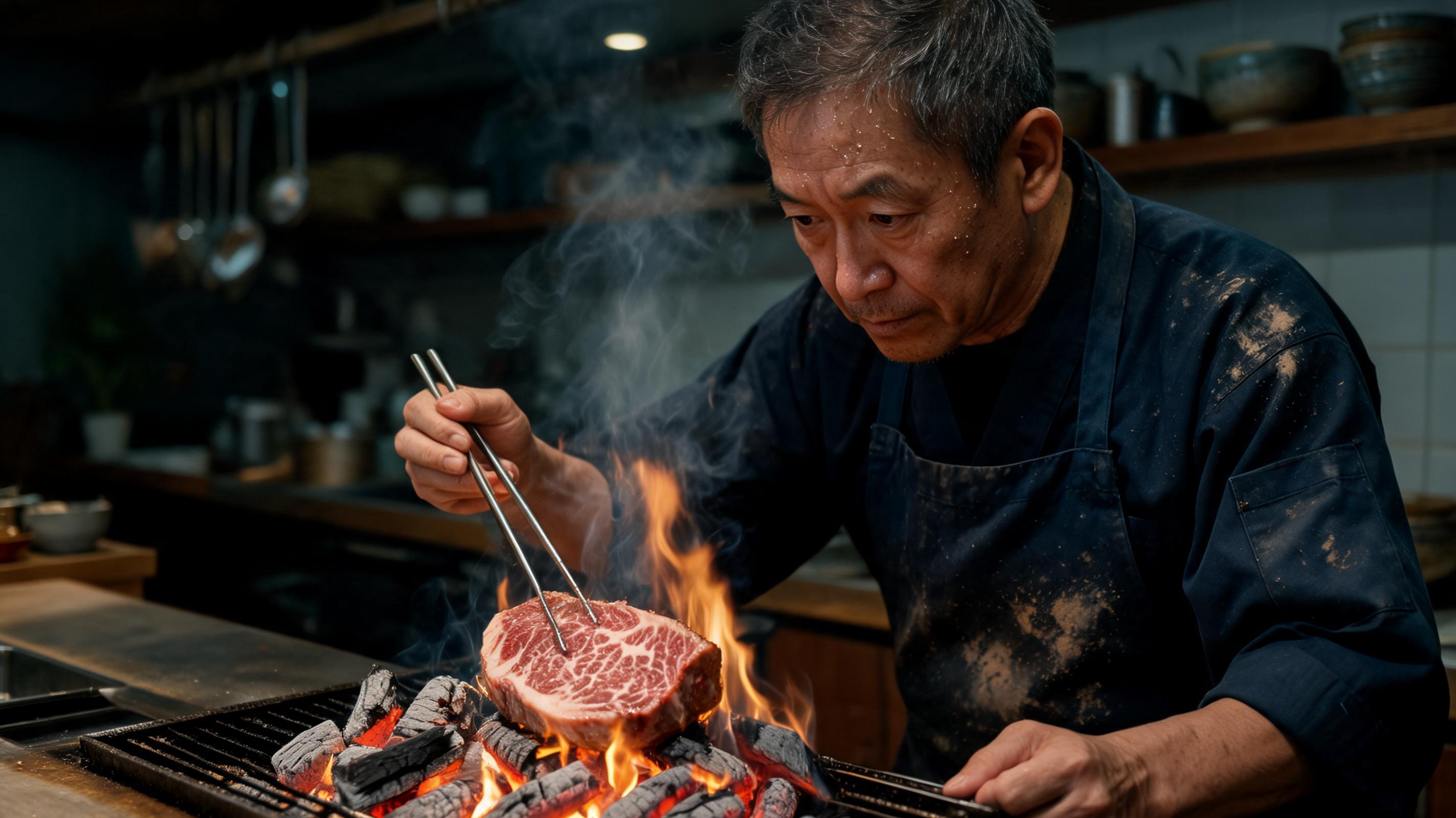
Miyazaki A5 Wagyu is beef from purebred Japanese Black (Kuroge Washu) cattle raised and certified in Miyazaki Prefecture, Japan, graded A5 (BMS 8–12) — the country's highest tier. In Bangkok, travelers can eat certified Miyazaki A5 Wagyu together with live king crab, uni and otoro at Taraba Prime, a 5-minute walk from BTS Asok on Sukhumvit Soi 20. This guide — updated for 2026 — covers grading, authenticity checks, cooking styles and real prices in THB.
- A5 (BMS 8–12) is the top score under Japan's JMGA grading system: yield grade A plus a perfect quality score of 5 for marbling, color, firmness and fat quality.
- Miyazaki Wagyu won Japan's "Wagyu Olympics" — held once every 5 years — in 2007, 2012 and 2017, more titles in that span than any other region.
- A5 wagyu fat begins melting at roughly 25°C, so rare–medium-rare searing, sukiyaki and shabu shabu are the recommended styles — never medium well.
- Authentic Miyazaki A5 Wagyu is verifiable with a JMGA grading certificate, the official Miyazakigyu seal, and a 10-digit cattle ID traceable on Japan's national database (nlbc.go.jp).
- The recommended A5 portion is 100–150g per person; typical Bangkok prices run around.
What Is Miyazaki A5 Wagyu — and Why Do Bangkok's Best Japanese Restaurants Serve It?
Miyazaki A5 Wagyu is beef from purebred Japanese Black (Kuroge Washu) cattle raised and certified in Miyazaki Prefecture, southern Japan, that earned the A5 grade — yield grade A plus quality score 5, with a Beef Marbling Standard of 8–12. Miyazaki won Japan's national Wagyu Olympics in 2007, 2012 and 2017, placing it alongside, and often above, Kobe beef.
Only cattle born, raised and certified within Miyazaki Prefecture can carry the official Miyazakigyu brand name. That regional certification is why serious Japanese restaurants in Bangkok label the prefecture on the menu — not just a vague "Japanese wagyu."
How Japan's JMGA grading system works (A1–A5 explained)
A5 grade is the highest score under the JMGA (Japanese Meat Grading Association) system. The letter (A–C) measures yield — how much usable meat the carcass produces — while the number (1–5) scores quality: marbling, meat color, firmness and fat quality. A5 means top marks in both categories at once.
BMS (Beef Marbling Standard) is the marbling scale inside that quality score, running from 1 to 12. To qualify as A5, beef must score BMS 8–12 — the dense "snowflake" pattern of intramuscular fat you see in premium wagyu photos. A BMS 12 ribeye looks almost more white than red.
Grain-fed finishing and why it creates snowflake marbling
Grain-fed finishing means Miyazaki cattle spend an extended fattening period on a grain-based diet, which builds fine intramuscular fat instead of the leaner profile of grass-fed beef. The payoff is sweet, low-melting-point fat that dissolves on the tongue — the defining sensation of A5 (BMS 8–12) beef.
Miyazaki vs Kobe vs other A5 wagyu: awards and flavor profile
Miyazaki Wagyu and Kobe beef both come from Kuroge Washu cattle, but their track records differ. At the Zenkoku Wagyu Noryoku Kyoshinkai — the "Wagyu Olympics" held once every 5 years — Miyazaki took top honors in 2007, 2012 and 2017, a winning run no other region matched in that period.
- Miyazaki: multiple Wagyu Olympics titles, balanced sweetness, typically better value than Kobe at the same A5 grade.
- Kobe: the most famous name internationally, strict local certification, priced with a significant brand premium.
- Other A5 regions (Kagoshima, Akita and more): excellent beef, but fewer national titles and less consistent availability in Bangkok.
Quick take: if you want award-proven A5 quality without paying Kobe's brand markup, Miyazaki A5 Wagyu is the smart order.
How to Verify You're Eating Real Miyazaki A5 Wagyu in Bangkok
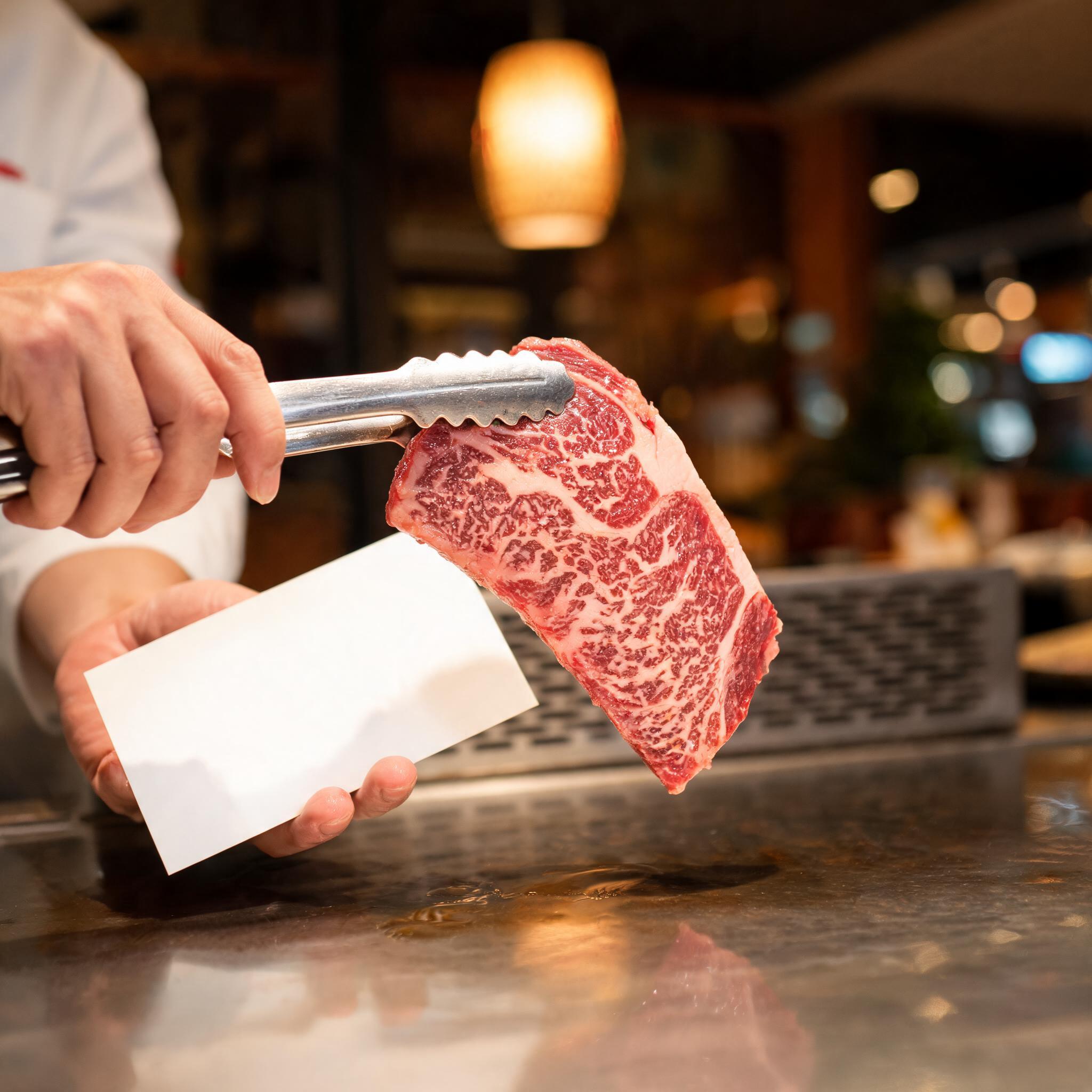
Real Miyazaki A5 Wagyu can be verified through three things: the JMGA grading certificate showing the A5 score, the official Miyazakigyu brand seal, and a 10-digit individual cattle ID traceable on Japan's national beef traceability database, run by the National Livestock Breeding Center (nlbc.go.jp). Reputable Bangkok restaurants will show all three on request.
This matters because "wagyu" is one of the most abused words on Bangkok menus. From cases we see repeatedly, some restaurants serve crossbred Australian wagyu — or unlabeled "Japanese-style beef" — at genuine A5 prices. Run this checklist before you order:
3 documents to ask for before you order
- Ask for the JMGA grading certificate. A genuine certificate states the grade (A5), the BMS score, the processing facility and the grading date — not just a printed logo on the menu cover.
- Check the 10-digit individual cattle ID. Every Japanese-born cow carries a unique 10-digit number you can look up yourself on Japan's national traceability system (nlbc.go.jp) to confirm birthplace and breed.
- Look for the official Miyazakigyu seal. Miyazaki Prefecture issues its own brand certification; beef sold as "Miyazaki" without it is, at best, generic Japanese wagyu. At Taraba Prime, staff can present with each shipment's documentation.
Red flags: "wagyu-style" and unlabeled "Japanese beef"
Red flags for fake A5 wagyu include menus that say "wagyu-style", "wagyu blend" or "Japanese beef" with no prefecture, grade or BMS number; prices far below market (genuine A5 imports cannot be cheap); and staff who cannot say where the beef comes from. A restaurant proud of its sourcing answers in ten seconds.
Pro tip: spend 30 seconds asking "Which prefecture, and what grade?" before ordering. Any premium Japanese restaurant serving real A5 welcomes the question — hesitation is your answer. You can also ask about sourcing in advance when you message Taraba Prime before booking.
Best Ways to Eat A5 Wagyu: Steak vs Sukiyaki vs Shabu Shabu vs Aburi Sushi (Comparison Table)
A5 wagyu suits quick, high-heat or hot-broth cooking because its intramuscular fat melts at roughly 25°C. Ribeye is best seared rare to medium-rare for steak lovers; sirloin shines thin-sliced in sukiyaki's sweet soy broth; shabu shabu highlights pure fat sweetness; and aburi (seared) sushi delivers one-bite luxury over rice.
| Style | Best cut | Doneness / cook time | Best for |
|---|---|---|---|
| Ribeye steak (portion cut) | Ribeye | Rare–medium-rare, quick hard sear | Beef-forward, caramelized-crust lovers |
| Sukiyaki | Sirloin, sliced ~1.5–2 mm | Seconds in sweet soy broth | First-timers; maximum melt-in-mouth |
| Shabu shabu | Thin-sliced sirloin | A brief swish in clear broth | Pure fat sweetness, lighter meal |
| Aburi sushi | Sirloin over rice | Torch-seared surface only | One-bite luxury in a sushi course |
At Taraba Prime, Miyazaki A5 Wagyu is served across several of these styles, so a table of two can compare seared and hot-pot preparations in a single dinner.
Ribeye (portion cut) vs sirloin: which cut for which cooking style
Ribeye carries the deepest marbling and richest fat cap, making it the classic choice for a seared steak portion — the crust adds roasted, nutty contrast to the melting interior. Sirloin is slightly firmer with cleaner sweetness, which is exactly why Japanese kitchens slice it thin for sukiyaki and shabu shabu.
Why slow-searing sirloin renders fat without losing juiciness
Slow-searing A5 sirloin — moderate heat, frequent turning — lets surface fat render and baste the meat while the center stays below the point where marbling escapes. Because A5 fat melts from around 25°C, even gentle heat creates that liquid-butter texture; aggressive, prolonged heat simply drains it into the pan.
Sukiyaki and shabu shabu: the traditional Japanese way to enjoy BMS 10+ beef
A5 wagyu sukiyaki is how Japan traditionally serves ultra-marbled beef: slices around 1.5–2 mm thin, cooked for seconds in warishita (sweet soy broth), then dipped in raw egg. Shabu shabu does the same in clear kombu broth. Both let BMS 10+ fat melt fully with zero doneness risk — often a smarter order in Bangkok than wagyu steak.
Should You Order A5 Wagyu Medium Well? Common Mistakes That Ruin Premium Wagyu
Ordering A5 wagyu medium well is the most common mistake tourists make in Bangkok steakhouses. Medium well means an internal temperature of roughly 65–68°C — hot enough to render out most of the BMS 8–12 marbling that defines the grade, leaving dry meat at a premium price. Chefs recommend rare to medium-rare, or thin-sliced hot-pot styles instead.
From repeat cases with first-time A5 diners, four mistakes come up again and again:
- Mistake 1: Ordering medium well or well done. A5 fat begins melting at ~25°C; by 65°C+ it has largely rendered into the pan. You paid for marbling, then cooked it away. Cannot eat pink beef? Order sukiyaki or shabu shabu — thin slices cook through in seconds while the fat melts into a broth you still eat.
- Mistake 2: Ordering a 300g steak like Western beef. A5 richness saturates the palate fast. The recommended portion is 100–150g per person — full enjoyment without fat fatigue, and it leaves budget for king crab or sushi in the same meal.
- Mistake 3: Drowning it in heavy sauces. The umami of A5 wagyu is the product; pepper sauce and heavy marinades mask it. Sea salt, fresh wasabi or a light soy dip is all it needs.
- Mistake 4: Skipping the grading certificate. Without verification, you cannot know whether your "A5" is genuine Miyazaki A5 Wagyu or a crossbred substitute. Ask before you order, every time.
Caution: some Bangkok steakhouses will cook A5 to medium well without pushing back. A restaurant that respects the product will gently recommend rare–medium-rare — read that as a good sign, not an upsell.
Where to Eat Miyazaki A5 Wagyu Near BTS Asok: Taraba Prime on Sukhumvit Soi 20
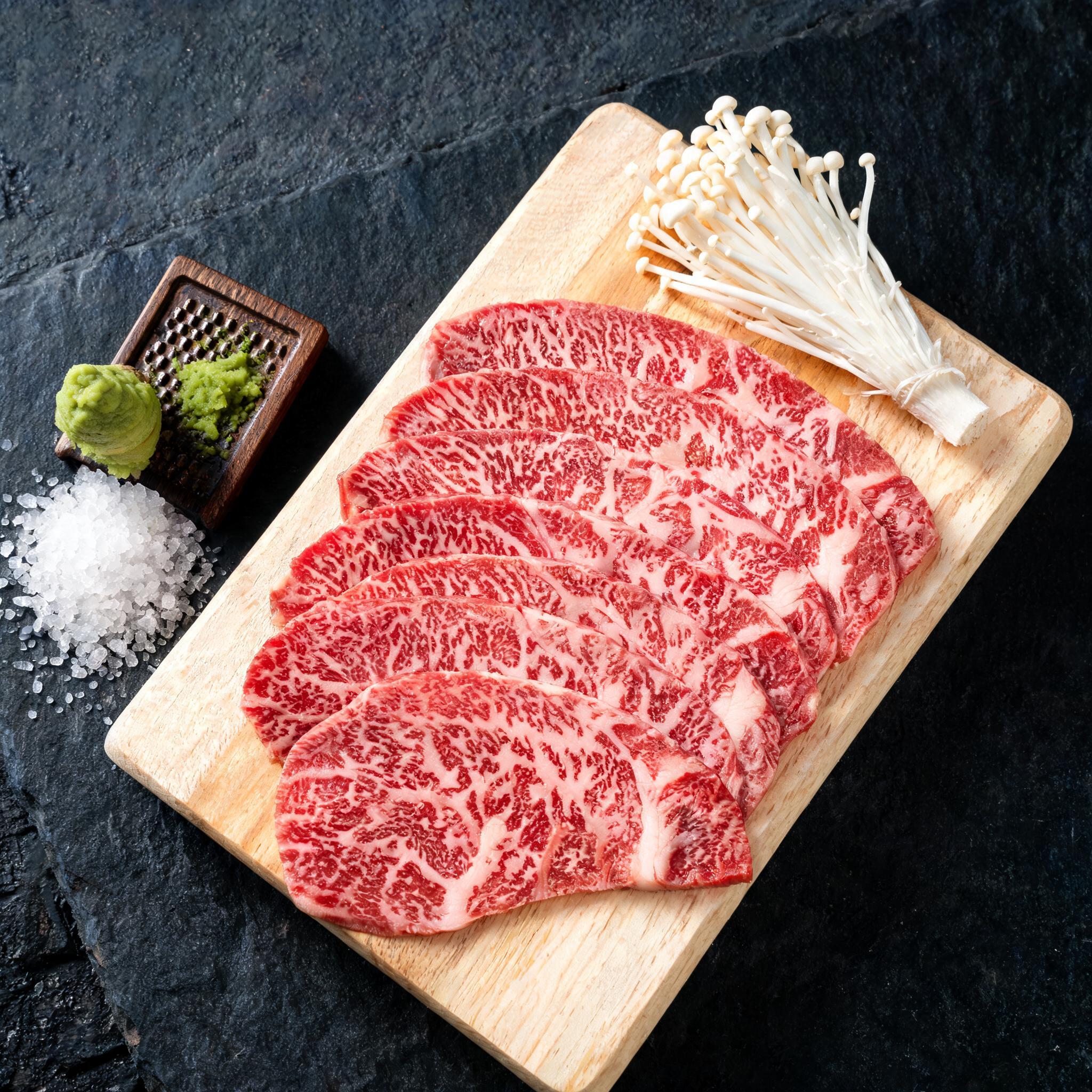
Taraba Prime is a premium Japanese seafood restaurant on Sukhumvit Soi 20, a 5-minute walk from BTS Asok, serving Miyazaki A5 Wagyu alongside live Taraba king crab, uni, otoro and dry-aged sushi flown in from Japan daily. The menu is trilingual (TH/EN/JP), built for foreign visitors staying around Sukhumvit.
For travelers, that solves the three usual pain points at once: authenticity you can verify at the table, an English menu with clear per-portion pricing, and a location you can walk to from most Asok–Phrom Phong hotels without a taxi.
How to get there from BTS Asok / MRT Sukhumvit (walking directions)
From BTS Asok (interchange with MRT Sukhumvit), exit toward Sukhumvit Road in the Phrom Phong direction, walk to Sukhumvit Soi 20, and turn into the soi — Taraba Prime is about 5 minutes on foot in total. See the full how to get to Taraba Prime from BTS Asok guide with a map and landmarks.
Signature order: Miyazaki A5 Wagyu + live king crab in one meal
The signature order at Taraba Prime combines Miyazaki A5 Wagyu with the live Taraba king crab menu (sashimi, steak, nabe) in a single dinner — a pairing most premium Japanese restaurants in Bangkok cannot offer under one roof. Add uni and otoro from the premium sushi & dry-aged sushi sets to cover Japan's three luxury pillars in one sitting.
Booking via LINE @tarabaprime or phone 094-456-1124
Booking Taraba Prime takes two minutes: call 094-456-1124 or message LINE @tarabaprime — English works on both channels. Because live king crab is prepared per booking, reserving a day ahead guarantees availability. You can reserve a table via LINE @tarabaprime in a couple of messages.
The Ultimate Bangkok Fine Dining Order: Pairing A5 Wagyu with Live King Crab, Uni and Otoro
A5 wagyu pairs naturally with premium Japanese seafood in one sitting: start with live Taraba king crab sashimi, follow with uni and otoro sushi, then finish with seared Miyazaki A5 Wagyu. The progression from clean ocean sweetness to rich beef umami mirrors how high-end Japanese kaiseki-style meals are structured.
The course flow we recommend for a table of two to four:
- Start with live Taraba king crab. Order the crab first — one live crab can be served three ways in one order: sashimi, steak and nabe (hot pot) — because its delicate sweetness reads best on a fresh palate.
- Move to uni and otoro sushi or sashimi. Uni's creamy brine and otoro's soft fattiness bridge the gap between light seafood and rich beef.
- Sear the Miyazaki A5 Wagyu. A 100–150g portion per person, rare to medium-rare, arrives when your palate is warmed up but not fatigued — the peak of the meal.
- Finish with foie gras unagi don. A small bowl of grilled eel and seared foie gras over rice closes the dinner with warm, savory-sweet comfort — an omakase-style premium seafood dinner in Bangkok without omakase pricing. (Omakase is a dining style where the chef selects and serves the day's best ingredients instead of you ordering from the menu.)
One-crab-three-ways: sashimi, steak, nabe
One live Taraba king crab, served three ways, is the most efficient premium order in Bangkok: raw legs as sashimi for translucent sweetness, grilled sections as crab steak for smoky depth, and the body plus remaining legs in nabe broth that later becomes crab-rice porridge. Nothing is wasted, and one crab feeds 2–4 diners.
Budget guide per person in THB
A full crab-plus-wagyu dinner in Bangkok runs a per-head budget of, depending on crab size and how many A5 portions the table shares. Compared with hotel fine dining at similar ingredient quality, specialist restaurants generally deliver more food per baht — the trade-off is a simpler dining room instead of a skyline view.
Best Japanese Seafood & Wagyu Restaurants in Bangkok 2026: How Taraba Prime Compares (Price & Criteria Table)
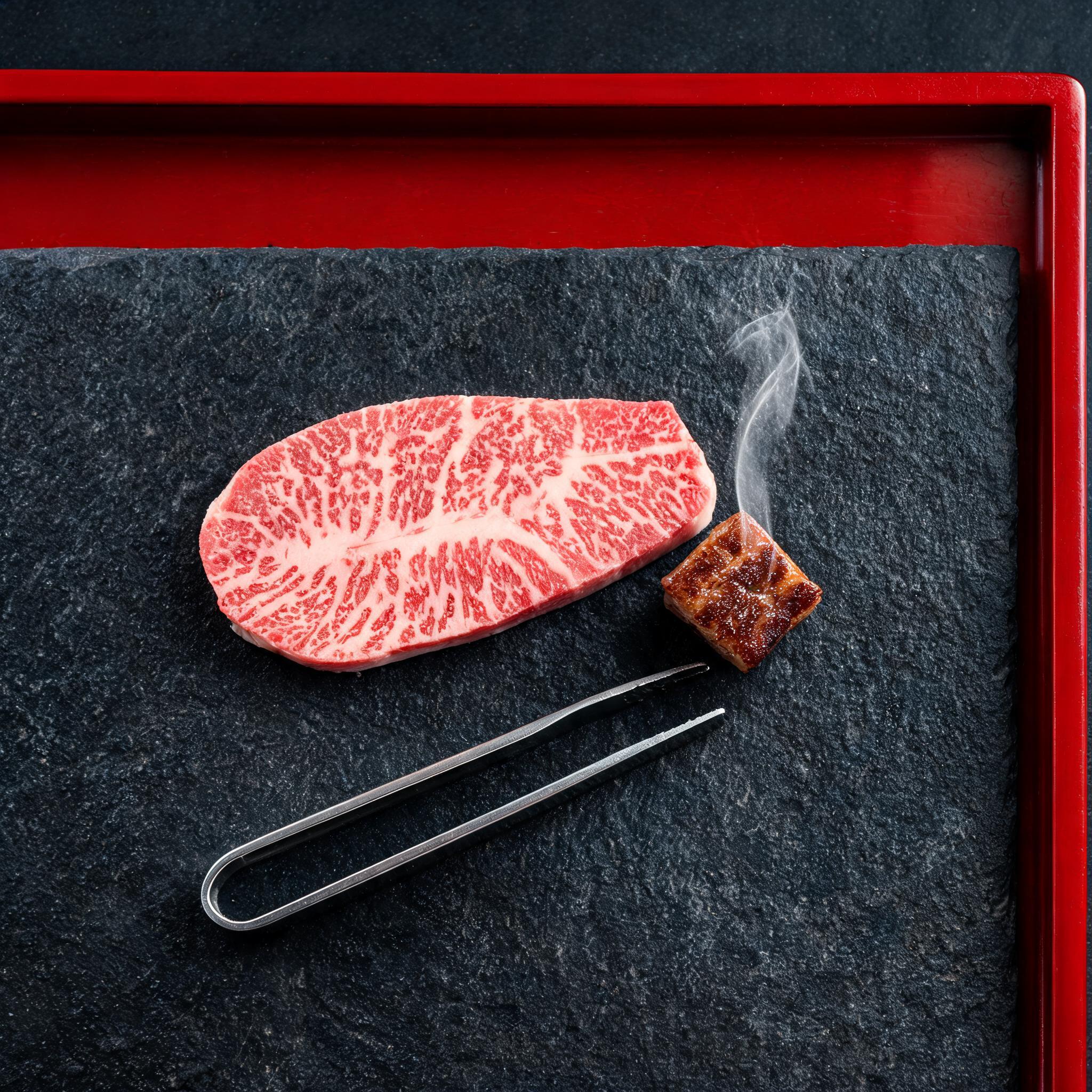
Bangkok's premium Japanese dining scene in 2026 spans French-Japanese fine dining like Blue by Alain Ducasse, hotel omakase counters, and specialist houses. Travelers choosing by A5 authenticity, live seafood, BTS access and per-head budget will find specialists like Taraba Prime deliver Japan-direct ingredients at versus hotel fine-dining prices.
5 criteria for choosing a premium Japanese restaurant in Bangkok
- Verifiable A5 sourcing: can the restaurant show a JMGA certificate and prefecture branding on request?
- Live seafood capability: a live tank means your king crab was swimming before service — frozen crab is a different product at a similar price.
- Distance from BTS: within a 5–10 minute walk of BTS Asok or Phrom Phong saves a rush-hour taxi.
- Menu language: a proper English (ideally TH/EN/JP) menu with per-portion prices removes ordering anxiety and surprise bills.
- Transparent THB pricing: per-portion or per-set prices printed on the menu — not "market price" quoted at the table.
Price range table: omakase vs à la carte vs seafood specialist
| Restaurant type | Example | Per-head budget (THB) | Best for |
|---|---|---|---|
| French-Japanese fine dining | Blue by Alain Ducasse | Special-occasion tasting menus, skyline setting | |
| Premium omakase counter | Hotel / chef's-counter omakase | Chef-led sushi progression, small parties | |
| Seafood & wagyu specialist | Taraba Prime, Sukhumvit Soi 20 | Live king crab + Miyazaki A5 Wagyu à la carte, near BTS Asok |
The honest trade-off: omakase gives you a curated narrative but no control over what arrives; a specialist à la carte house gives you control — order exactly the crab, uni, otoro and A5 portions you want — but you build the meal yourself. For groups with mixed appetites, à la carte usually wins.
Best sushi near Sukhumvit Soi 20: what to look for
The best sushi near Sukhumvit Soi 20 shows three signals: daily Japan-direct fish deliveries (ask which market and which days), house-seasoned rice rather than pre-mixed shari, and dry-aging capability. Aged fish signals a kitchen that manages fish at a technical level — not just a reseller of imported fillets.
คำถามที่พบบ่อย (FAQ): Miyazaki A5 Wagyu & Japanese Fine Dining in Bangkok
This FAQ answers the questions travelers search most: how Miyazaki A5 differs from Kobe, what A5 wagyu costs in Bangkok, the right doneness to order, and how to book a premium Japanese seafood and wagyu dinner near BTS Asok — with short, quotable answers drawn from the sections above.
Is Miyazaki Wagyu better than Kobe beef?
Miyazaki Wagyu won Japan's national Wagyu Olympics — a competition held once every 5 years — in 2007, 2012 and 2017, more titles in that span than any other region. Both Miyazaki and Kobe come from A5-capable Japanese Black cattle; Miyazaki typically delivers comparable BMS 8–12 marbling at a noticeably lower price than Kobe.
How much does Miyazaki A5 Wagyu cost in Bangkok?
Miyazaki A5 Wagyu in Bangkok is priced per portion cut at premium restaurants, usually 100–150g per person. At Taraba Prime on Sukhumvit Soi 20, A5 wagyu is served at; expect a full seafood-plus-wagyu dinner to run per head, depending on portions shared.
What doneness should I order for A5 wagyu steak?
Rare to medium-rare is the recommended doneness for A5 wagyu steak, because its marbled fat melts from roughly 25°C; cooking to medium well (65°C and above) renders out the fat that justifies the A5 price. If you prefer fully cooked beef, order thin-sliced sukiyaki or shabu shabu instead of steak.
Is A5 wagyu sukiyaki or steak better for first-timers?
Sukiyaki is the safer first A5 wagyu experience: thin-sliced sirloin around 1.5–2 mm, cooked for seconds in sweet soy broth, gives maximum melt-in-mouth texture with zero doneness risk. A seared ribeye portion cut, cooked rare, suits diners who want a stronger, caramelized, beef-forward flavor from their A5.
Where can I eat A5 wagyu and live king crab in one meal near BTS Asok?
Taraba Prime on Sukhumvit Soi 20, a 5-minute walk from BTS Asok, serves Miyazaki A5 Wagyu alongside live Taraba king crab (sashimi, steak or nabe), uni, otoro and dry-aged sushi flown in from Japan daily. Book via LINE @tarabaprime or call 094-456-1124; English is available on both channels.
Do I need a reservation for premium Japanese restaurants in Bangkok?
Reservations are strongly recommended for premium Japanese restaurants in Bangkok, especially for live king crab and omakase-style dinners where ingredients are prepared per booking. Taraba Prime accepts reservations by phone 094-456-1124 or LINE @tarabaprime, with a full English-language menu available for foreign visitors.
What does "grain-fed" mean for Miyazaki Wagyu?
Grain-fed means Miyazaki cattle are finished on a grain-based diet through an extended fattening period, which develops the fine snowflake marbling (BMS 8–12) and sweet, low-melting-point fat that defines the A5 grade — a distinctly richer profile than leaner, grass-fed beef.
Note: raw or lightly seared beef and raw seafood (sashimi, uni) may not be suitable for pregnant travelers, young children or immunocompromised diners — ask the restaurant for fully cooked preparations such as nabe or crab steak. Award and grading facts reference the JMGA grading system and Japan's Zenkoku Wagyu Noryoku Kyoshinkai results; cattle traceability via the National Livestock Breeding Center (nlbc.go.jp).