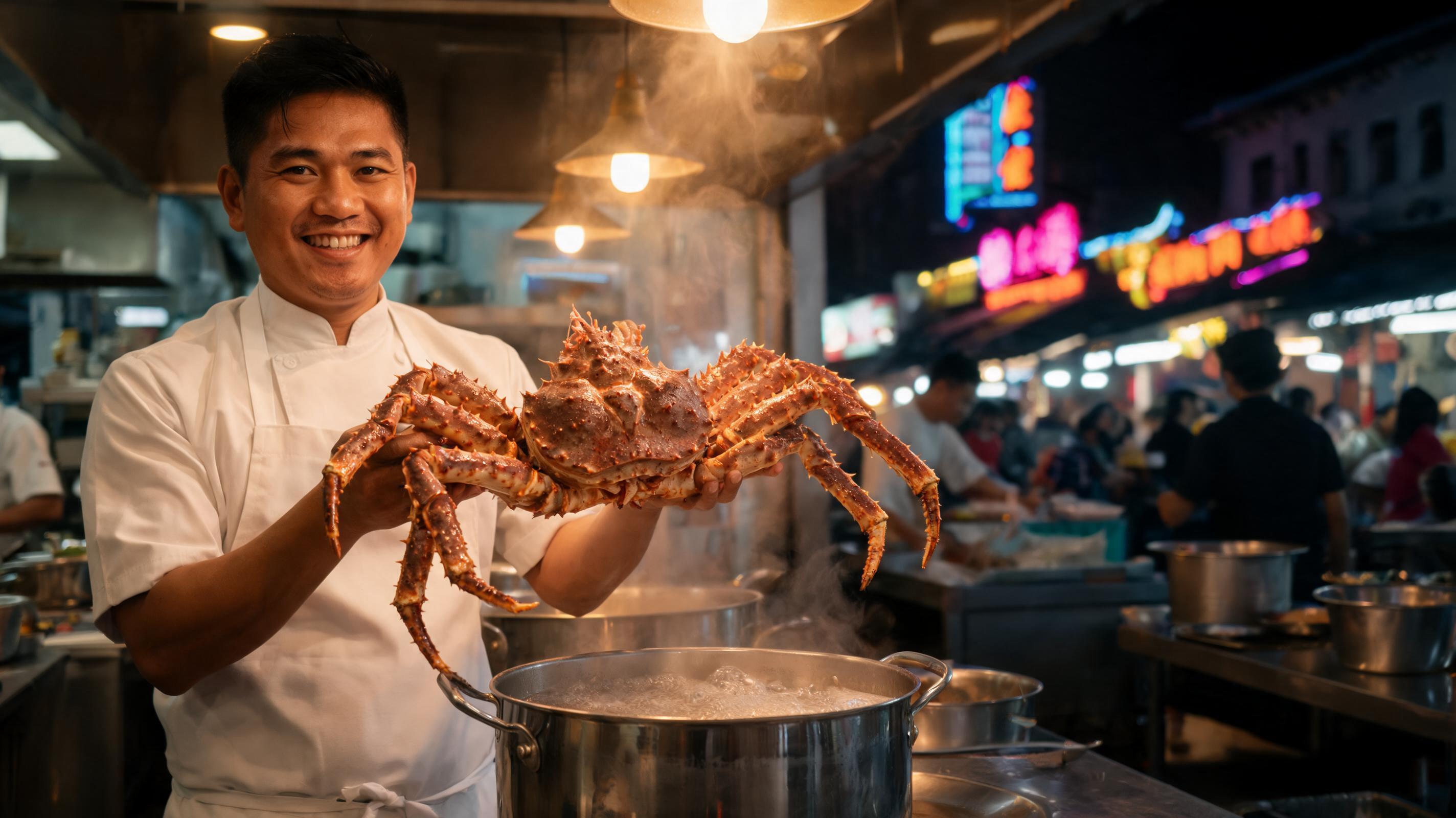
Live king crab in Bangkok means the crab is kept alive in a seawater tank and prepared only after you order — the sole way to serve true sashimi-grade king crab. Live king crab คือ ปูยักษ์ที่เลี้ยงในแท็งก์น้ำทะเลและปรุงทันทีหลังสั่งเท่านั้น For 2026, the standout live-tank specialist is Taraba Prime on Sukhumvit Soi 20, a 5-minute walk from BTS Asok. (Guide updated for 2026.)
- Live vs frozen: only a crab that is alive until preparation can be served as sashimi; buffet crab legs are pre-boiled and brine-frozen at source and can only be reheated.
- Where to go: Taraba Prime, Sukhumvit Soi 20, a 5-minute walk from BTS Asok, serves one live Taraba king crab three ways — sashimi, charcoal-grilled steak, and nabe (Japanese hotpot).
- Pricing model: live-tank restaurants price by actual crab weight, weighed at your table before cooking —.
- For international diners: Taraba Prime offers a trilingual English/Thai/Japanese menu, with seafood flown in from Japan daily.
- Booking: call 094-456-1124 or LINE @tarabaprime; live crab stock is limited each day —.
Live King Crab in Bangkok vs Frozen King Crab: What's the Difference?
Live king crab in Bangkok is kept in a seawater tank and prepared only after ordering, which preserves the natural sweetness and glassy, jelly-like texture that makes sashimi possible. Frozen king crab, used by most Bangkok hotel buffets, arrives pre-cooked, tastes saltier from brine absorption during freezing, and loses the delicate raw-grade texture entirely.
The difference is visible on the plate. Live king crab sashimi is translucent, almost glass-like, with a cool, clean sweetness. Frozen legs arrive opaque white, firmer, and noticeably saltier. Once you taste the two side by side, no menu wording can blur the line — which is exactly why this guide starts here, before any restaurant names.
Why sashimi is only possible with a live crab
King crab sashimi requires the crab to be alive until the moment of preparation. Crab meat deteriorates within minutes of the crab dying, so raw service is only safe when the crab moves straight from tank to cutting board. Frozen crab legs are typically pre-boiled and brine-frozen at the port — they can be reheated, never eaten raw.
Food-safety note: raw seafood of any kind carries some risk for pregnant diners and people with weakened immune systems; check with your doctor if unsure.
How to spot a real live-tank restaurant vs a marketing claim
A genuine live-tank king crab restaurant will show you the seawater tank and your specific crab before cooking. Ask three questions: Can I see the crab alive? Will it be weighed in front of me? Is sashimi on the menu? If any answer is no — especially the sashimi option — the "live" claim is marketing, not reality.
Tip: a restaurant offering king crab sashimi is effectively proving its crab is alive, because raw service is impossible with frozen stock.
Taraba king crab (Japanese red king crab) vs generic Alaskan king crab
Taraba king crab (Japanese red king crab) is the species prized in Japan for the sweetest, densest leg meat of any king crab — Taraba king crab คือ ชื่อภาษาญี่ปุ่นของ red king crab ที่ถือเป็นวัตถุดิบซิกเนเจอร์ของร้านญี่ปุ่นระดับพรีเมียม Generic "Alaskan king crab" sold around Bangkok is almost always frozen leg sections graded for volume, not raw-eating quality.
Where to Eat Live King Crab in Bangkok: Top Restaurants Compared
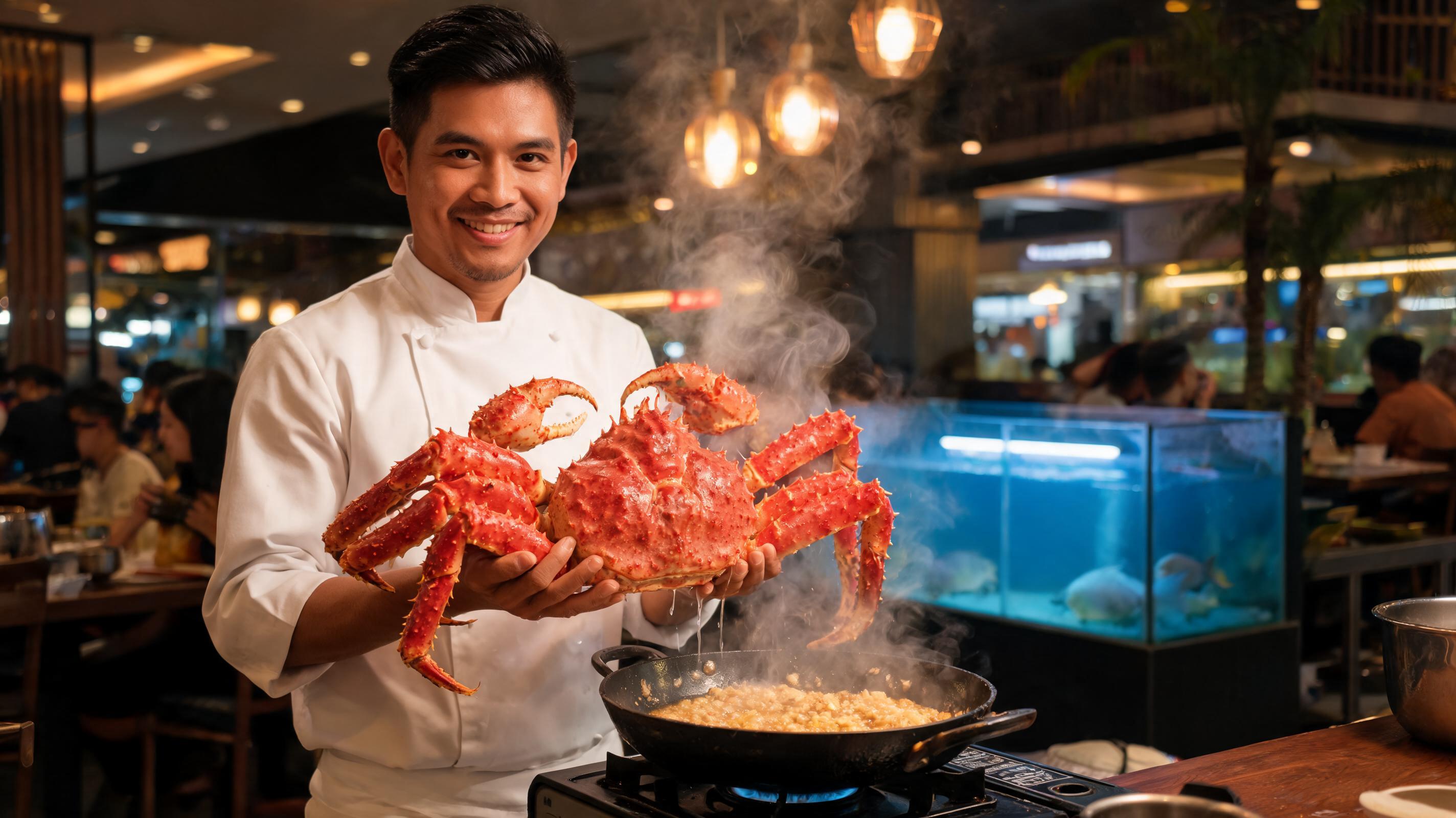
Bangkok's king crab restaurants split into two camps: hotel buffets such as Goji Kitchen + Bar (Marriott Marquis) and Kani Tengoku (Sukhumvit 23) serving frozen crab in volume, and specialist live-tank restaurants. Taraba Prime on Sukhumvit Soi 20, a 5-minute walk from BTS Asok, is the standout for genuine live Taraba king crab served as sashimi, steak, or nabe (Japanese hotpot).
Comparison table: live-tank à la carte vs hotel crab buffets
| Factor | Taraba Prime (live-tank à la carte) | Hotel crab buffets (Goji Kitchen + Bar, Kani Tengoku) |
|---|---|---|
| Freshness | Alive in tank until you order | Pre-boiled, brine-frozen legs |
| Sashimi option | Yes — sashimi-grade | No — cooked only |
| Pricing model | By weight, weighed at your table — | Flat per-person rate — |
| Menu variety | One crab, three preparations + wagyu, uni, sushi | Volume of crab legs + buffet lines |
| Transparency | Crab shown and weighed before cooking | No weighing; batch quality varies |
| Best for | Special dinners, sashimi lovers | Volume eaters on a fixed budget |
Buffet crab vs à la carte live crab: which gives better value per baht
King crab buffets win on quantity; live-tank à la carte wins on quality per bite. Buffets serve unlimited frozen legs at a fixed price, but every leg is the same pre-cooked product. À la carte live crab costs more per kilogram, yet one crab yields sashimi, grilled steak, and nabe — three distinct dishes no buffet can physically serve.
Why serious seafood lovers choose weight-based à la carte over all-you-can-eat
Weight-based à la carte pricing puts quality control in the diner's hands. You see the live crab, confirm its weight on the scale, agree on the total, and watch it become your meal. From first-time visitors we hear the same story: the buffet route delivers plenty of crab, none of it memorable. Browse the live Taraba king crab menu at Taraba Prime to see what weight-based ordering actually includes.
Taraba Prime: Live Taraba King Crab a 5-Minute Walk from BTS Asok
Taraba Prime is a premium Japanese seafood restaurant on Sukhumvit Soi 20, a 5-minute walk from BTS Asok, specializing in live Taraba king crab kept in in-house seawater tanks. Seafood including lobster, uni (sea urchin), and otoro (fatty tuna) is flown in from Japan daily, and the menu is printed in English, Thai, and Japanese.
How to get there from BTS Asok / MRT Sukhumvit (walking directions)
From BTS Asok, Taraba Prime is roughly a 5-minute walk. Exit toward Sukhumvit Road, continue along the main road to Sukhumvit Soi 20, then walk a short distance into the soi. MRT Sukhumvit connects directly to BTS Asok, so both lines work. Full route: how to get to Taraba Prime from BTS Asok.
What to expect: live tanks, trilingual menu, and daily Japan-flown seafood
Expect to see the live seafood tank the moment you walk in — the crab you order is the crab you saw swimming. The trilingual English/Thai/Japanese menu and staff who explain crab sizes and preparations daily to international guests remove the language-barrier worry entirely.
Who it suits: travelers, business dinners, and special occasions
Taraba Prime suits three groups best: travelers staying around Sukhumvit–Asok who want one unmissable seafood dinner, business hosts entertaining Japanese or international clients, and couples marking anniversaries. One honest caveat: this is fine dining priced by weight, not a casual budget meal — diners chasing cheap volume are genuinely better served by a buffet.
Three Ways to Eat One Live King Crab: Sashimi, Steak, and Nabe
One live Taraba king crab can be served three ways in the traditional Japanese style: the slender legs as translucent, sweet sashimi; the thick merus legs charcoal-grilled as crab steak; and the body and shell simmered in nabe. King crab nabe คือ หม้อไฟญี่ปุ่นที่ต้มปูในน้ำซุปคอมบุ/ดาชิ แล้วปิดท้ายด้วย zosui โจ๊กน้ำซุปปู
- Start with sashimi from the slender legs. King crab sashimi must reach the plate within minutes of being cut from the live crab — glassy, cool, naturally sweet, a texture that vanishes the moment the crab is cooked or frozen.
- Grill the thickest merus legs as crab steak. Charcoal heat caramelizes the shell and concentrates the sweetness, a smoky counterpoint to the raw course.
- Finish with the body and shell in nabe. The carapace simmers in kombu-dashi broth, then that crab-rich broth becomes zosui — rice porridge capturing every drop of flavor the crab left behind.
Tip: request all three preparations when you book so the kitchen portions the crab correctly.
Step 1 — King crab sashimi: glassy texture and cold natural sweetness
King crab sashimi is the truest test of a live crab. The flesh arrives slightly chilled, translucent like jelly, and melts with a clean sweetness. Because the meat degrades within minutes, it travels from live tank to plate almost immediately — a course no buffet or frozen supplier anywhere in Bangkok can replicate.
Step 2 — Charcoal-grilled king crab steak from the thickest legs
Charcoal-grilled king crab steak uses the merus, the thickest leg segment. High heat firms the meat, edges the shell with char, and deepens the same sweetness the sashimi shows raw. Eating the two courses back to back is the clearest way to understand how much range one crab can deliver.
Step 3 — King crab nabe hotpot and the zosui finale
King crab nabe (Japanese hotpot) simmers the body and shell in kombu-dashi broth with vegetables, drawing flavor no other cut releases. The finale is zosui: rice cooked in that broth with egg. In Japan, skipping the zosui is considered wasting the best part of the crab — don't make that mistake.
How Much Does Live King Crab Cost in Bangkok? (2026 Price Guide)
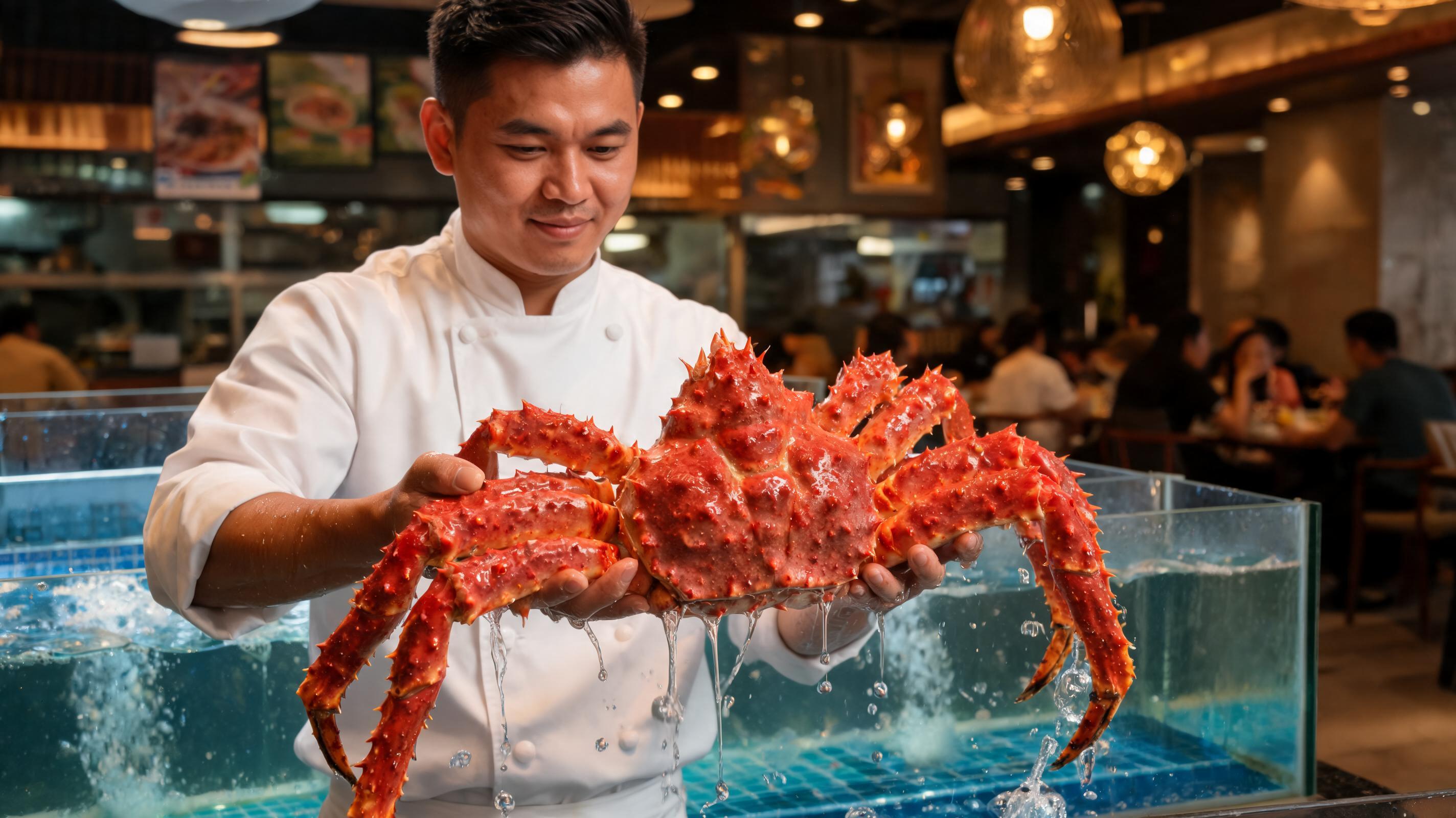
Live king crab in Bangkok is priced by weight, with the crab weighed in front of you before preparation —. Expect a premium over buffet rates because the crab is alive, sashimi-grade, and flown from Japan. Hotel buffets charge a fixed per-person rate but serve frozen, pre-cooked crab only.
Price table: live king crab by weight vs buffet rates vs other premium dishes
| Option | Pricing model | 2026 price |
|---|---|---|
| Live Taraba king crab (Taraba Prime) | Per kg, weighed at your table | |
| Hotel crab buffet (Goji Kitchen / Kani Tengoku) | Flat rate per person | |
| Miyazaki A5 wagyu / foie gras unagi don / omakase set | Per portion or per set |
Why weighing the crab in front of you protects diners from tourist pricing
Table-side weighing is the strongest protection against tourist pricing in Bangkok. You see the live crab, watch the scale, and confirm the total before anything is cooked — the bill becomes simple arithmetic, not a surprise. The classic tourist-trap pattern elsewhere is a vague "market price" with no scale in sight. If a restaurant refuses to weigh the crab in front of you, walk away.
Budget planning: what a dinner for two at a live king crab restaurant costs
A dinner for two at a live king crab restaurant is anchored by crab weight, plus add-ons. The crab is the main cost — — with dishes like wagyu or premium omakase and chirashi on Sukhumvit Soi 20 stacking on top. Confirm the per-kg rate when booking so the final bill holds no surprises.
ข้อควรระวัง: imported live seafood prices move with season and flight availability — always confirm the current rate on booking day rather than trusting an old review.
Beyond King Crab: Miyazaki A5 Wagyu, Uni, Otoro, and Dry-Aged Sushi
Taraba Prime pairs its live king crab with a full premium Japanese menu: Miyazaki A5 wagyu — grain-fed ribeye and sirloin seared to render the marbled fat slowly — Hokkaido uni, otoro, dry-aged sushi sets, foie gras unagi don, chirashi, and omakase-style courses, all built on seafood flown in from Japan daily.
Miyazaki A5 wagyu ribeye and sirloin: why slow fat rendering matters
Miyazaki A5 is the highest grade of Japanese wagyu, from grain-fed cattle with dense, snowflake marbling. Both the ribeye and sirloin portion cuts are seared slowly so the fat renders gradually instead of scorching — the difference between merely rich and buttery-clean. It also anchors an A5 wagyu sukiyaki-style dinner if beef, not crab, is your headline.
Uni, otoro, and dry-aged sushi: the premium sashimi lineup
The premium sashimi lineup — uni, otoro, and dry-aged sushi — rides the same daily Japan flights as the crab. Dry-aged sushi คือ ซูชิที่ใช้ปลาบ่มแห้งหลายวันในตู้ควบคุมอุณหภูมิ-ความชื้นเพื่อเร่งรสอูมามิให้เข้มกว่าปลาสด See the full Miyazaki A5 wagyu and dry-aged sushi sets if you want crab, beef, and aged fish in one sitting.
How Taraba Prime compares to Bangkok fine dining icons for a Japanese-focused night out
For a Japanese-focused fine dining night, Taraba Prime competes on ingredients rather than theater. Icons like Blue by Alain Ducasse offer French technique and a river view; Taraba Prime offers live Taraba king crab, Miyazaki A5 wagyu, and Japan-flown sashimi minutes from BTS Asok. When the ingredient itself is the occasion, the crab tank wins.
Common Mistakes to Avoid When Ordering King Crab in Bangkok
The most common mistake when ordering king crab in Bangkok is assuming every "king crab" restaurant serves live crab — most buffets serve pre-frozen legs that can never be eaten as sashimi. Other frequent errors: not confirming the per-kilogram price before weighing, walking in without a reservation, and having the whole crab cooked one single way.
Mistake 1: Believing "king crab buffet" means fresh or live crab
King crab buffets in Bangkok serve frozen, pre-cooked crab — no exceptions. No buffet offers a sashimi option, because raw service requires a live crab. The pattern repeats constantly: diners pay buffet prices expecting Japanese-grade crab and leave underwhelmed. If sashimi isn't on the menu, the crab was never alive in that kitchen.
Mistake 2: Not asking for the price per kg and weight confirmation upfront
Confirm the per-kilogram price before the crab goes on the scale. Reputable live-tank restaurants state the rate clearly and weigh the crab at your table. Agreeing on price only after cooking is how tourist-pricing disputes start — lock in the number first, then enjoy the meal without watching the bill.
Mistake 3: Ordering one crab a single way instead of three preparations
Ordering the whole crab boiled or grilled wastes its potential. The one-crab-three-ways approach — sashimi from the slender legs, charcoal-grilled steak from the merus, nabe and zosui from the body — yields three distinct dishes from the same animal. It costs nothing extra; you only have to ask when ordering.
Mistake 4: Walking in during peak dinner hours without booking
Live Taraba king crab stock is limited each day, so walk-ins risk finding the tank empty. Peak Sukhumvit dinner hours fill fast with tourists and local regulars alike.
สรุปเร็ว — checklist before you order:
- Confirm the restaurant keeps live crab in a visible seawater tank, not a freezer.
- Ask for the price per kilogram before the crab is weighed in front of you.
- Request the three-way preparation: sashimi, grilled steak, and nabe with zosui.
- Book ahead by phone or LINE — daily live crab stock is limited.
How to Book a Live King Crab Dinner at Taraba Prime
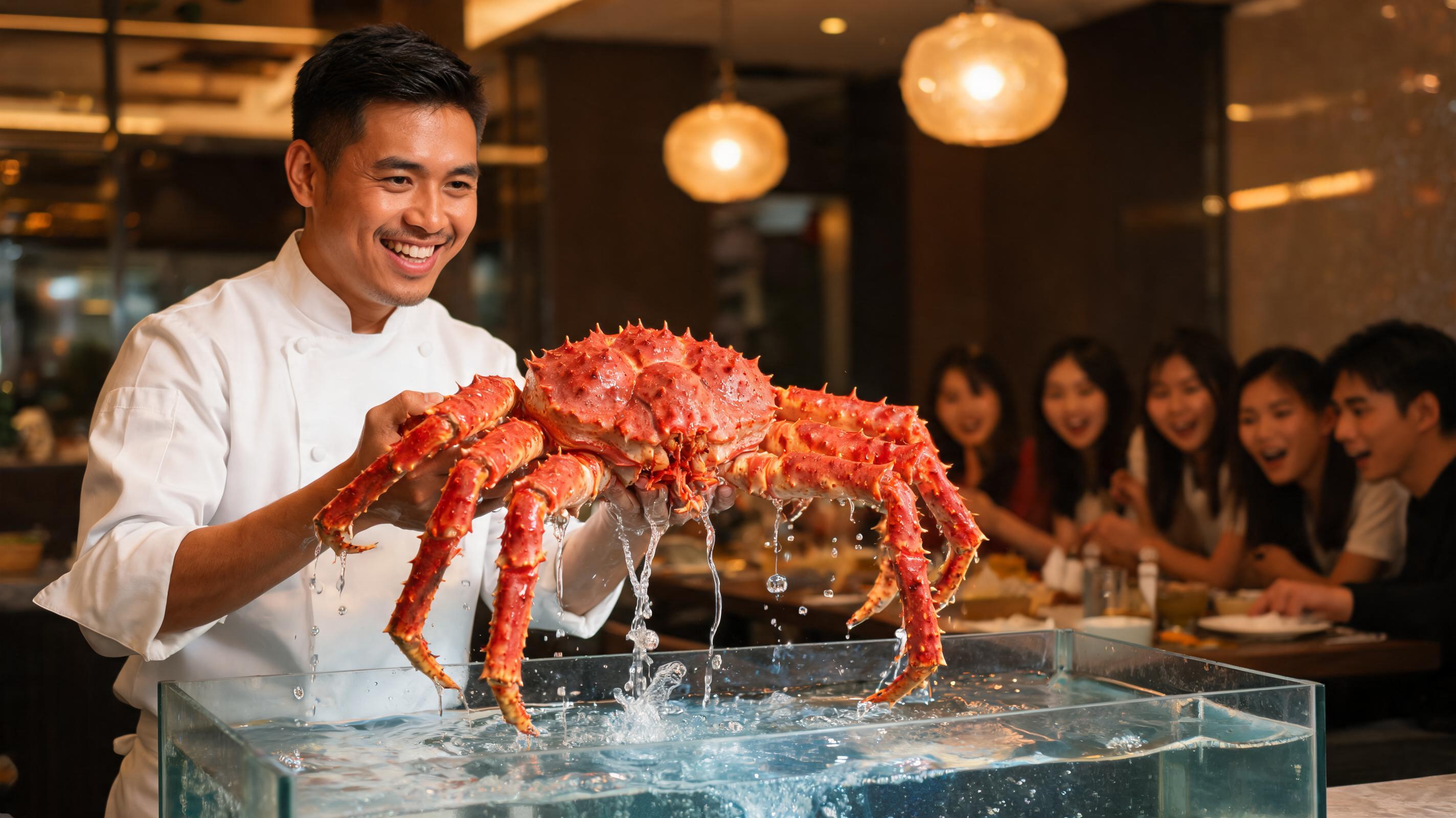
Taraba Prime accepts reservations by phone at 094-456-1124 and via LINE at @tarabaprime. Because live Taraba king crab stock is limited each day, booking ahead — and stating your preferred crab size and preparation style — guarantees availability. The restaurant is on Sukhumvit Soi 20, a 5-minute walk from BTS Asok.
Step-by-step: reserving via LINE @tarabaprime or phone
- Choose your channel: call 094-456-1124 or reserve via LINE @tarabaprime — LINE is easiest for travelers who prefer messaging in English.
- Give your date, time, and party size, and ask whether live Taraba king crab is confirmed for that day.
- Request your crab in advance: state the approximate weight you want and ask staff to hold one from the day's stock.
- Confirm the per-kilogram price and the three-way preparation (sashimi, charcoal-grilled steak, nabe with zosui) so the kitchen plans your courses before you arrive.
What to tell the restaurant: party size, crab size, and preparation preference
Three details make a Taraba Prime booking smooth: how many diners, what crab weight you want, and how you want it prepared. Mention add-ons — Miyazaki A5 wagyu, uni, or a dry-aged sushi set — at booking so imported items are held for you. Staff serve international guests daily and reply comfortably in English.
Frequently Asked Questions About Live King Crab in Bangkok
These are the questions international diners ask most before booking a live king crab dinner in Bangkok — sashimi safety, pricing, buffet comparisons, and what else to order at a premium Japanese seafood restaurant near BTS Asok. Every answer draws only on the facts covered above.
Is it safe to eat king crab sashimi in Bangkok?
Yes — provided the crab is alive until the moment it is prepared. King crab sashimi at live-tank restaurants like Taraba Prime is cut from a crab taken straight from the seawater tank, the same standard used in Japan. Frozen crab should never be eaten raw under any circumstances.
Which Bangkok restaurant serves live king crab, not frozen?
Taraba Prime on Sukhumvit Soi 20 keeps live Taraba king crab in in-house seawater tanks and prepares each crab to order — as sashimi, charcoal-grilled steak, or nabe (Japanese hotpot). Most other "king crab" options in Bangkok, including hotel buffets, serve pre-cooked frozen crab legs only.
How much does live king crab cost in Bangkok?
Live king crab in Bangkok is priced by weight and weighed in front of you before cooking. Buffets charge a flat per-person rate but serve only frozen crab, so the two options cannot be compared directly on freshness or quality.
Is a king crab buffet or à la carte live king crab better value?
Buffets like Goji Kitchen + Bar or Kani Tengoku win on sheer quantity of frozen legs; à la carte live crab wins on quality, the sashimi option, and the one-crab-three-ways experience. For a special dinner rather than volume eating, live-tank à la carte is the stronger choice.
How do I get to Taraba Prime from BTS Asok?
Taraba Prime is on Sukhumvit Soi 20, about a 5-minute walk from BTS Asok station and also reachable from MRT Sukhumvit. Exit toward Sukhumvit Road, walk to Soi 20, and the restaurant is a short distance into the soi.
Does Taraba Prime have an English menu?
Yes. Taraba Prime offers a trilingual menu in English, Thai, and Japanese, and staff serve international visitors every day. That combination makes it one of the most tourist-friendly premium Japanese seafood restaurants near BTS Asok, with no language barrier at ordering or booking.
What else should I order besides king crab at Taraba Prime?
Signature dishes beyond live king crab include Miyazaki A5 wagyu ribeye and sirloin, Hokkaido uni, otoro, dry-aged sushi sets, foie gras unagi don, chirashi, fresh lobster, and omakase-style premium seafood courses — all built on ingredients flown in from Japan daily.
Do I need to reserve in advance for live king crab?
Yes — booking ahead is strongly recommended because live Taraba king crab stock is limited each day. Reserve by phone at 094-456-1124 or via LINE @tarabaprime, and mention your party size and preferred crab preparation.