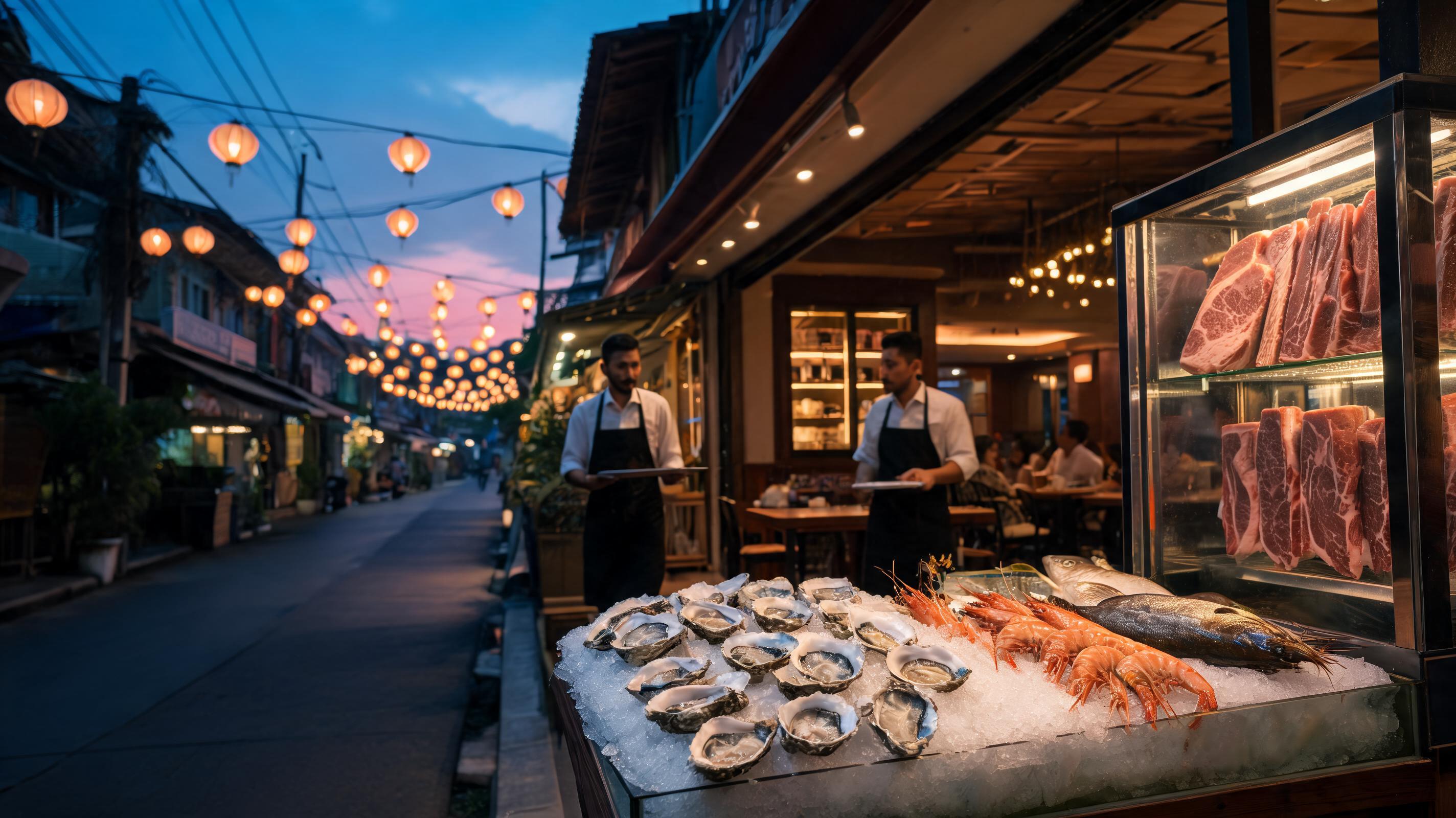
The best seafood and A5 wagyu restaurants in Sukhumvit for tourists in 2026 are Taraba Prime on Sukhumvit Soi 20 — a 5-minute walk from BTS Asok, with live Taraba king crab and Miyazaki A5 wagyu — followed by Ministry of Crab (TripAdvisor 4.7), Nami Teppanyaki Steakhouse (TripAdvisor 4.9), and Blue by Alain Ducasse for French fine dining. Last updated: January 2026.
- Taraba Prime is the only restaurant in this guide combining a live Taraba king crab tank, seafood flown in from Japan daily, and Miyazaki A5 wagyu under one roof, 5 minutes on foot from BTS Asok.
- A5 wagyu is Japanese beef awarded the highest possible grade: yield grade A plus quality score 5, with a marbling (BMS) score of 8–12 under the Japan Meat Grading Association system.
- One live Taraba king crab is served 3 ways: leg sashimi, grilled claw steak, and kani nabe hot pot — ideal for groups of 2–4.
- English reservations at Taraba Prime work via phone 094-456-1124 or LINE @tarabaprime; the menu is trilingual TH/EN/JP.
- "Unlimited A5 buffet" deals around 2,299 THB are rarely certified single-origin A5 — this guide includes a 5-point checklist to verify the real thing.
Quick Answer: The Best Seafood and A5 Wagyu Restaurants in Sukhumvit for Tourists (2026)
The best seafood and A5 wagyu restaurants in Sukhumvit for 2026 are Taraba Prime on Sukhumvit Soi 20 for live Taraba king crab and Miyazaki A5 wagyu, Ministry of Crab for Sri Lankan mud crab, Nami Teppanyaki Steakhouse for tableside-grilled wagyu, and Blue by Alain Ducasse for French fine dining built on premium seafood.
Two quick definitions before we compare. A5 wagyu is Japanese beef at the top of the official grading scale: "A" means the highest meat yield, "5" the highest quality score for marbling, color, and texture. Taraba king crab is the red king crab Japanese diners call tarabagani, best served live from the tank as sashimi, steak, or hot pot.
Our top 3 picks at a glance
The top 3 picks split cleanly by what you want. Want live Japanese seafood plus certified A5 in one meal? Taraba Prime, 5 minutes from BTS Asok. Want an internationally famous name? Ministry of Crab (TripAdvisor 4.7) for giant Sri Lankan crab. Want dinner as a show? Nami Teppanyaki Steakhouse (TripAdvisor 4.9) grills wagyu at your table.
Who this guide is for (tourists staying near Asok–Phrom Phong)
This guide is for travelers staying near BTS Asok, BTS Phrom Phong, or MRT Sukhumvit with a special-occasion budget of roughly 1,500–6,000+ THB per person. Every restaurant is judged on what tourists actually worry about: provable freshness, real A5 paperwork, walking distance from the train, English menus, and booking without a Thai phone number.
Comparison Table: 6 Top Seafood & Wagyu Restaurants in Sukhumvit
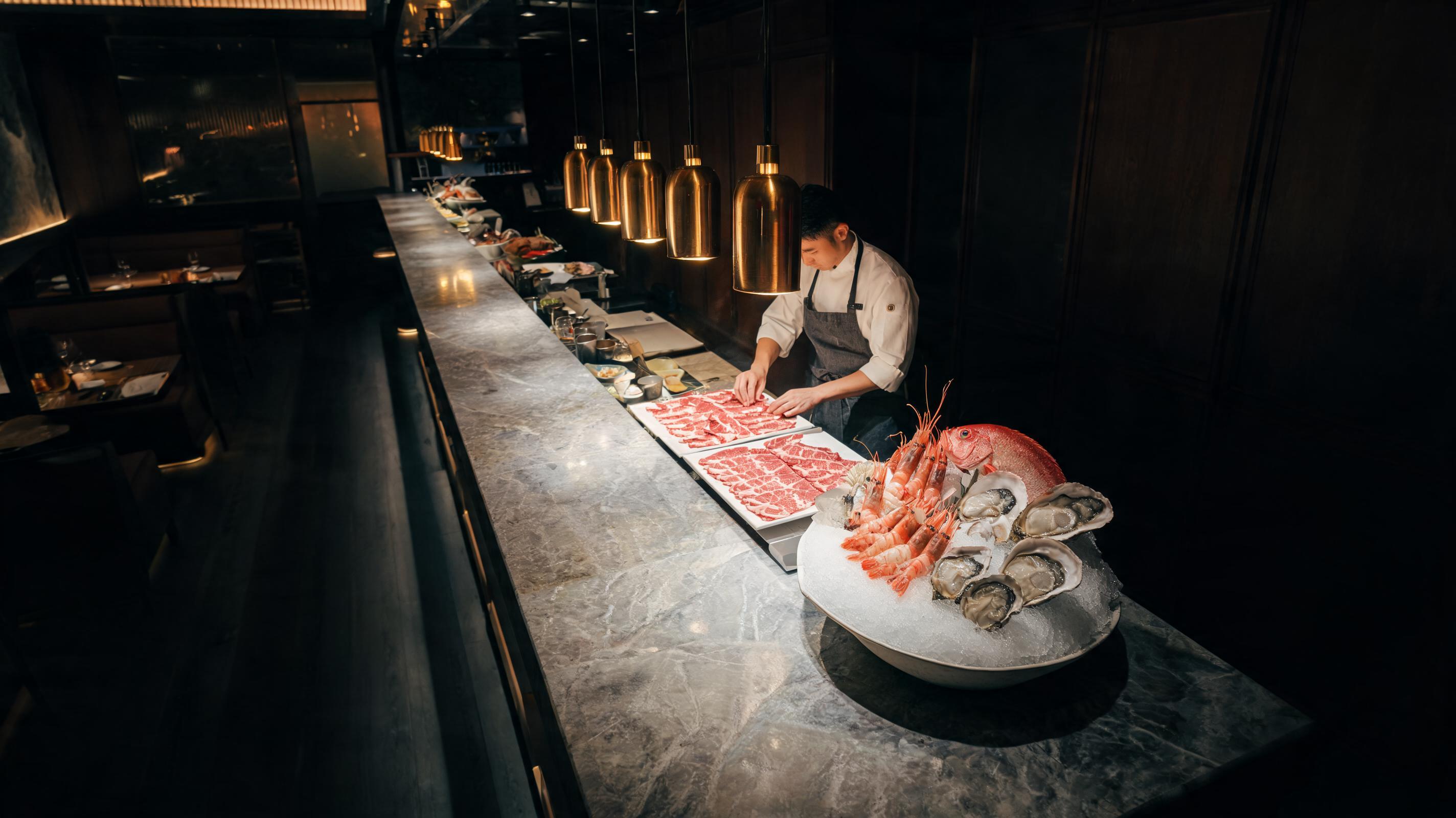
Six restaurants dominate Sukhumvit's premium seafood scene in 2026: Taraba Prime, Ministry of Crab, Nami Teppanyaki Steakhouse, Blue by Alain Ducasse, Goji Kitchen + Bar, and Laem Charoen Seafood. Only Taraba Prime combines live Japanese king crab, daily-flown sashimi, and Miyazaki A5 wagyu in one location near BTS Asok.
| Restaurant | Cuisine & seafood highlight | A5 wagyu? | Nearest station / price per person |
|---|---|---|---|
| Taraba Prime | Japanese — live Taraba king crab, daily-flown sashimi, dry-aged sushi | Yes — Miyazaki A5 | BTS Asok, 5-min walk / |
| Ministry of Crab | Sri Lankan — giant mud crab, prawns (TripAdvisor 4.7) | No | Sukhumvit area / |
| Nami Teppanyaki Steakhouse | Japanese teppanyaki — grilled seafood and beef (TripAdvisor 4.9) | Yes — teppanyaki style | / |
| Blue by Alain Ducasse | French fine dining — luxury seafood courses | Wagyu on tasting menus | / |
| Goji Kitchen + Bar | Hotel buffet — seafood-on-ice spread | No certified A5 portion cuts | BTS Asok–Phrom Phong / |
| Laem Charoen Seafood | Thai seafood — steamed sea bass, curry crab (2 Bangkok branches, per bangkokbeyond.com) | No | Mall locations near BTS / |
How to read this table: buffet value vs à la carte quality
Buffet vs à la carte comes down to one trade-off: quantity per baht versus traceability per plate. Buffets like Goji Kitchen + Bar win on volume. À la carte specialists like Taraba Prime and Ministry of Crab charge per dish, but you can see the crab alive in the tank and ask exactly where the beef comes from. For a once-per-trip meal, traceability wins.
Why "unlimited A5 buffet" deals (~2,299 THB) are not the same as certified single-origin A5
Unlimited "A5" buffets around 2,299 THB per person typically serve mixed or trimmed cuts, and grading paperwork is rarely shown. Certified single-origin A5 — such as Miyazaki A5 wagyu — is sold as portion cuts with a prefecture certificate the restaurant can produce on request. Both formats have a place; they are simply different products with different price logic. You can see what a documented portion cut looks like on the Miyazaki A5 wagyu menu at Taraba Prime.
Taraba Prime: Live King Crab & Miyazaki A5 Wagyu on Sukhumvit Soi 20
Taraba Prime is a premium Japanese seafood restaurant on Sukhumvit Soi 20, a 5-minute walk from BTS Asok, specializing in live Taraba king crab, fresh lobster, and sushi flown in from Japan daily — alongside Miyazaki A5 wagyu, uni, otoro, and dry-aged sushi sets, all on a trilingual TH/EN/JP menu.
Signature dishes: live king crab, foie gras unagi don, chirashi
Taraba Prime's signature order is live Taraba king crab served 3 ways — sashimi, grilled steak, and nabe hot pot — chosen straight from the tank. Beyond crab, regulars order the foie gras unagi don (seared foie gras over grilled eel and rice), loaded chirashi don bowls, and omakase-style sets built around whatever landed from Japan that morning. Browse the full live Taraba king crab menu (sashimi, steak, nabe) before you book.
Why daily flights from Japan matter for sashimi quality
Daily flights from Japan matter because raw fish quality degrades continuously from the moment it leaves the market — texture softens, sweetness fades, off-notes creep in. Daily air freight means the shortest possible cold chain between Japanese auction and your plate. You taste it directly: firmer otoro, cleaner uni, zero ammonia smell. A restaurant restocking weekly cannot serve the same product, whatever its menu claims.
Trilingual TH/EN/JP menu for tourists
Taraba Prime's menu comes in Thai, English, and Japanese, so you never order blind. Staff handle English bookings by phone at 094-456-1124 or via LINE @tarabaprime — no Thai number or concierge needed. That removes the two friction points tourists complain about most in Bangkok: menu confusion and reservation language barriers.
How to Order Live King Crab in Bangkok: Sashimi vs Steak vs Nabe
Live Taraba king crab in Bangkok is typically served three ways from one crab: the legs as translucent, sweet sashimi; the thick claw sections grilled as steak; and the body with crab miso simmered in a kani nabe hot pot. One crab lets a group of 2–4 diners taste every texture.
Step-by-step: choosing your crab from the tank
- Ask to see the tank first. A healthy live Taraba king crab moves its legs actively; sluggish crabs have been held too long.
- Watch the weigh-in on a scale. Live king crab is priced per kilogram, and this number sets your bill — reputable restaurants weigh it in front of you.
- Tell the staff how to split it. The standard split: legs for sashimi, claws for grilled steak, body and miso for nabe.
- Time the nabe last. The hot pot should arrive after the sashimi and steak, so the meal ends with rich crab-miso broth.
- Ask for kani zosui (crab rice porridge). The leftover broth cooked with rice and egg is the finale most first-timers don't know to request.
King crab sashimi: why it must be alive minutes before serving
King crab sashimi only works when the crab is alive until minutes before serving. Once the crab dies, enzymes break down the leg meat fast — it turns opaque, watery, and loses its sweetness. Live-prepared leg meat is translucent and springy, often flash-chilled so the flesh "blooms" open. This is the clearest freshness test in seafood dining: previously frozen crab physically cannot be served this way. (Note: raw seafood carries some risk for pregnant women, young children, and immunocompromised diners — ask staff if unsure.)
Kani nabe: finishing the meal with crab miso hot pot
Kani nabe (king crab hot pot) simmers the body sections and kani miso — the rich crab innards — with vegetables and tofu in a light broth. The miso dissolves into the soup, creating a briny umami depth leg meat alone can't deliver. Tip from repeat diners: hold back two leg segments and dip them in the bubbling nabe for under a minute — barely-cooked crab in hot broth is the best bite of the night.
Miyazaki A5 Wagyu Explained: Ribeye, Sirloin, and Sukiyaki Cuts
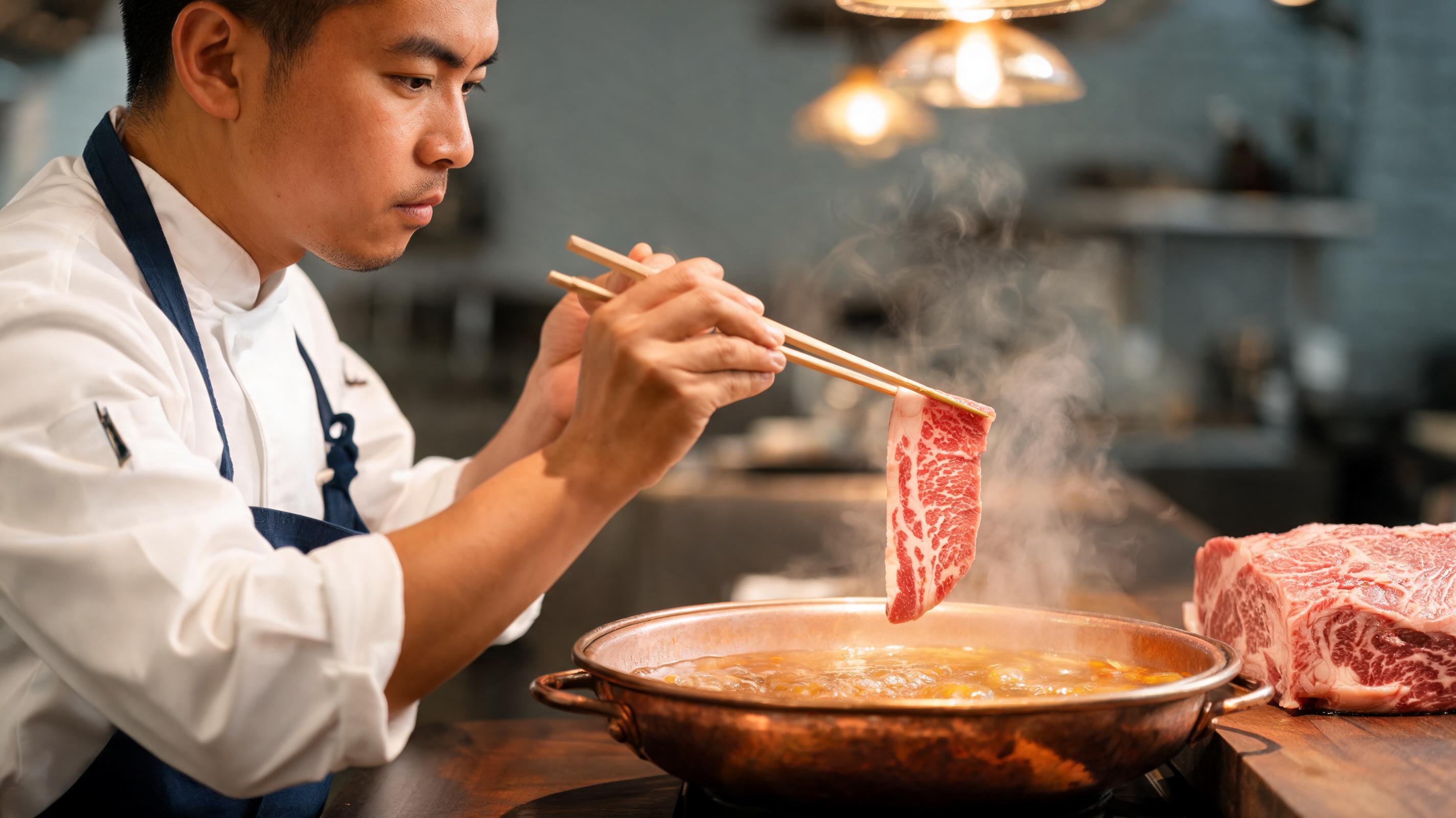
Miyazaki A5 wagyu is beef from Miyazaki Prefecture, Japan, graded A5 — the country's highest rating, combining yield grade A, quality score 5, and a marbling (BMS) score of 8–12. Ribeye portion cuts deliver the richest fat, sirloin balances beef flavor with melt, and thin sukiyaki slices should be seared slowly or dipped briefly to render the fat. Miyazaki cattle have famously won Japan's "Wagyu Olympics" (全国和牛能力共進会).
| Cut | Character | Best cooking method | Price |
|---|---|---|---|
| A5 ribeye (portion cut) | Richest marbling, buttery fat cap | Seared hard outside, rare–medium inside | |
| A5 sirloin | Balanced beef flavor, clean melt | Seared slowly to render the fat | |
| A5 sukiyaki cut | Paper-thin slices, maximum surface marbling | Brief dip in sweet soy broth, raw egg |
Ribeye vs sirloin: fat cap, marbling, and portion cuts compared
Ribeye vs sirloin is a richness decision. Ribeye carries the heaviest intramuscular fat plus an outer fat cap — the cut where BMS 8–12 marbling shows most dramatically. Sirloin is slightly leaner, so you taste more beef and less butter; many diners prefer it past the third slice. Both should arrive as portion cuts: a fixed-weight slab cut to order, never pre-sliced buffet strips.
Where to find A5 wagyu sukiyaki in Bangkok
A5 wagyu sukiyaki — thin marbled slices swished briefly in sweet soy broth, then dipped in raw egg — is the gentlest way to experience A5, because the fat renders in the broth rather than burning on a grill. Premium Japanese restaurants around Sukhumvit serve it, some seasonally.
Grain-fed Miyazaki cattle: why the marbling melts at body temperature
Miyazaki cattle are grain-fed Japanese Black cattle raised on controlled diets, producing fat rich in unsaturated fatty acids. The practical result: A5 fat melts at close to human body temperature, which is why a slice literally dissolves on the tongue. It's also why chefs recommend small portions — a modest A5 portion cut satisfies more than a large regular steak, so order less than you think you need.
Beyond Crab: Uni, Otoro, Dry-Aged Sushi & Premium Omakase in Sukhumvit
Premium sushi in Sukhumvit centers on three luxury items: uni (sea urchin), otoro (fatty tuna belly), and dry-aged fish. Dry-aged sushi is sushi made from fish matured for days in a temperature- and humidity-controlled cabinet to concentrate umami. Taraba Prime serves all three in dry-aged sushi sets, chirashi bowls, and omakase-style courses on Sukhumvit Soi 20.
Uni and otoro: how to judge freshness at the counter
Fresh uni holds its shape in firm, bright orange-gold lobes with a clean, sweet-ocean smell — collapsing, watery uni or any bitterness means it's past prime. Fresh otoro shows pale pink flesh, fine white fat lines, and a glossy sheen; dull brownish edges signal age. One insider test: ask which prefecture today's uni came from. A confident, specific answer is itself a freshness signal.
Dry-aged sushi vs fresh sushi: taste and texture differences
Dry-aged sushi tastes deeper and more savory than fresh sushi, with a denser, almost silky texture, because moisture leaves the flesh during aging and umami concentrates. Fresh sushi wins on bright, clean flavor; dry-aged wins on intensity. Order both side by side — easy with the dry-aged sushi and omakase sets at Taraba Prime — and pick your camp.
Omakase-style sets vs à la carte: which suits first-time visitors
Omakase is a Japanese dining format where the chef selects and sequences your courses from the day's best ingredients. For a first visit, omakase-style sets suit you better — every piece arrives with an explanation, and you don't need to know Japanese fish names. À la carte suits return visitors who already know they want double otoro or a whole crab. First visit: set. Second visit: chase your favorites.
Common Mistakes Tourists Make When Booking Seafood & Wagyu in Bangkok
The most common tourist mistakes when booking seafood and wagyu in Bangkok are: assuming any "A5 buffet" serves certified single-origin A5, paying live-crab prices for frozen crab, skipping weekend reservations, and picking restaurants far from BTS stations. Verifying the grading certificate and seeing the crab alive before ordering prevents nearly every disappointment.
5-point checklist to verify real A5 wagyu
- Ask to see the grading certificate. Legitimate importers hold Japan Meat Grading Association paperwork, and reputable restaurants will show it without hesitation.
- Check the prefecture of origin. Real single-origin beef names its source — Miyazaki, for example — not just "Japanese wagyu."
- Look at the marbling. Genuine A5 shows dense, even white webbing consistent with BMS 8–12, not a few fat streaks.
- Confirm it's a portion cut. Certified A5 is cut to order by weight, not pre-sliced into anonymous buffet trays.
- Sanity-check the price. Certified A5 cannot be profitable as an unlimited ~2,299 THB buffet. If the price looks impossible, the grade probably is too.
Live vs frozen king crab: how to tell before you pay
Live vs frozen king crab is the mistake tourists pay for most often. Three checks protect you: see the crab moving in the tank before you order, watch the weigh-in on a scale, and order at least one portion as sashimi. Frozen crab cannot be served raw — so a restaurant confidently offering king crab sashimi is effectively proving its crab is alive.
Self-cook yakiniku vs chef-prepared A5: pros and cons for tourists
Self-cook yakiniku is fun and cheaper, but A5's high fat content burns fast on a tabletop grill — most first-timers overcook it in seconds and waste the marbling they paid for. Chef-prepared A5 costs more per gram, but the searing, resting, and slicing are handled by someone who does it daily. Once-per-trip splurge: chef-prepared. Casual group night: yakiniku with cheaper cuts.
Getting There & Booking: BTS Asok, English Menus, and Reservations

Taraba Prime sits on Sukhumvit Soi 20, a 5-minute walk from BTS Asok and equally reachable from MRT Sukhumvit, which connects to the BTS station. Tourists can reserve in English by calling 094-456-1124 or messaging LINE @tarabaprime; the menu is available in Thai, English, and Japanese.
Walking route from BTS Asok / MRT Sukhumvit to Sukhumvit Soi 20
- Exit BTS Asok and walk along Sukhumvit Road toward Phrom Phong — even-numbered sois are on your right.
- Turn right into Sukhumvit Soi 20. The soi entrance is signposted and lined with hotels and restaurants.
- Walk about 5 minutes into the soi to reach Taraba Prime. From MRT Sukhumvit the route is nearly identical, since the station links underground to BTS Asok.
- Coming by taxi or Grab? Show the driver "Taraba Prime, Sukhumvit Soi 20" — drop-off at the door is easy.
How to book via LINE @tarabaprime in English
- Add @tarabaprime in the LINE app (include the @ when searching).
- Send your date, time, and group size in English — for example: "Table for 4, Saturday 7pm, live king crab."
- State special requests up front: birthday plates, counter seats, or pre-ordering a specific crab size so it's reserved from the tank.
- Get written confirmation in the chat and screenshot it. Prefer talking to a person? Call 094-456-1124, or reserve a table via LINE @tarabaprime directly.
Dress code, payment methods, and group dining tips
Smart-casual works everywhere on this list; only Blue by Alain Ducasse leans formal. Group tip: for parties of 4 or more, message ahead about crab availability — large live Taraba king crabs can sell out on weekend evenings, and pre-ordering guarantees your size.
Frequently Asked Questions (FAQ)
This FAQ answers the questions tourists search most in 2026: where to eat live king crab and Miyazaki A5 wagyu near BTS Asok, what A5 grading means, typical prices for premium Japanese seafood in Sukhumvit, and how to reserve a table in English.
Where can I eat live king crab in Bangkok near BTS Asok?
Live king crab near BTS Asok is served at Taraba Prime on Sukhumvit Soi 20, a 5-minute walk from the station. The crab comes straight from the tank, prepared as sashimi, grilled steak, or kani nabe hot pot, with an English menu and reservations via LINE @tarabaprime or phone 094-456-1124.
What is Miyazaki A5 wagyu and why is it special?
Miyazaki A5 wagyu is beef from Miyazaki Prefecture, Japan, graded A5 — the highest rating under the Japan Meat Grading Association system, requiring yield grade A, quality score 5, and a marbling score of 8–12. The fat melts near body temperature, giving a buttery, umami-rich flavor regular beef cannot match.
How much does A5 wagyu cost in Bangkok?
A5 wagyu prices in Bangkok vary widely: all-you-can-eat "A5" buffets start around 2,299 THB per person, while certified single-origin Miyazaki A5 portion cuts at premium Japanese restaurants cost significantly more per plate — the premium pays for documented grade and origin.
Is king crab sashimi safe to eat?
King crab sashimi is safe when the crab is alive until minutes before serving and handled by trained Japanese chefs. The raw leg meat turns translucent and naturally sweet — which is why live-tank restaurants like Taraba Prime prepare it strictly to order. Pregnant, very young, or immunocompromised diners should consult staff about raw seafood first.
What is the best sushi restaurant on Sukhumvit Soi 20?
The best sushi on Sukhumvit Soi 20 is at Taraba Prime, which serves uni, otoro, dry-aged sushi sets, chirashi bowls, and omakase-style courses made with fish flown in from Japan daily. Its trilingual TH/EN/JP menu makes ordering straightforward for first-time visitors to Bangkok.
Do I need a reservation for premium Japanese restaurants in Sukhumvit?
Reservations for premium Japanese restaurants in Sukhumvit are strongly recommended — especially weekends and holidays, when live king crab stock can run out early. At Taraba Prime, tourists book in English by calling 094-456-1124 or messaging LINE @tarabaprime.
What is the difference between an A5 wagyu buffet and à la carte A5?
An A5 wagyu buffet prioritizes quantity, often using mixed or trimmed cuts with no origin paperwork, while à la carte A5 at fine-dining restaurants serves certified single-origin portion cuts — such as Miyazaki ribeye or sirloin — with a grading certificate you can ask to see before ordering.
Where can I find A5 wagyu sukiyaki in Bangkok?
A5 wagyu sukiyaki — paper-thin marbled slices briefly simmered in sweet soy broth and dipped in raw egg — is served at premium Japanese restaurants around Sukhumvit, typically as a set or an add-on to seafood courses.