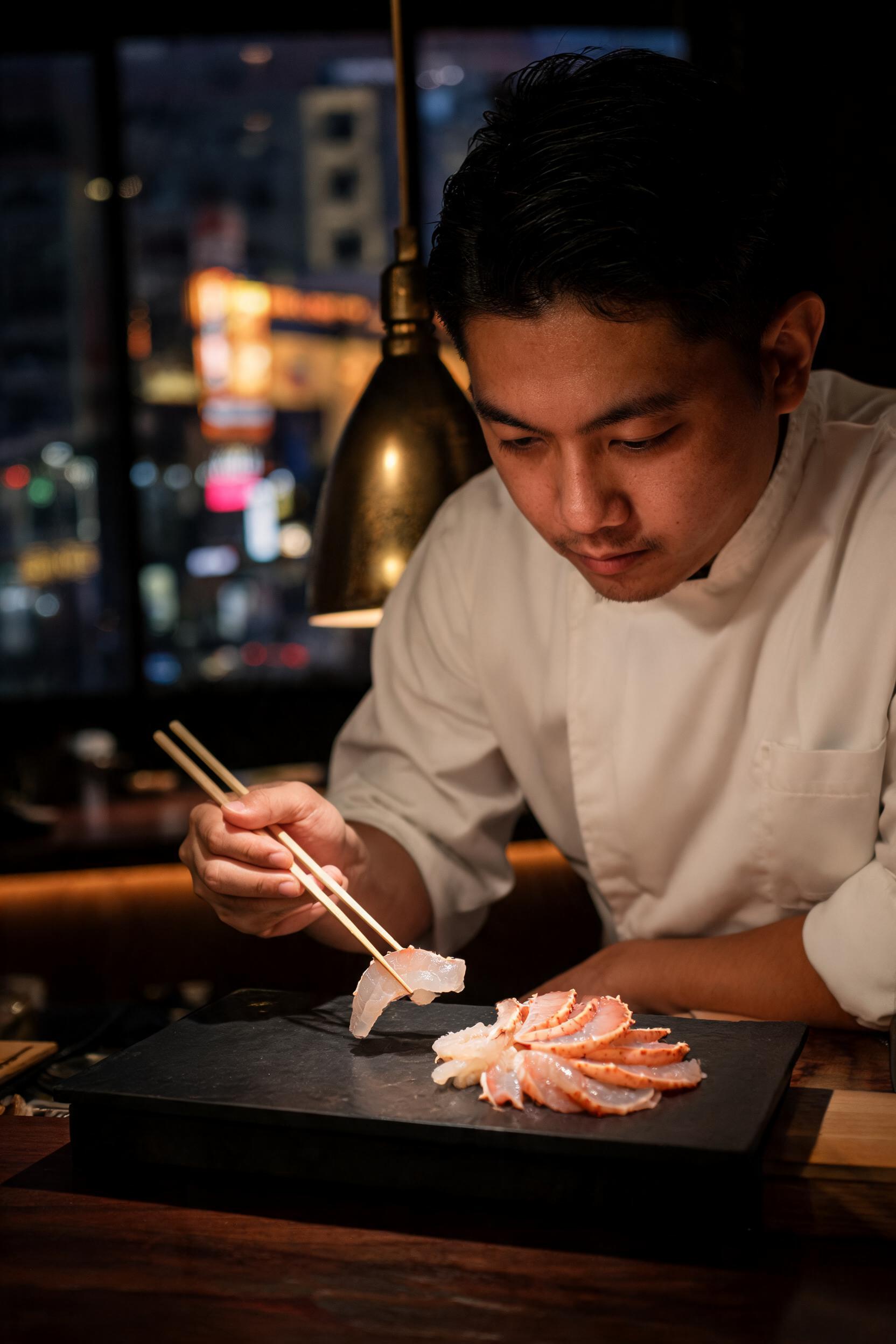
King crab sashimi in Bangkok is only served at restaurants that keep live Taraba king crab in tanks, because frozen crab can never be eaten raw. Taraba Prime on Sukhumvit Soi 20, a 5-minute walk from BTS Asok, slices sashimi from live crabs dispatched moments before serving — the only preparation that delivers the sweet, translucent texture this dish is famous for. (Guide updated for 2026.)
- King crab sashimi must come from a live crab — frozen king crab legs can only be served cooked, never raw, because ice crystals destroy the muscle fiber.
- Taraba Prime serves one live Taraba king crab up to four ways: sashimi, steak, kani nabe, and zosui — all from a single crab.
- A live king crab typically weighs 2–4 kg, is priced per kilogram, and feeds 3–4 diners.
- Most "king crab" results in Bangkok search are cooked-crab buffets; only a handful of Japanese restaurants keep live tanks for true sashimi service.
- Reserve your crab ahead via LINE @tarabaprime or 094-456-1124 — live stock is limited daily.
King Crab Sashimi in Bangkok: Why It Can Only Come from a Live Crab
King crab sashimi is raw Taraba king crab meat sliced from a live crab moments before serving, giving it a sweet, translucent, springy texture that frozen crab can never reproduce. Freezing ruptures the crab's delicate muscle fibers, so frozen king crab legs are always served cooked. Genuine king crab sashimi in Bangkok therefore requires a live-tank restaurant.
The science is simple. When crab meat freezes, ice crystals form inside the muscle cells and puncture them. Once thawed, the meat turns watery and mushy — fine for boiling or grilling, hopeless for sashimi. Raw crab depends on intact, springy fiber. Only a crab that was alive minutes before slicing has it.
That texture is the whole point. Fresh king crab sashimi tastes like a cross between raw scallop and sweet shrimp — clean, cool, and faintly briny. Cooked crab, however good, is a different dish entirely. If you have only eaten king crab from a buffet line, you have never actually tasted this one.
Taraba vs Alaskan king crab: same species, different supply chain
Taraba crab is the Japanese name for the red king crab (Paralithodes camtschaticus) — the exact same species marketed in the West as Alaskan king crab. The difference is logistics, not biology: Alaskan crab is almost always cooked and frozen at sea, while Taraba-grade crabs stay alive through the entire supply chain from cold northern waters.
That live chain is expensive — the crab must survive air freight in chilled, oxygenated water — which is why live Taraba king crab costs meaningfully more per kilogram than frozen legs. You are paying for a logistics chain, not just a crab. The upside: it is the only version you can eat raw.
How to tell if a restaurant serves truly live crab
A restaurant serving genuine live king crab shows three signals at once: a visible live seafood tank, crab priced per kilogram rather than per plate, and sashimi listed explicitly on the menu. If any one of the three is missing, assume the crab arrived frozen and will only ever be served cooked.
- Live tank on display: you should be able to see — and often choose — your crab before it is weighed.
- Per-kilogram pricing: live crabs vary in size, so honest restaurants weigh the crab in front of you.
- Sashimi on the printed menu: no restaurant risks serving thawed crab raw; if sashimi is offered, the crab is alive.
Pro tip: ask the staff one question — "Can I see the crab before you prepare it?" A live-tank restaurant says yes immediately. Hesitation is your answer.
Where to Eat King Crab in Bangkok: Buffet vs Live-Tank Japanese Restaurant
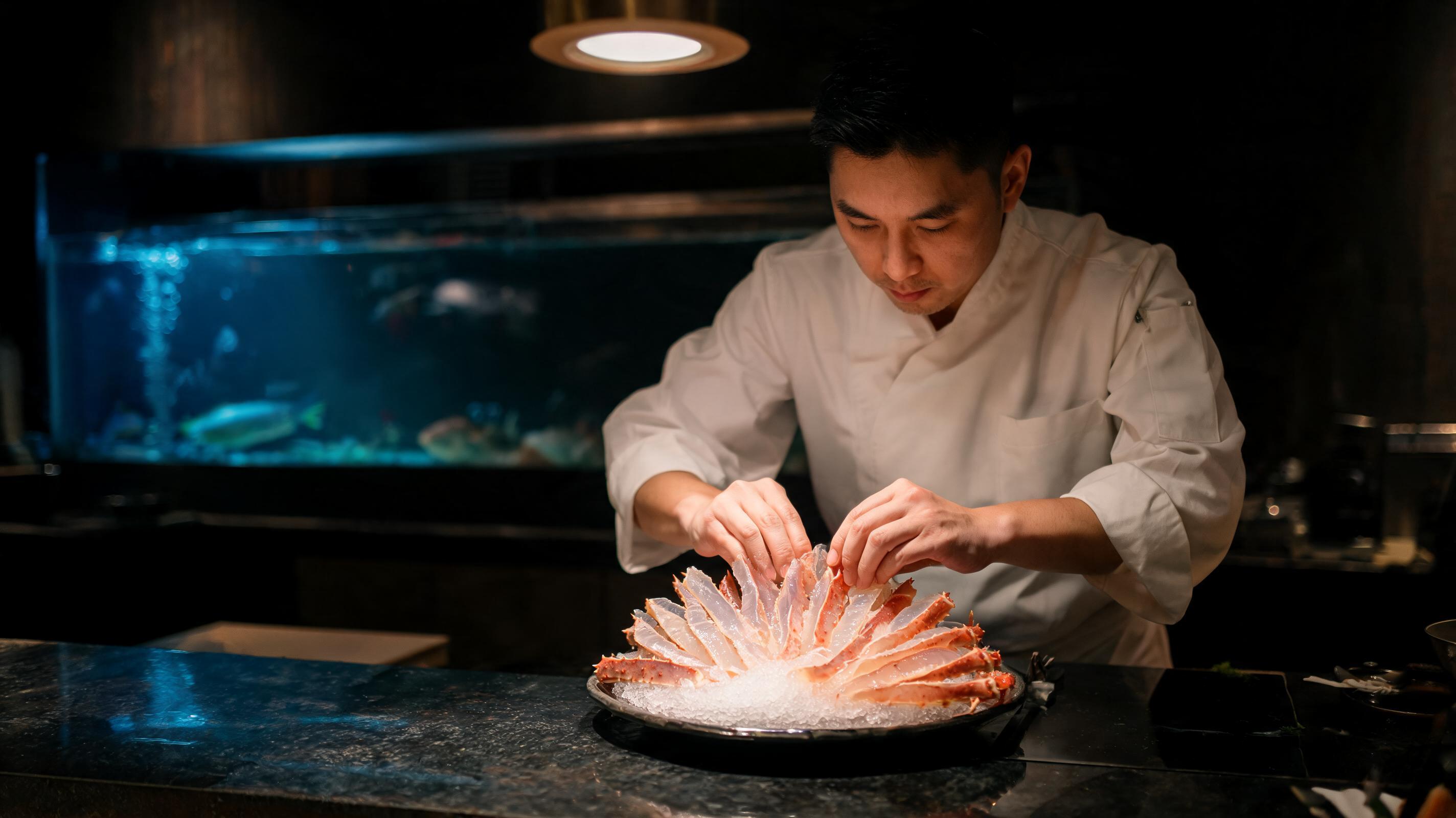
King crab restaurants in Bangkok fall into three categories: all-you-can-eat crab buffets around Asok, hotel seafood buffets, and premium Japanese restaurants with live tanks. Only the third category can safely serve king crab as sashimi, because buffet crab arrives pre-cooked or frozen long before it reaches the serving line.
| Option | Price | Sashimi? | Best for |
|---|---|---|---|
| Crab buffet (Asok area) | No — cooked/frozen only | Volume eaters, casual groups | |
| Hotel seafood buffet | No — crab is pre-cooked | Variety seekers, Sunday brunch | |
| Live-tank Japanese restaurant (Taraba Prime) | Per kg of live weight | Yes — from live crab | Special occasions, sashimi lovers |
Crab buffets near Asok: volume over freshness
Crab buffets in the Asok–Sukhumvit area sell one thing: unlimited quantity at a fixed price. The legs are imported cooked-frozen in bulk, thawed, and held warm on steam trays. For hungry groups the value works. But the meat has already been frozen once and cooked once before you touch it — that is the trade you are making.
Why sashimi-grade crab is never on a buffet line
Sashimi-grade king crab cannot survive buffet economics. A live crab costs several times more per kilogram than frozen legs, must be prepared to order within minutes, and cannot sit on a serving line at all. Any buffet advertising "fresh king crab" means freshly thawed — a distinction no buffet will volunteer.
Who should choose which option
- Choose a buffet if your priority is quantity, your budget is fixed, and cooked crab is enough.
- Choose a hotel buffet if crab is just one item among oysters, sushi, and carving stations.
- Choose a live-tank Japanese restaurant for an anniversary, a client dinner, or simply because king crab sashimi is nearly impossible to find outside Japan. Browse the live Taraba king crab menu (sashimi, steak, nabe) to see how one crab becomes a full-course meal.
Taraba Prime: Live King Crab Sashimi 5 Minutes from BTS Asok
Taraba Prime is a premium Japanese seafood restaurant on Sukhumvit Soi 20, a 5-minute walk from BTS Asok and MRT Sukhumvit. The restaurant specializes in live Taraba king crab served as sashimi, steak, or nabe, with seafood flown in from Japan and a trilingual EN/TH/JP menu built for international diners.
What separates Taraba Prime from the buffet crowd is the live seafood tank. Crabs stay alive in chilled seawater until you order, are weighed in front of you, and are priced transparently per kilogram. No guessing, no bill shock — you confirm the weight and rate before the chef picks up a knife. Opening hours:. Reservations: 094-456-1124 or LINE @tarabaprime.
How to get there from BTS Asok / MRT Sukhumvit (walking route)
From BTS Asok (also spelled "Asoke" on some street signs), take the exit toward the south side of Sukhumvit Road, walk away from Terminal 21, and turn into Sukhumvit Soi 20. The restaurant is roughly a 5-minute walk from the station. From MRT Sukhumvit, use the exit connecting to BTS Asok and follow the same route.
Pro tip: Sukhumvit Soi 20 is a quiet soi compared with the main road — if you pass the large hotel entrances near the soi mouth, you are heading the right way. A short Grab ride works from anywhere in central Sukhumvit if you prefer not to walk.
Daily flights from Japan: how the seafood arrives fresh
Taraba Prime's premium seafood — uni, otoro, and seasonal fish — is flown in from Japan, while the king crabs travel alive in oxygenated, temperature-controlled water and go straight into the restaurant's tank on arrival. The crab never touches a freezer between the ocean and your table — the single non-negotiable condition for serving it raw.
One Crab, Four Courses: How to Order Live King Crab the Japanese Way
A live king crab is traditionally ordered as a multi-course meal from a single animal: legs served first as sashimi, then as grilled steak, the body simmered as kani nabe hotpot, and the broth finished as zosui rice porridge. One 2–3 kg crab comfortably feeds 3–4 diners.
Kani nabe is a Japanese hotpot that simmers the crab's legs and body in dashi broth — the standard companion order to sashimi, because it lets one crab be eaten both raw and cooked at a single sitting.
Step-by-step ordering guide (weight, style, timing)
- Reserve your crab in advance. Live stock is limited daily — contact the restaurant via LINE @tarabaprime or 094-456-1124 before you arrive.
- Choose and weigh the crab at the tank. Crabs typically run 2–4 kg; staff weigh yours in front of you and confirm the total price before preparation.
- Split the crab across styles. Tell the chef how to divide it — the standard split sends the best legs to sashimi and steak, with the body reserved for nabe.
- Eat the sashimi first, within minutes. Raw crab is at its sweetest immediately after slicing — do not let it wait while you photograph the steak.
- Finish with zosui. The chef adds rice and egg to your nabe broth, which by then carries the concentrated flavor of the entire crab. Skipping this is the regret first-timers report most.
Sashimi vs steak vs nabe: which cut suits each style
Each part of a Taraba king crab has a best use. The long, thick leg segments carry the cleanest muscle for sashimi. The meatier upper legs and claws stand up to grilling as steak, where light charring concentrates the sweetness. The body and knuckles — rich but fiddly to eat raw — give the nabe broth its depth, which is exactly why the zosui finish tastes the way it does.
Beyond the Crab: Miyazaki A5 Wagyu, Uni, Otoro and Dry-Aged Sushi
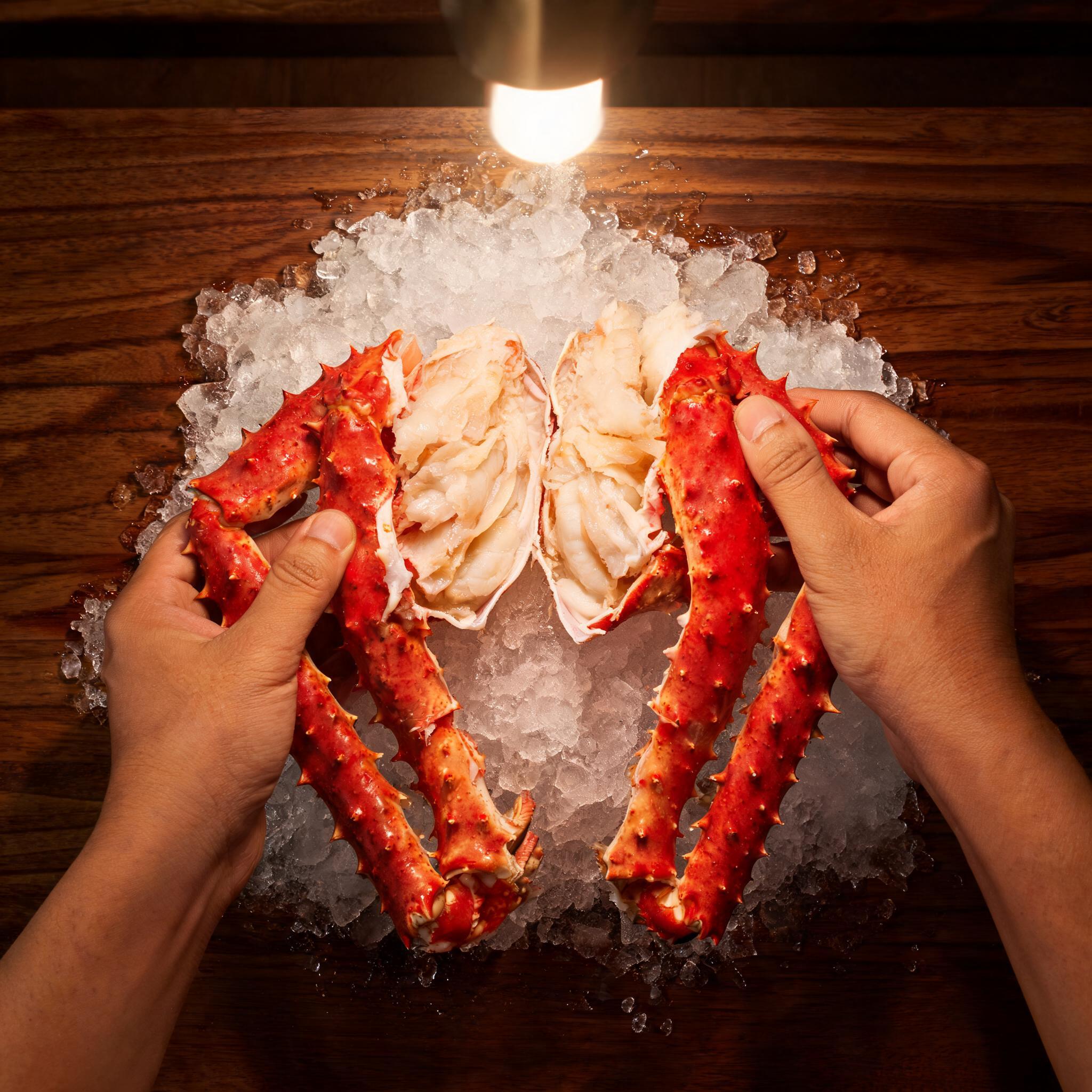
Taraba Prime's menu extends beyond king crab to Miyazaki A5 wagyu — one of Japan's most decorated wagyu brands — plus Hokkaido uni, otoro fatty tuna, dry-aged sushi sets, fresh lobster, foie gras unagi don, and chirashi. That range makes it a practical booking for groups where not everyone eats raw crab.
From common cases with visiting groups, at least one person at the table never touches raw seafood. At a crab-only restaurant that person suffers politely. Here, they order wagyu or a fully cooked lobster — and everyone wins.
Miyazaki A5 wagyu: ribeye and sirloin, seared or sukiyaki-style
Miyazaki A5 denotes the highest grade awarded under the Japanese Meat Grading Association system, and Miyazaki Prefecture's cattle have repeatedly won Japan's national "Wagyu Olympics." At Taraba Prime the beef comes as ribeye or sirloin, seared or prepared sukiyaki-style with raw egg dip. See the full Miyazaki A5 wagyu selection at Taraba Prime before you book.
Uni, otoro and dry-aged sushi: what makes them premium
Hokkaido uni (sea urchin) and otoro (the fattiest cut of tuna belly) are the two most prized items in Japanese raw cuisine, both flown in from Japan. The restaurant's dry-aged sushi goes further: aging fish for a controlled period breaks proteins down into amino acids, deepening umami well beyond day-fresh fish.
Fresh lobster and foie gras unagi don for non-crab diners
Fully cooked options include fresh lobster from the live tank and the foie gras unagi don — grilled eel and seared foie gras over rice, one of the menu's richest dishes. Both sit on the same trilingual menu, so mixed groups order without friction.
Omakase-style premium seafood experience
Omakase is a Japanese dining format where the chef selects every course from the day's best ingredients — ideal for diners who want fine dining without choosing. At Taraba Prime, an omakase-style meal typically weaves in crab, dry-aged sushi, and seasonal fish from that day's arrivals. Details are on the dry-aged sushi and omakase sets page.
How Much Does King Crab Sashimi Cost in Bangkok? Price Guide 2026
King crab sashimi in Bangkok in 2026 is priced by the crab's live weight, not per plate. A live Taraba king crab is sold per kilogram, with one whole crab shared between 3–4 diners across sashimi, steak, and nabe courses. Crab buffets cost less per person but never include raw sashimi-grade crab.
| Item | Pricing model | Typical cost |
|---|---|---|
| Live Taraba king crab | Per kg, weighed at tank | |
| Full crab course per person (3–4 sharing) | Crab weight ÷ group size | |
| Crab buffet (comparison) | Fixed per person | |
| Service charge / VAT | Added to bill |
Price per kilogram vs per person: how the bill actually works
Per-kilogram pricing feels unfamiliar to travelers used to fixed menus, but it is the more transparent model. You see the crab, you see the scale, you multiply. A 3 kg crab split four ways puts each person's crab cost at exactly one quarter of the weighed price — confirm the total before the crab leaves the tank, and bill shock becomes impossible.
Same budget, different experience: live seafood vs Western fine dining
Bangkok's Western fine dining rooms — Blue by Alain Ducasse being a benchmark — deliver plated tasting menus in a formal setting. For a comparable per-head budget, a live king crab dinner trades white-tablecloth theatre for something rarer: a 3 kg animal from a tank becoming four courses in front of you. Neither is better — they answer different occasions. If your group wants a meal they cannot photograph anywhere else, the crab wins. Ready to compare dates? Reserve a table near BTS Asok and confirm crab availability first.
Common Mistakes to Avoid When Ordering King Crab in Bangkok
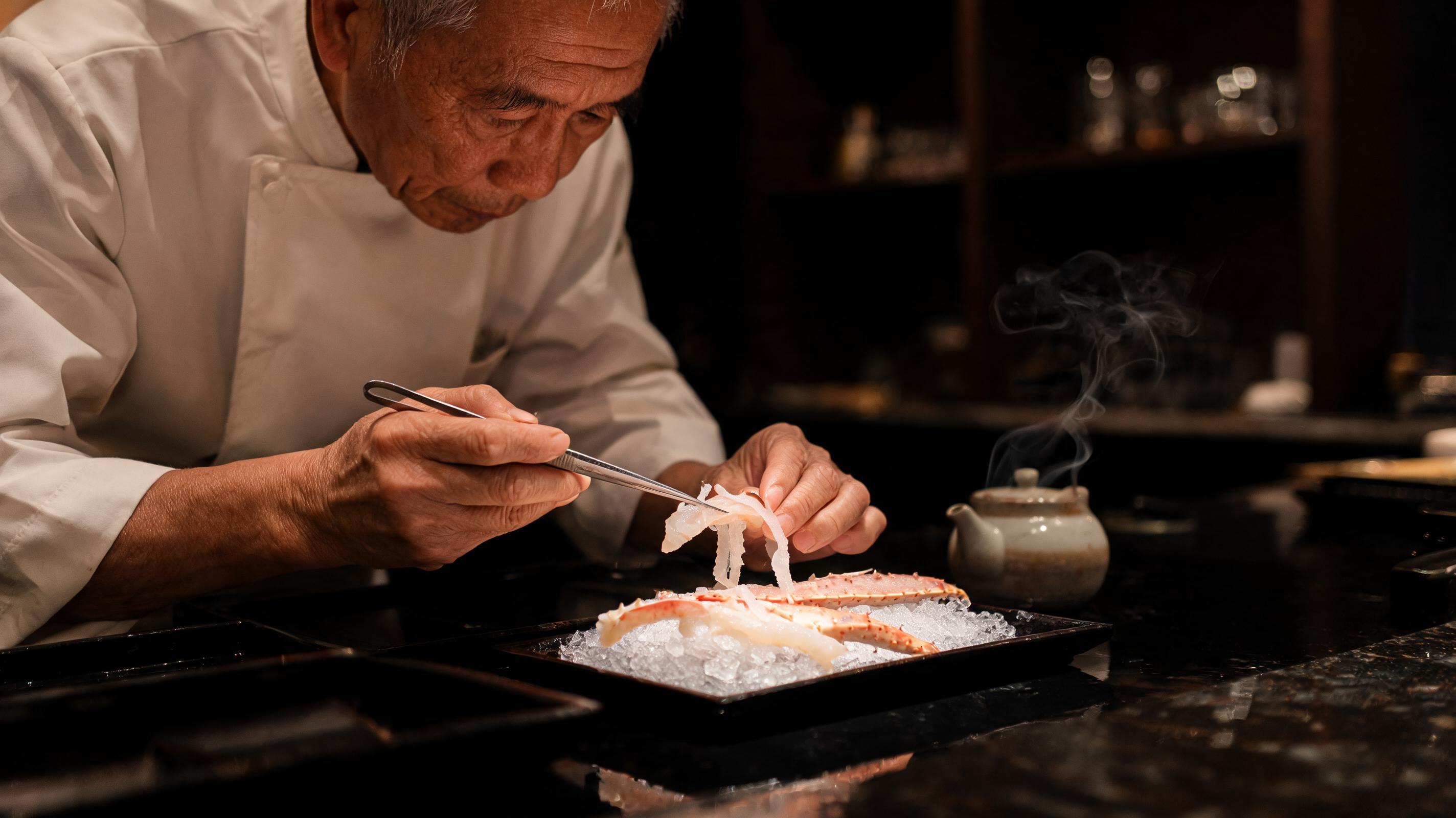
The most common king crab mistakes in Bangkok are assuming buffet crab equals sashimi-grade crab, walking in without reserving a live crab, ordering more weight than the group can finish, and skipping the nabe broth finish — the most flavor-dense part of the entire crab experience.
- Do not assume "king crab" means sashimi-grade. Most Bangkok listings are cooked-frozen buffet crab; only live-tank restaurants can serve it raw.
- Do not walk in expecting a crab to be waiting. Live stock is limited daily — reserve via 094-456-1124 or LINE @tarabaprime.
- Do not over-order weight. A 2–3 kg crab already feeds 3–4 people across four courses; check the minimum order first.
- Do not skip the zosui finish. The rice porridge made from your nabe broth carries the deepest crab flavor of the meal.
- Do not trust the word "fresh" alone. On Bangkok menus, "fresh king crab" frequently means freshly thawed — ask whether the crab is alive right now.
Red flags that "fresh king crab" is actually thawed
Warning signs of thawed crab show up quickly: no visible tank, crab priced per plate instead of per kilogram, legs sold separately from whole crabs, and no sashimi option anywhere on the menu. A restaurant confident in live crab will happily show you the animal before preparing it — a refusal tells you everything.
Portion planning: how much crab per person
Portion planning for king crab starts from the shell: it accounts for a large share of total live weight, so a 2–3 kg crab feeds 3–4 diners as part of a full meal rather than one person each. Groups that add a wagyu or sushi course alongside one crab finish comfortably without waste.
คำถามที่พบบ่อย (FAQ): King Crab Sashimi in Bangkok
This FAQ answers the questions travelers ask most before booking king crab sashimi in Bangkok: whether raw king crab is safe, how far the restaurant is from BTS Asok, what non-sashimi eaters should order, and how to reserve a live crab in advance via LINE @tarabaprime or 094-456-1124.
Is it safe to eat king crab sashimi?
King crab sashimi is safe when the crab is alive until moments before preparation and handled to sashimi-grade hygiene standards. Taraba Prime prepares sashimi only from live Taraba king crabs kept in tanks — never from frozen or pre-cooked crab. Diners who are pregnant or immunocompromised should consult a doctor before eating any raw seafood.
Where can I eat live king crab near BTS Asok?
Taraba Prime on Sukhumvit Soi 20, a 5-minute walk from BTS Asok and MRT Sukhumvit, serves live Taraba king crab as sashimi, steak, or kani nabe hotpot, alongside dry-aged sushi and Miyazaki A5 wagyu on a trilingual EN/TH/JP menu.
How much does a live king crab cost in Bangkok?
Live king crab in Bangkok is priced per kilogram of live weight, weighed in front of you before preparation. A whole crab typically feeds 3–4 people across sashimi, steak, and nabe courses, so per-person cost drops as the group grows.
What's the difference between a king crab buffet and king crab sashimi?
King crab buffets serve pre-cooked or frozen crab legs in unlimited quantity, while king crab sashimi requires a live crab prepared to order within minutes. Buffets cost less per person, but sashimi-grade raw crab is never available on a buffet line — freezing destroys the texture raw crab needs.
Do I need to reserve king crab in advance?
Reserving a live king crab in advance is strongly recommended because live crab stock is limited each day. Contact Taraba Prime at 094-456-1124 or LINE @tarabaprime to confirm availability and crab size before you arrive.
What should someone who doesn't eat raw crab order?
Non-sashimi diners at Taraba Prime can order king crab steak or kani nabe hotpot — both fully cooked — plus Miyazaki A5 wagyu, fresh lobster, foie gras unagi don, or dry-aged sushi sets. Everything sits on the same trilingual menu, so mixed groups order easily at one table.
Is Taraba crab the same as Alaskan king crab?
Taraba crab is the Japanese name for the red king crab (Paralithodes camtschaticus), the same species marketed as Alaskan king crab. The difference is the supply chain: Taraba-grade crabs are shipped live for sashimi service, while Alaskan crab is almost always sold cooked-frozen for boiling or grilling.
Does Taraba Prime have an English menu?
Taraba Prime offers a trilingual menu in English, Thai, and Japanese, and the restaurant is built for international visitors, so ordering in English is fully supported — both in the restaurant and when reserving your crab in advance via LINE @tarabaprime or 094-456-1124.
Disclaimer: raw seafood carries inherent risk for certain groups (pregnancy, weakened immune systems). This guide is informational — confirm current prices, availability, and dietary concerns directly with the restaurant before booking.